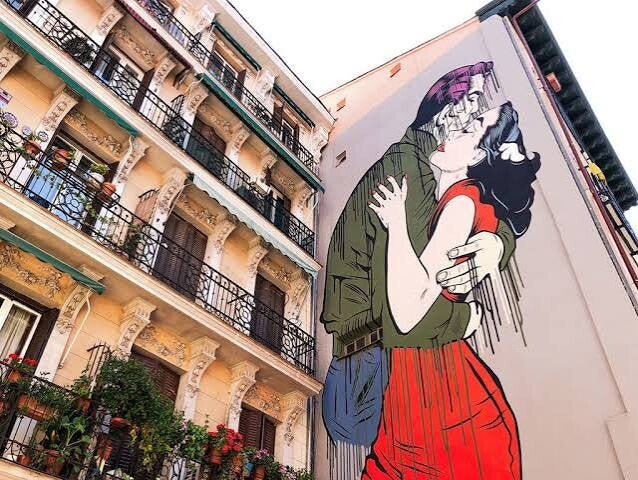
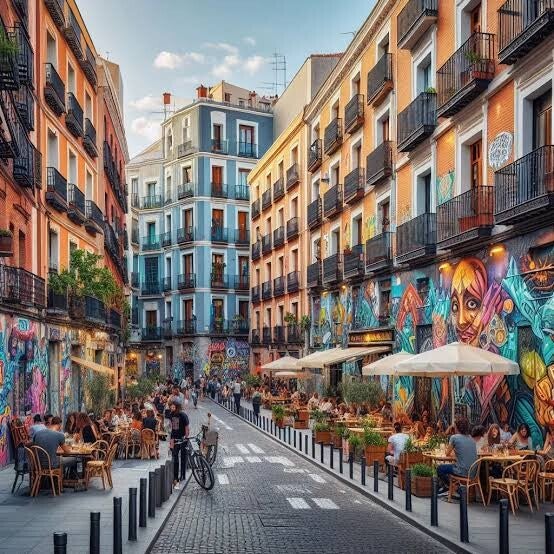
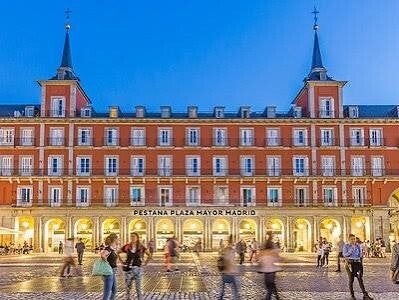
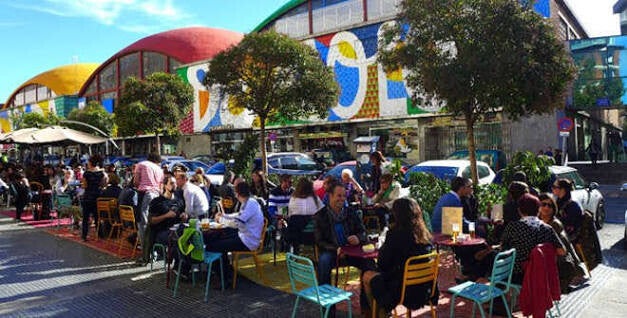
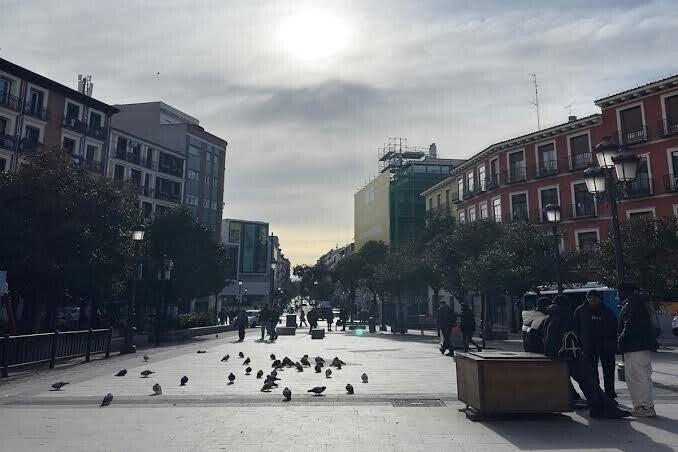
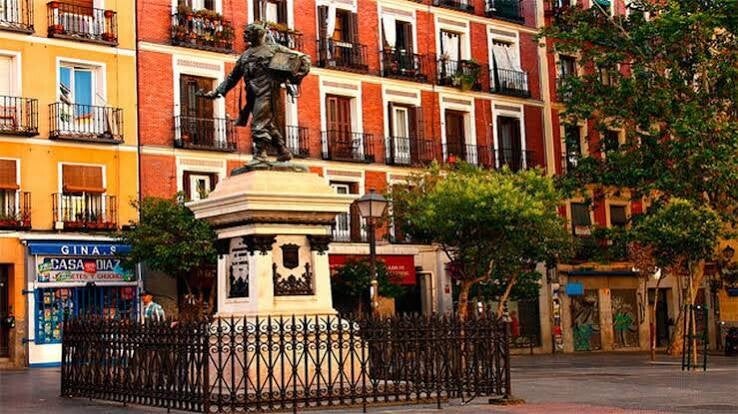
Madrid is best understood through its neighbourhoods. Beyond the city’s royal palaces, grand avenues and famous museums, districts such as La Latina, Lavapiés, Malasaña and Chueca reveal the everyday personality of the Spanish capital.
Together, these four central neighbourhoods offer medieval streets, traditional taverns, multicultural restaurants, vintage shops, colourful markets, independent galleries, live music and some of Madrid’s most energetic nightlife. They can be explored separately or combined into a full-day walking itinerary.
An Overview of the Four Neighbourhoods
Each neighbourhood offers a distinct experience:
- La Latina: Historic streets, traditional tapas and the famous El Rastro market.
- Lavapiés: Multicultural cuisine, community life, alternative theatre and contemporary art.
- Malasaña: Vintage fashion, independent cafés, youth culture and the legacy of the Movida Madrileña.
- Chueca: Fashion, inclusive nightlife, restaurants and Madrid’s internationally recognised LGBTQIA+ culture.
These are living residential and commercial neighbourhoods rather than enclosed tourist attractions. Their streets are open at all hours and there is no general admission charge, although museums, performances, tours and entertainment venues may require tickets.
La Latina
Brief Historical Context
La Latina is one of Madrid’s oldest districts. Its narrow, irregular and sometimes steep streets preserve elements of the medieval city that developed before Madrid became Spain’s permanent royal capital in 1561.
The neighbourhood takes its name from Beatriz Galindo, a respected fifteenth-century scholar and teacher to Queen Isabella I. Galindo was popularly known as “La Latina” because of her knowledge of Latin.
During the Middle Ages and early modern period, this area contained markets, religious institutions, craft workshops and housing for merchants and working families. Streets such as Cava Baja and Cava Alta later became associated with inns that accommodated traders arriving in Madrid.
La Latina is also closely connected with El Rastro, Madrid’s historic open-air market. Its name is traditionally associated with the trail left by animal hides being transported from nearby slaughterhouses to local tanneries. Today, El Rastro remains one of Madrid’s best-known Sunday traditions.
Location
La Latina is situated southwest of Plaza Mayor, beside Madrid de los Austrias and close to Lavapiés, Tirso de Molina and Madrid Río.
Its main gathering places include:
- Plaza de la Cebada
- Plaza de la Paja
- Plaza de Cascorro
- Cava Baja
- Cava Alta
- Calle de Toledo
- Ribera de Curtidores
- Mercado de la Cebada
- Jardín del Príncipe de Anglona
- Basilica of San Francisco el Grande
Getting There
The most convenient Metro stations are:
- La Latina – Line 5
- Puerta de Toledo – Line 5
- Tirso de Molina – Line 1
Numerous EMT buses travel along Calle de Toledo and the surrounding central streets.
What to See and Do
Explore Cava Baja
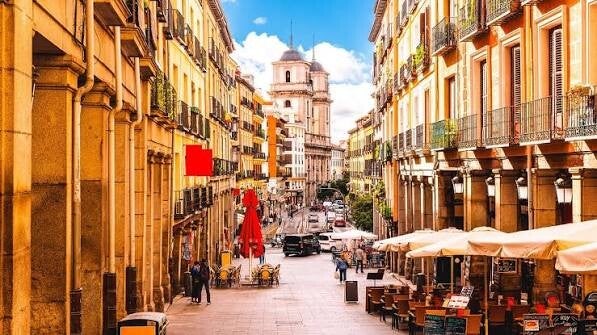
Cava Baja is one of Madrid’s celebrated tapas streets. Traditional taverns, wine bars and contemporary restaurants occupy many of its historic buildings.
Visit Plaza de la Paja
This attractive square provides a quieter contrast to the neighbourhood’s busy restaurant streets. The nearby Jardín del Príncipe de Anglona is a small historic garden with views across parts of old Madrid.
Discover El Rastro
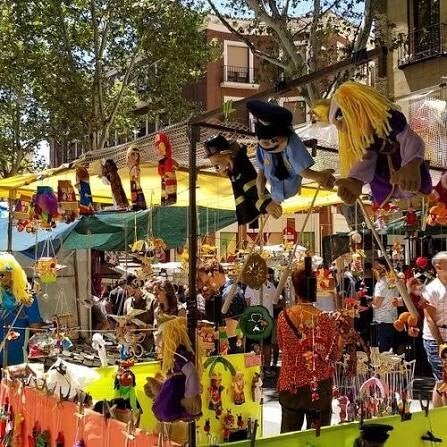
El Rastro occupies Plaza de Cascorro, Ribera de Curtidores and the surrounding streets. Visitors will find clothing, antiques, books, artwork, household objects, souvenirs and collectables.
The main street market operates on Sundays and public holidays, generally in the morning and early afternoon. The surrounding specialist shops, galleries and restaurants operate throughout the week.
Visit San Francisco el Grande
The monumental Basilica of San Francisco el Grande is recognised for its enormous dome, chapels and collection of religious artwork. Check its current visiting and worship schedule before travelling.
Lavapiés
Brief Historical Context
Lavapiés developed outside the walls of medieval Madrid. After Madrid became the capital in 1561, the neighbourhood became home to craftspeople, labourers and working-class families.
Its historic residential buildings include the corralas—apartment blocks constructed around communal courtyards. These buildings reflect an earlier form of dense urban life in which families shared central spaces and facilities.
Over time, Lavapiés welcomed people from different parts of Spain and, more recently, communities from Africa, Asia, Latin America, the Middle East and elsewhere in Europe. It is now celebrated as one of Madrid’s most multicultural neighbourhoods.
The district retains its traditional working-class identity while supporting alternative theatres, cultural associations, independent art spaces and restaurants serving cuisine from around the world.
Location
Lavapiés is southeast of Madrid’s central historic area, between Tirso de Molina, Embajadores and the Reina Sofía Museum district.
Important places include:
- Plaza de Lavapiés
- Calle de Argumosa
- Calle de Embajadores
- Calle de Mesón de Paredes
- Mercado de San Fernando
- La Corrala
- Teatro Valle-Inclán
- La Casa Encendida
- Tabacalera
- Escuelas Pías de San Fernando
Getting There
Useful Metro and railway stations include:
- Lavapiés – Line 3
- Embajadores – Metro Lines 3 and 5
- Embajadores – Cercanías railway
- Antón Martín – Line 1
- Tirso de Molina – Line 1
- Estación del Arte – Line 1
Lavapiés is also within walking distance of Atocha railway station, the Reina Sofía Museum and La Latina.
What to See and Do
Walk Around Plaza de Lavapiés
This central square is an excellent starting point for discovering the neighbourhood’s cafés, restaurants and multicultural shops.
Experience International Cuisine
Lavapiés is one of Madrid’s best districts for discovering food from Africa, India, Bangladesh, the Middle East, Latin America and the Mediterranean.
Visit Mercado de San Fernando
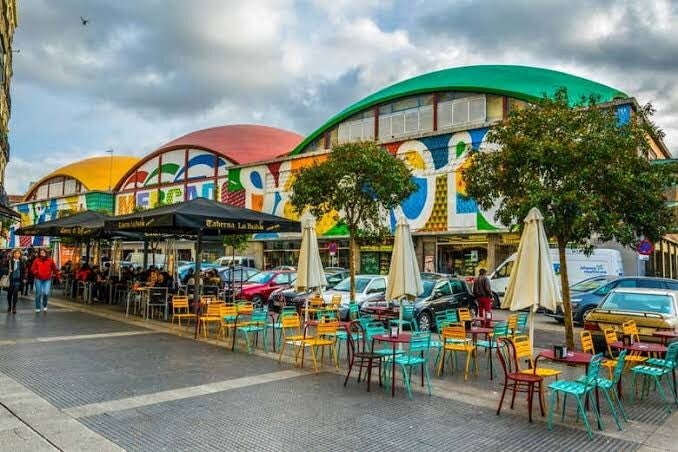
This neighbourhood market combines traditional food stalls with small restaurants, bookshops and community businesses.
Explore Calle de Argumosa
Calle de Argumosa is lined with cafés, terraces and restaurants. It connects the neighbourhood with the Reina Sofía Museum area.
Discover Independent Culture
Lavapiés is known for alternative theatre, street art, film, music and community festivals. La Casa Encendida, Teatro Valle-Inclán and the cultural spaces around Tabacalera regularly host exhibitions and performances.
Malasaña
Brief Historical Context
Malasaña takes its name from Manuela Malasaña, a young woman associated with the Madrid uprising against Napoleon’s occupying forces on 2 May 1808.
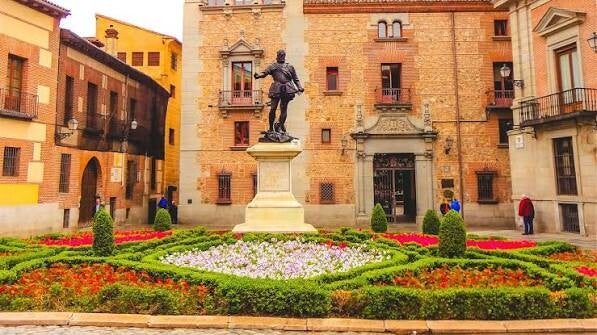
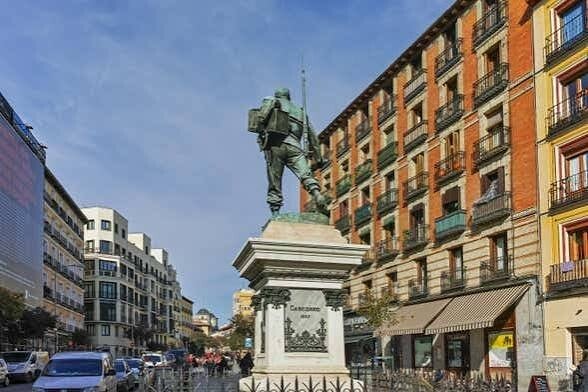
Plaza del Dos de Mayo, the heart of the neighbourhood, commemorates this rebellion. The monument in the square honours Spanish officers Luis Daoíz and Pedro Velarde, who became important figures in the resistance.
The district was previously known as Maravillas. During the late 1970s and 1980s, it became a centre of the Movida Madrileña, an artistic and cultural movement that emerged after the end of Francisco Franco’s dictatorship. Musicians, filmmakers, artists, designers and young people used Malasaña’s clubs and creative spaces to express a new sense of freedom.
Today, the district combines this countercultural heritage with vintage shops, independent boutiques, cafés, tattoo studios, bookshops, cocktail bars and nightlife.
Location
Malasaña lies immediately north of Gran Vía. Its approximate boundaries are:
- Gran Vía to the south
- Calle de Fuencarral to the east
- Calle de Carranza to the north
- Calle de San Bernardo to the west
Its centre is Plaza del Dos de Mayo.
Getting There
The most convenient Metro stations are:
- Tribunal – Lines 1 and 10
- Noviciado – Line 2
- Bilbao – Lines 1 and 4
- San Bernardo – Lines 2 and 4
- Gran Vía – Lines 1 and 5
- Callao – Lines 3 and 5
Malasaña can easily be reached on foot from Puerta del Sol, Gran Vía and Chueca.
What to See and Do
Visit Plaza del Dos de Mayo
The square is surrounded by cafés and bars and remains one of Malasaña’s principal social meeting places.
Explore Vintage and Independent Shops
Calle del Espíritu Santo, Calle Velarde and the surrounding streets contain vintage-clothing shops, record stores, bookshops and independent fashion businesses.
Visit the History of Madrid Museum
Located on Calle de Fuencarral, the museum presents the history, culture and development of Madrid from 1561 to the modern period.
Experience the Café Culture
Malasaña offers traditional cafés alongside contemporary speciality-coffee shops. It is a good neighbourhood for breakfast, an afternoon break or an evening drink.
Enjoy the Nightlife
The district contains small music venues, cocktail bars and clubs. Nightlife becomes particularly active from Thursday to Saturday.
Chueca
Brief Historical Context
Chueca is named after Federico Chueca, a nineteenth-century Spanish composer known for popular musical theatre and zarzuela.
Historically a central residential and commercial district, Chueca experienced periods of decline during the twentieth century. From the 1980s onwards, LGBTQIA+ residents, entrepreneurs and community organisations helped revitalise the area.
It subsequently developed into one of Europe’s most visible centres of LGBTQIA+ life, recognised for its inclusive community, nightlife, fashion and Madrid Pride celebrations. Chueca’s principal meeting points include Plaza de Chueca and Plaza de Pedro Zerolo, which commemorates the influential equality campaigner Pedro Zerolo.
Chueca welcomes visitors of every background. Respect, inclusion and freedom of personal expression are central to its identity.
Location
Chueca is situated north of Gran Vía and east of Malasaña. It is bordered approximately by Calle de Fuencarral, Calle de Hortaleza, Gran Vía and the streets approaching Paseo de Recoletos.
Major locations include:
- Plaza de Chueca
- Plaza de Pedro Zerolo
- Calle de Hortaleza
- Calle de Augusto Figueroa
- Mercado de San Antón
- Mercado de San Ildefonso
- Calle de Fuencarral
- Museum of Romanticism
Getting There
Useful Metro stations include:
- Chueca – Line 5
- Gran Vía – Lines 1 and 5
- Tribunal – Lines 1 and 10
- Banco de España – Line 2
- Alonso Martínez – Lines 4, 5 and 10
The neighbourhood is a short walk from Gran Vía, Cibeles, Malasaña and Puerta del Sol.
What to See and Do
Relax in Plaza de Chueca
Plaza de Chueca is the social heart of the district, surrounded by cafés, restaurants and shops.
Visit Mercado de San Antón
This renovated market combines fresh-food stalls, restaurants and social spaces. Opening hours vary among the market’s different sections.
Explore Calle de Hortaleza
This busy street contains fashion shops, restaurants, cafés, specialised stores and nightlife venues.
Visit the Museum of Romanticism
This museum recreates the art, decoration and domestic culture of nineteenth-century Madrid. It requires a separate admission ticket, although discounted and free-entry periods may be offered.
Experience Madrid Pride
Madrid’s annual Pride celebrations usually take place in late June and early July, with Chueca serving as their principal centre. Accommodation and transport can become extremely busy during this period, so early booking is recommended.
Opening and Closing Times
La Latina, Lavapiés, Malasaña and Chueca are public neighbourhoods. Their streets and squares are accessible 24 hours a day, and the neighbourhoods themselves do not have opening or closing times.
Individual businesses establish their own schedules. As a general guide:
- Cafés: commonly open from approximately 8:00 or 9:00 a.m.
- Shops: frequently open from approximately 10:00 a.m. until 8:00 or 9:00 p.m.
- Lunch service: commonly starts around 1:00 or 1:30 p.m.
- Dinner service: often starts around 8:00 p.m., with many locals dining later.
- Markets: morning and daytime opening is most common.
- Bars: may remain open until late at night.
- Nightclubs: often become busy after midnight.
- Museums and cultural venues: have their own schedules and weekly closing days.
- El Rastro: operates on Sundays and public holidays, mainly during the morning and early afternoon.
Hours can change on public holidays, during August and around Christmas and New Year. Check individual venues before making a special journey.
Entry Fees
There is no entry fee to walk through La Latina, Lavapiés, Malasaña or Chueca.
You can explore their streets, squares and public spaces free of charge. However, you should budget separately for:
- Food and drinks
- Museums and exhibitions
- Guided walking tours
- Theatre performances
- Live music and clubs
- Special events
- Public transport
- Purchases at El Rastro and local shops
Some municipal museums offer free admission, while private exhibitions and entertainment venues set their own prices.
Suggested One-Day Walking Itinerary
A full-day exploration can begin in La Latina and finish in Chueca:
Morning: La Latina and El Rastro
Start at Puerta de Toledo or La Latina Metro station. Walk through Plaza de la Cebada, Cava Baja and Plaza de la Paja. If visiting on Sunday, explore El Rastro early before it becomes extremely crowded.
Late Morning: Lavapiés
Continue through Plaza de Cascorro towards Lavapiés. Visit Mercado de San Fernando, walk along Calle de Embajadores and stop for an international lunch.
Afternoon: Malasaña
Take the Metro or walk north through central Madrid. Explore Plaza del Dos de Mayo, Calle del Espíritu Santo and the vintage stores around Calle Velarde.
Evening: Chueca
Finish in Chueca with dinner near Mercado de San Antón, Plaza de Chueca or Plaza de Pedro Zerolo. Those interested in nightlife can remain in the area after dinner.
Trying to explore all four neighbourhoods in one day provides a useful introduction, but spending half a day in each will give you a richer experience.
Connecting Internationally
From Madrid-Barajas Airport
The most convenient rail connection from Adolfo Suárez Madrid–Barajas Airport is normally Metro Line 8 to Nuevos Ministerios. From there, transfer to the Metro network for the appropriate neighbourhood:
- For Malasaña, take Line 10 to Tribunal.
- For Chueca, connect to Line 5 or travel via Gran Vía.
- For La Latina, connect to Line 5.
- For Lavapiés, transfer to Line 3 or Line 1, depending on your destination.
Airport Express buses, taxis and private transfers are also available.
From Atocha Railway Station
Lavapiés is within walking distance of Atocha, depending on your luggage and exact destination. Metro Line 1 also connects Atocha with Antón Martín, Tirso de Molina, Gran Vía, Tribunal and Bilbao.
From Chamartín Railway Station
Metro Line 10 connects Chamartín with Tribunal, providing convenient access to Malasaña. From Tribunal, visitors can walk to Chueca or transfer to other Metro services.
From International Coach Stations
Madrid’s main coach terminals—including Estación Sur, Avenida de América and Moncloa—are connected to the city centre by Metro and bus.
Dos When Visiting
- Wear comfortable shoes. The best way to experience these neighbourhoods is on foot.
- Use public transport. Parking in central Madrid is limited and traffic restrictions apply.
- Start El Rastro early. Sunday crowds become much heavier later in the morning.
- Keep valuables secure. Use a zipped bag and remain alert in markets, crowded Metro carriages and busy nightlife areas.
- Try local businesses. Independent cafés, taverns, markets and shops contribute to the character of each neighbourhood.
- Respect residents. These districts are homes and communities, not only tourist attractions.
- Keep noise low at night, especially in residential streets.
- Ask permission before photographing people, shopkeepers, performers or private courtyards.
- Be respectful of cultural diversity, particularly in multicultural Lavapiés.
- Respect LGBTQIA+ identities and spaces in Chueca and throughout Madrid.
- Check prices before ordering, particularly on restaurant terraces.
- Reserve popular restaurants for Friday and Saturday evenings.
- Carry a reusable water bottle, especially during Madrid’s hot summer months.
- Use licensed taxis or recognised transport applications.
- Confirm museum and market schedules before travelling.
Don’ts When Visiting
- Do not leave phones or wallets unattended on café and restaurant tables.
- Do not carry your wallet in an exposed back pocket in crowded locations.
- Do not photograph residents without permission.
- Do not treat Lavapiés’s multicultural communities as a tourist spectacle.
- Do not make discriminatory remarks or jokes about nationality, ethnicity, gender identity or sexual orientation.
- Do not create unnecessary noise outside bars or in residential squares late at night.
- Do not litter, especially around markets and public squares.
- Do not buy counterfeit goods or items of uncertain origin.
- Do not assume every El Rastro price is fixed, but bargain politely rather than aggressively.
- Do not rely on a car for travelling between the four neighbourhoods.
- Do not expect dinner to begin early in every traditional restaurant.
- Do not enter private corralas or residential courtyards without permission.
- Do not consume alcohol in public spaces where local regulations prohibit it.
- Do not forget that opening hours can change during holidays, festivals and special events.
Plan Your Madrid Holiday with Virtual World Travel Agency
Would you like to experience the historic streets of La Latina, the multicultural character of Lavapiés, the creative energy of Malasaña and the welcoming atmosphere of Chueca?
Virtual World Travel Agency can assist with personalised holiday planning, hotel accommodation, transportation, car rental, activities and events in Madrid and other destinations.
WhatsApp or call: +34 664 663 275
Email: info@virtual-world.pl
Holiday planner form:
Request your personalised holiday plan
Self-booking platform:
Book hotels, car rentals and events
Discover Madrid beyond its famous monuments. Walk through its historic streets, taste its many cuisines, meet its diverse communities and experience the authentic rhythm of neighbourhood life with Virtual World Travel Agency.
Add comment
Comments