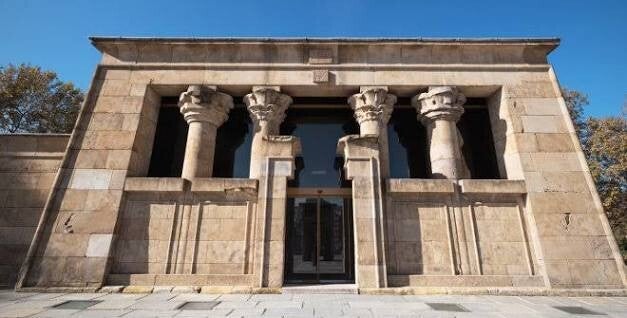

The Temple of Debod—Templo de Debod—is one of Madrid’s most unusual and historically significant monuments. It is an authentic ancient Egyptian temple standing in a landscaped park near Plaza de España.
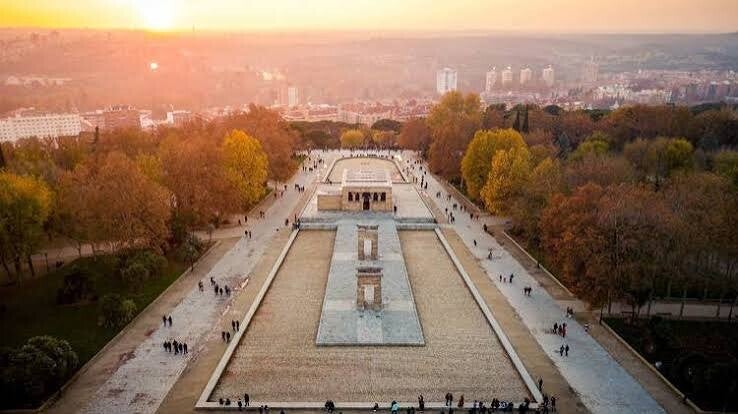
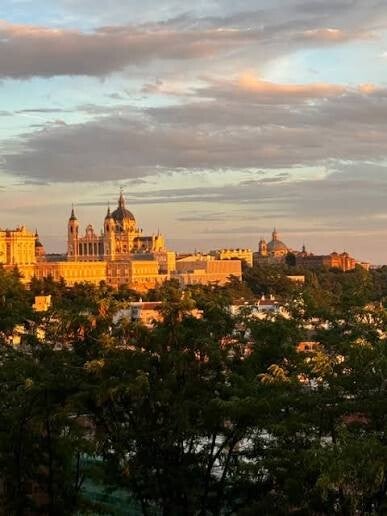
More than 2,000 years old, the temple was dismantled in Egypt and reconstructed stone by stone in Madrid. Its hilltop location also provides some of the city’s finest views towards Casa de Campo, the Royal Palace and the mountains beyond Madrid.
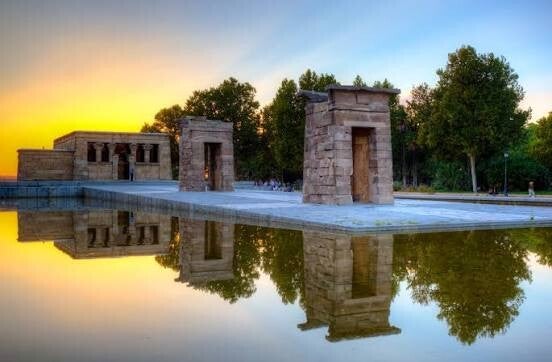
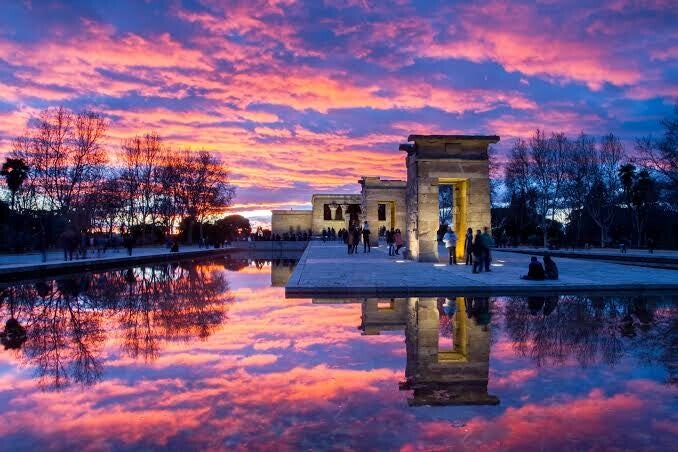
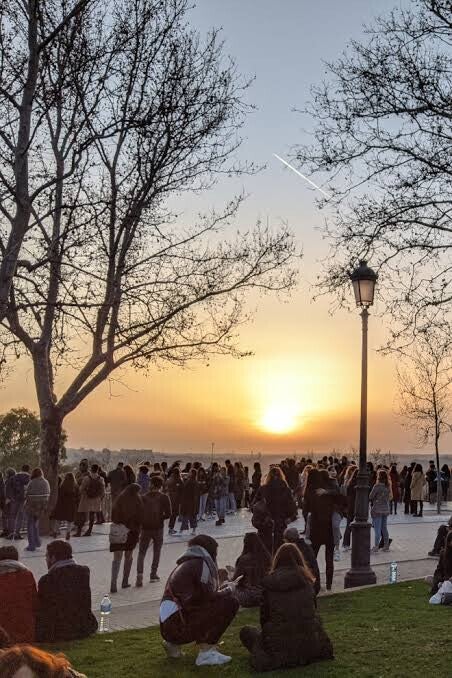
The site is particularly popular at sunset, when the ancient stone, reflecting pool and evening sky create one of Madrid’s most photographed scenes.
A Brief History of the Temple of Debod
The Temple of Debod was originally constructed in ancient Nubia, south of Egypt’s historic capital region and close to the First Cataract of the River Nile.
Construction began at the beginning of the second century BC under King Adikhalamani—also written as Adijalamani—of Meroë.
The king commissioned a small chapel dedicated to:
- Amun of Debod
- The goddess Isis
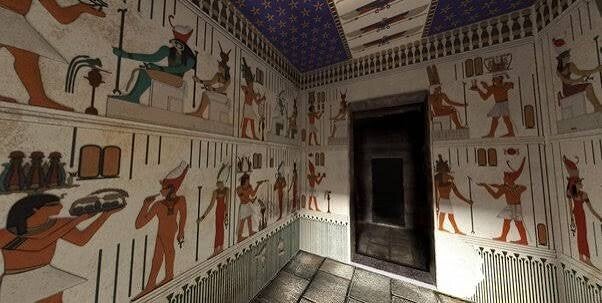
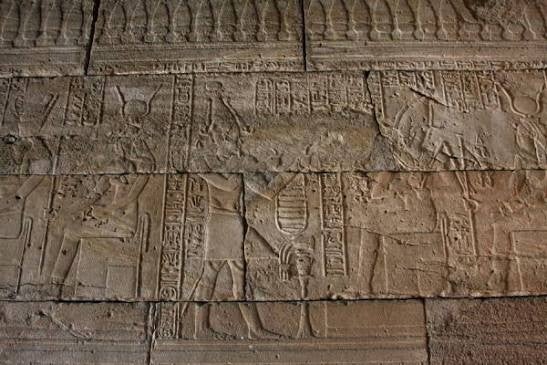
The original chapel was decorated with reliefs showing the king making offerings to Egyptian deities.
Later rulers of Egypt’s Ptolemaic dynasty expanded the sanctuary by adding new chambers around the original chapel. After Rome annexed Egypt, Roman emperors including Augustus and Tiberius continued the temple’s construction and decoration. Hadrian may also have contributed to it.
The temple therefore reflects several historical periods:
- The Kingdom of Meroë
- Ptolemaic Egypt
- Roman Egypt
- The later Christianisation of Nubia
Following Nubia’s conversion to Christianity in the sixth century, the temple was closed and eventually abandoned.
Why Is an Egyptian Temple in Madrid?
During the twentieth century, the construction of dams across the Nile threatened ancient monuments in Nubia.
The building of the Aswan High Dam created the danger that numerous archaeological sites would be permanently submerged beneath the new reservoir.
UNESCO launched an international campaign to rescue the endangered monuments. Spain participated in archaeological and preservation work connected with this effort.
In 1968, the Egyptian government donated the Temple of Debod to Spain in recognition of the country’s assistance.
The temple was dismantled, transported to Spain and reconstructed in Madrid. It opened to the public in 1972.
Its reconstruction preserved the temple’s original east-to-west orientation.
The Temple of Debod is one of only a small number of ancient Egyptian temples that were given to other countries following the international Nubian rescue campaign.
The Temple’s Madrid Location and Its Own Spanish History
The temple stands on land previously occupied by the Cuartel de la Montaña, a nineteenth-century military barracks.
The area is historically significant for Spain as well as Egypt. Príncipe Pío Hill was associated with the execution of Madrid citizens by French troops following the uprising of 2 May 1808. Francisco de Goya later commemorated the repression in his famous painting The Third of May 1808.
The Cuartel de la Montaña was also the location of serious fighting at the beginning of the Spanish Civil War in July 1936. The heavily damaged barracks were eventually demolished.
The Temple of Debod and its surrounding gardens now occupy this historically layered location.
Where Is the Temple of Debod Located?
Temple of Debod
Calle de Ferraz, 1
28008 Madrid
Spain
The monument stands in the Parque de la Montaña, adjoining Parque del Oeste and close to Plaza de España.
Nearby attractions include:
- Plaza de España
- Royal Palace of Madrid
- Almudena Cathedral
- Sabatini Gardens
- Cerralbo Museum
- Liria Palace
- Parque del Oeste
- Madrid Río
- Casa de Campo
- Príncipe Pío
- Gran Vía
How to Get There Locally
By Metro
The most convenient stations are:
Plaza de España
- Line 2
- Line 3
- Line 10
From Plaza de España, the temple is approximately 8–12 minutes away on foot.
Ventura Rodríguez
- Line 3
The walk normally takes approximately 10 minutes.
Príncipe Pío
- Line 6
- Line 10
- Line R
Príncipe Pío is convenient for visitors arriving from western Madrid, Casa de Campo or the Cercanías network. The uphill walk to the temple may take approximately 10–15 minutes.
By Cercanías Train
Use Madrid-Príncipe Pío station and continue on foot or by local bus.
Remember that the approach from Príncipe Pío involves an uphill section.
By Bus
Bus routes serving the surrounding area include:
- 001
- 1
- 2
- 3
- 25
- 39
- 44
- 46
- 62
- 74
- 75
- 133
- 138
- 148
- 158
- C1
- C2
Several night-bus routes also serve the wider district. Check Madrid’s official transport planner for the best route from your accommodation.
By Bicycle
BiciMAD docking stations are available near:
- Plaza de España
- Paseo del Pintor Rosales
- Plaza del Marqués de Cerralbo
- Plaza de España 360 transport hub
Park bicycles correctly before approaching the temple.
On Foot
Approximate walking times are:
- Plaza de España: 8–12 minutes
- Royal Palace: 15 minutes
- Almudena Cathedral: 15–20 minutes
- Gran Vía: 15–20 minutes
- Príncipe Pío: 10–15 minutes
- Puerta del Sol: 25 minutes
- Plaza Mayor: 25 minutes
The walk from the Royal Palace towards the Temple of Debod is particularly attractive around sunset.
By Taxi
Ask the driver for Templo de Debod, Calle Ferraz. Use an official Madrid taxi or recognised ride-booking service.
Connecting with Madrid Internationally
By Air
International visitors normally arrive at Adolfo Suárez Madrid-Barajas Airport.
The airport is connected to central Madrid by:
- Metro
- Cercanías commuter train from Terminal 4
- Airport Express bus
- EMT public buses
- Official taxis
- Private transfers
- Recognised ride-booking platforms
Metro passengers can travel towards Plaza de España or Príncipe Pío with the necessary changes.
Visitors using the Cercanías train from Terminal 4 can connect through central Madrid to Príncipe Pío.
By International and High-Speed Train
Madrid’s main long-distance stations are:
- Madrid-Puerta de Atocha-Almudena Grandes
- Madrid-Chamartín-Clara Campoamor
High-speed trains connect Madrid with:
- Barcelona
- Valencia
- Seville
- Málaga
- Zaragoza
- Alicante
- Granada
- Córdoba
- Numerous other Spanish cities
From Atocha or Chamartín, continue towards Plaza de España, Ventura Rodríguez or Príncipe Pío by Metro, Cercanías or taxi.
By Long-Distance Coach
Madrid’s important coach stations include:
- Estación Sur de Autobuses
- Avenida de América
- Moncloa
Moncloa is relatively close to the temple and offers easy Metro and bus connections.
Temple of Debod Opening and Closing Times
The published hours apply to the interior of the temple. The surrounding public gardens have separate access arrangements.
Winter Schedule
Generally outside the period from 15 June to 15 September:
- Tuesday to Sunday and public holidays: 10:00–20:00
- Final admission: 19:30
Summer Schedule
From 15 June to 15 September:
- Tuesday to Sunday and public holidays: 10:00–19:00
- Final admission: 18:30
Weekly Closing Day
- Monday: Closed
Annual Closing Days
The temple is also closed on:
- 1 January
- 6 January
- 1 May
- 24 December
- 25 December
- 31 December
Opening times may change because of conservation work, security requirements, extreme temperatures, technical problems or special events.
Entry Fees
Temple Interior
Admission is free.
Although no payment is required, advance reservation is strongly recommended because capacity is very limited.
The official reservation service generally allows visitors to reserve up to six tickets. Reservations for a new month normally become available from the 15th day of the preceding month.
Surrounding Gardens and Exterior Views
Free
No ticket is required to see the exterior of the temple or enjoy the surrounding gardens and viewpoint.
Capacity and Visit Duration
The temple has a maximum interior capacity of approximately 30 people.
The maximum duration of an individual visit is normally 30 minutes.
Access without an advance reservation cannot be guaranteed.
Visitors should arrive punctually. An official reservation is generally valid from five minutes before the chosen time until ten minutes afterwards. Late reservations may be cancelled automatically.
Individual and Group Visits
Individual visitors should reserve through the official Madrid City Council ticket platform.
For booking purposes:
- A party of up to seven people, including a guide, may be treated as an individual visit.
- Larger parties are treated as groups.
- Group visits follow separate arrangements and designated weekday sessions.
- Large informal groups cannot simply enter together during ordinary individual sessions.
Official group sessions are normally offered from Tuesday to Friday at selected morning times. Advance arrangements are essential.
What to See Inside the Temple
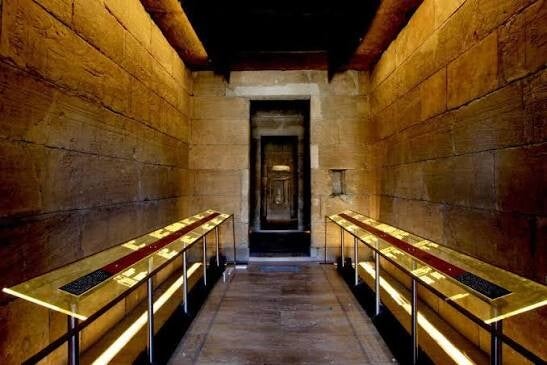
Chapel of Adikhalamani
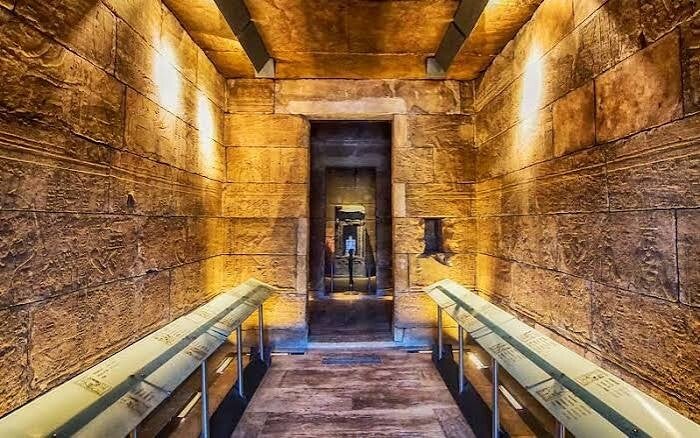
This is the oldest and most important surviving part of the sanctuary.
Its reliefs show the Meroitic ruler presenting offerings to Egyptian gods. The chapel demonstrates how Nubian rulers adopted and adapted Egyptian religious traditions.
Sanctuary Rooms
The interior contains chambers that served different ritual and religious purposes.
Although the temple is modest in size, the narrow rooms help visitors imagine its original sacred function.
Reliefs and Inscriptions
Look carefully at the carved figures and hieroglyphic inscriptions.
Some surfaces are weathered or damaged because of age, flooding, transportation and environmental exposure.
Scale Models and Interpretation
Models, videos and projected audiovisual material explain:
- The original location in Nubia
- The temple’s construction
- Its religious function
- The rescue campaign
- Its dismantling and transportation
- Its reconstruction in Madrid
Most exhibition information is available in Spanish and English, although some audiovisual content may be only in Spanish.
What to See Outside
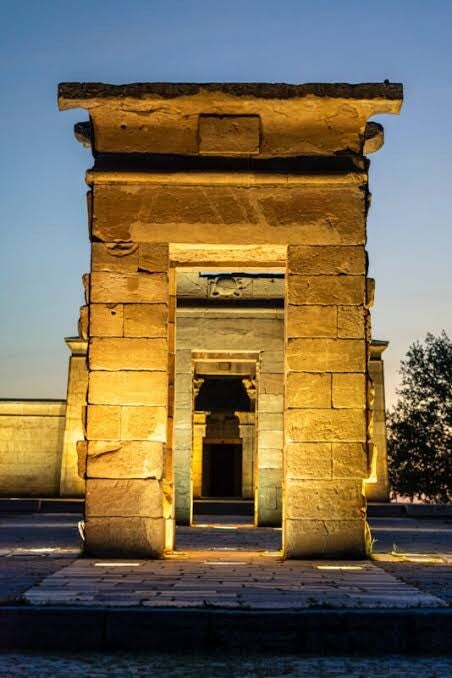
Processional Gates
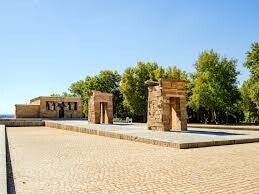
The freestanding stone gateways create the temple’s most familiar exterior composition.
Their alignment leads towards the main sanctuary and is particularly striking when reflected in the surrounding water.
Reflecting Pool
The shallow water feature is a modern landscaping element rather than part of the original Nubian temple site.
It helps create the famous reflected view of the temple.
Water levels may be reduced or the pool may be empty because of maintenance, conservation or water-management measures.
Sunset Viewpoint
The park offers broad views towards:
- Casa de Campo
- Campo del Moro
- Western Madrid
- Sierra de Guadarrama
- The Royal Palace area
Sunset is extremely popular, so arrive early if you want a comfortable viewing place.
Temple Gardens
The surrounding gardens were designed by Manuel Herrero Palacios and inaugurated with the temple in 1972.
They provide lawns, trees, walking paths and places to rest.
The Best Time to Visit
Early Morning
Best for:
- A quieter exterior
- Unobstructed photography
- Cooler summer temperatures
- A relaxed interior visit
Late Afternoon
Best for:
- Warmer light
- Views across western Madrid
- Combining the temple with Plaza de España and the Royal Palace
Sunset
The most atmospheric time, but also the busiest.
The sun sets west of Madrid, creating colourful skies behind the temple and surrounding landscape.
Sunset time changes considerably throughout the year. Check it before planning your visit.
Evening
The illuminated temple can be beautiful after sunset, even when its interior is closed.
Remain aware of the garden’s closing arrangements and local conditions.
Suggested Two-Hour Itinerary
- Begin at Plaza de España.
- Walk through the renovated square.
- Continue to the Temple of Debod gardens.
- Visit the temple interior at your reserved time.
- Explore the exterior gateways and reflecting pool.
- Read the interpretive information.
- Walk to the western viewpoint.
- Stay for sunset.
- Continue towards the Royal Palace or dine around Plaza de España.
Suggested Half-Day Cultural Route
- Visit Liria Palace or Cerralbo Museum.
- Walk through Plaza de España.
- Explore the Temple of Debod.
- Continue to the Sabatini Gardens.
- Visit the Royal Palace.
- Enter Almudena Cathedral.
- Finish in Plaza Mayor or Mercado de San Miguel.
Check the individual hours and ticket requirements for every attraction.
Dos When Visiting
- Reserve a free interior ticket in advance.
- Use only the official Madrid City Council reservation platform.
- Arrive at least 10–15 minutes before your slot.
- Keep the ticket available on your telephone or as a printed copy.
- Respect the 30-minute visit limit.
- Listen to instructions from museum staff.
- Keep your voice low inside the temple.
- Study the interpretation before examining the reliefs.
- Keep a safe distance from ancient stone surfaces.
- Wear comfortable shoes.
- Bring water during hot weather.
- Use sunscreen and a hat in summer.
- Arrive early for sunset.
- Keep valuables secure when the gardens become crowded.
- Check the weather before travelling.
- Check for temporary interior closures.
- Cancel your reservation if you cannot attend.
- Respect photographers and other visitors waiting for a clear view.
- Supervise children closely around the reflecting pool.
- Combine the visit with nearby Plaza de España or the Royal Palace.
Don’ts When Visiting
- Do not touch, lean against or sit on the ancient temple stones.
- Do not climb the gateways or sanctuary.
- Do not scratch, write or place objects on the monument.
- Do not enter restricted conservation areas.
- Do not use flash where prohibited.
- Do not use a tripod or professional equipment inside without permission.
- Do not bring oversized luggage into the temple.
- Do not bring food or uncovered drinks inside.
- Do not smoke inside the temple.
- Do not speak loudly during the interior visit.
- Do not block narrow chambers or doorways.
- Do not exceed your allocated visiting time.
- Do not arrive late and expect guaranteed admission.
- Do not assume that free entry means unlimited capacity.
- Do not join an unauthorised large group.
- Do not enter the reflecting pool.
- Do not allow children to climb on the stones.
- Do not fly a drone without formal authorisation.
- Do not leave litter in the gardens.
- Do not purchase supposedly “priority” tickets from unofficial sellers.
- Do not assume the interior remains open until sunset; follow the published seasonal schedule.
Accessibility and Practical Considerations
The exterior gardens are generally accessible by paved paths, although the site stands on elevated ground and some approaches involve slopes.
Visitors requiring step-free access or special assistance should contact the Temple of Debod before travelling.
The official contact details are:
- Telephone: +34 913 667 415
- Email: templodebod@madrid.es
Telephone and online information services normally operate from Monday to Friday, 08:00–15:00.
Book Your Madrid Holiday with Virtual World Travel Agency
Would you like to experience the Temple of Debod, the Royal Palace and Madrid’s other unforgettable historical and cultural attractions?
Virtual World Travel Agency can assist you with accommodation, car rentals, attraction and event tickets, customised itineraries and memorable holidays in Madrid.
WhatsApp or Call: +34 664 663 275
Email: info@virtual-world.pl
Holiday Planner Form:
Plan your holiday with us
Self-Booking Platform for Hotels, Car Rentals and Events:
Book hotels, car rentals and events online
Virtual World Travel Agency — helping you travel with confidence, convenience and unforgettable experiences.
Add comment
Comments