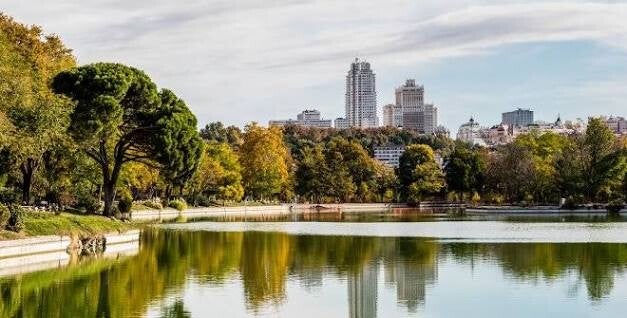
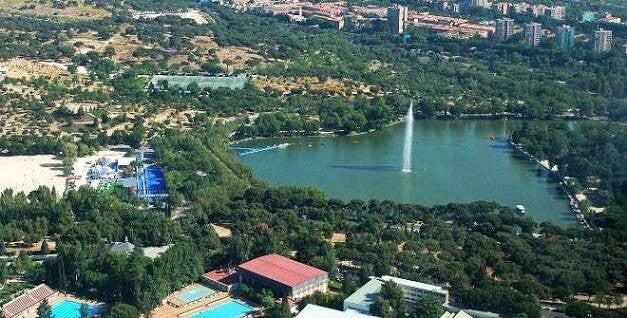
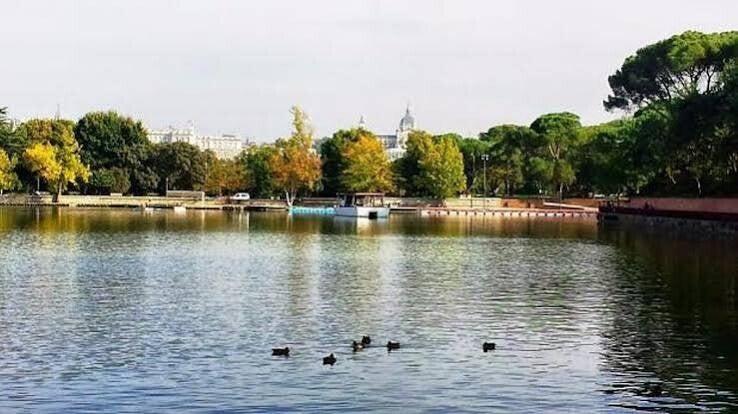
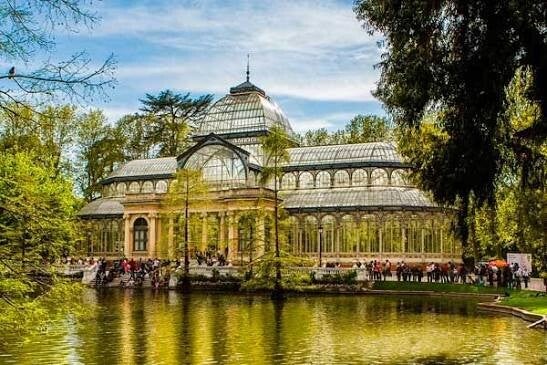
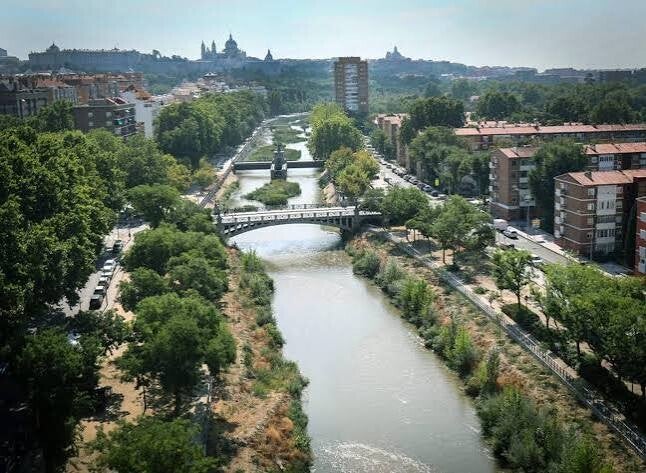
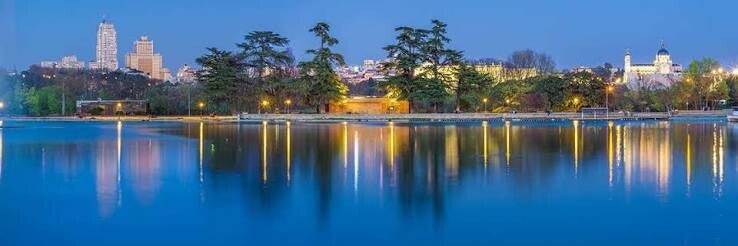
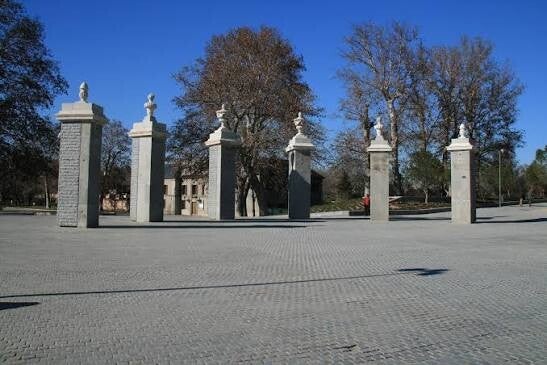
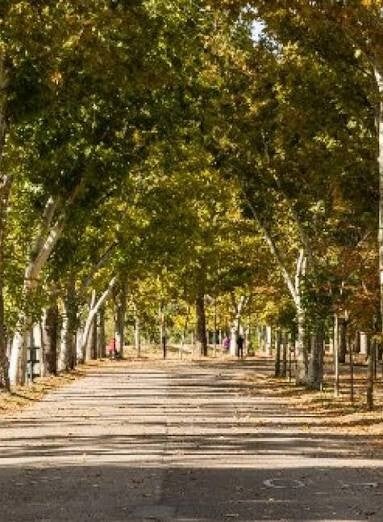
Madrid Río and Casa de Campo offer an entirely different perspective on Spain’s capital. Instead of palaces, enclosed museums and crowded shopping streets, visitors encounter riverside gardens, historic bridges, woodland trails, playgrounds, cycling routes, sports facilities and broad views of Madrid’s skyline.
Madrid Río follows the Manzanares River through the western and southern parts of the city, while Casa de Campo extends westward from the Royal Palace. The two green spaces can easily be combined in one visit and are especially suitable for families, walkers, cyclists, photographers and travellers seeking a relaxing break from central Madrid.
Madrid Río: Brief Historical Context
For much of the twentieth century, sections of the Manzanares River were surrounded by busy roads and urban infrastructure. The construction of Madrid’s M-30 ring road during the 1970s created a physical separation between nearby communities and the river.
Between 2005 and 2011, a major urban-renewal project moved several kilometres of the M-30 into underground tunnels. The land above the motorway was converted into Madrid Río—a landscaped green corridor extending for approximately 10 kilometres along the Manzanares.
The project reconnected neighbourhoods on both sides of the river and created pedestrian paths, bicycle routes, gardens, playgrounds, fountains and sporting areas. It also restored the importance of Madrid’s historic bridges and improved access between central Madrid, Casa de Campo and the southern districts.
Madrid Río has since become one of Madrid’s most ambitious environmental and urban-transformation projects.
Where Is Madrid Río?
Madrid Río follows the Manzanares River through the western and southern areas of Madrid. It passes through or alongside several districts, including Moncloa-Aravaca, Latina, Arganzuela and Carabanchel.
The park stretches approximately from the area around Puente de los Franceses and Casa de Campo in the north to the Matadero Madrid and Legazpi area in the south.
Important landmarks include:
- Puente del Rey
- Puente de Segovia
- Puente de Toledo
- Puente de Arganzuela
- Salón de Pinos
- Huerta de la Partida
- Explanada del Rey
- Arganzuela Park
- Madrid Río Beach
- Matadero Madrid
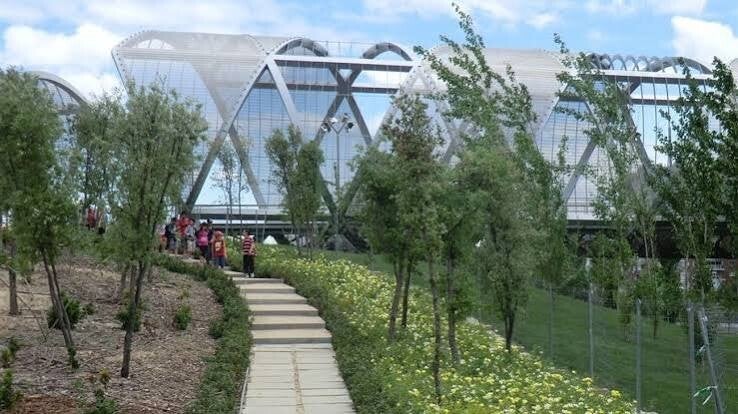
- Palacio de Cristal de Arganzuela
- Views towards the Royal Palace and Almudena Cathedral
What to See and Do at Madrid Río
Walk or Cycle Along the Manzanares
Madrid Río has long, mostly level paths that are suitable for walking, jogging and cycling. The route connects historic bridges, landscaped gardens, neighbourhood parks and cultural facilities.
Cyclists should control their speed in busy pedestrian areas and give priority to walkers where required.
Admire the Historic Bridges
The riverside contains bridges from different periods of Madrid’s history.
Puente de Segovia was originally commissioned during the reign of Philip II and designed by Juan de Herrera. It is one of the oldest surviving bridges in Madrid.
Puente de Toledo is an eighteenth-century Baroque bridge designed by Pedro de Ribera. Its stone arches and decorative statues make it one of Madrid Río’s most attractive historic structures.
The modern Puente de Arganzuela, designed by French architect Dominique Perrault, provides a striking contemporary contrast.
Explore the Playgrounds
Madrid Río contains numerous children’s play areas with swings, climbing equipment, slides and adventure structures. Some areas are designed for different age groups, making the park particularly suitable for families.
Visit Madrid Río Beach
Madrid Río Beach is not a conventional swimming beach. It is a recreational water area with fountains and water jets where visitors can cool down during the warmer months.
Its operation is seasonal and can be affected by maintenance, water restrictions or municipal regulations. Check its status before making a special journey.
Visit Matadero Madrid
At the southern end of Madrid Río, the city’s former slaughterhouse has been transformed into a major cultural complex. Matadero Madrid hosts exhibitions, theatre, cinema, festivals, design activities, workshops and community events.
Access to the general outdoor areas is free, but some exhibitions and performances require tickets. The usual hours for the outdoor cultural spaces are approximately 9:00 a.m.–10:00 p.m. daily, although schedules can vary by season and event.
Enjoy Views of the Royal Palace
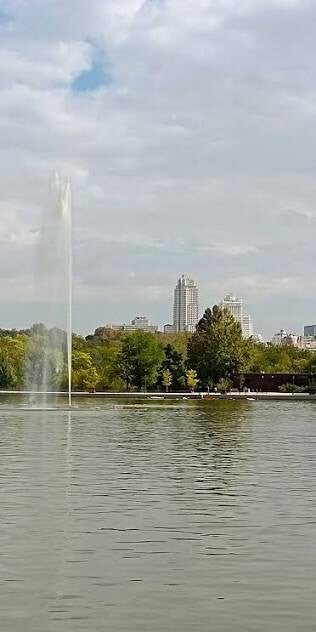
The northern part of Madrid Río offers beautiful perspectives towards the Royal Palace, Almudena Cathedral and Campo del Moro. Huerta de la Partida is particularly attractive at sunset.
Casa de Campo: Brief Historical Context
Casa de Campo is Madrid’s largest public park, covering approximately 1,535 hectares. It is substantially larger than El Retiro and offers a mixture of woodland, open countryside, recreational areas and visitor attractions.
Its origins date to the sixteenth century. After King Philip II moved the royal court to Madrid in 1561, he acquired farms and land west of the Royal Palace to establish a royal hunting and recreational estate. The property eventually extended towards the hunting grounds of El Pardo.
For centuries, Casa de Campo remained reserved for the Spanish royal family. It was transferred to the people of Madrid and opened as a public park during the Second Spanish Republic in the early 1930s.
The area suffered considerable damage during the Spanish Civil War because it formed part of the battlefront around Madrid. Trenches, bunkers and other traces of the conflict can still be found in parts of the park, although visitors should not enter unstable or restricted structures.
After the war, Casa de Campo developed into a major public recreational space. It now contains forests, walking and cycling trails, sports areas, restaurants, a lake, Madrid Zoo Aquarium and Parque de Atracciones de Madrid.
Where Is Casa de Campo?
Casa de Campo lies immediately west of central Madrid, across the Manzanares River from the Royal Palace and Campo del Moro.
The park is primarily within the Moncloa-Aravaca district, although its entrances connect with several western neighbourhoods.
Important areas include:
- Casa de Campo Lake
- Puerta del Rey
- Paseo del Embarcadero
- Cerro Garabitas
- Encinar de San Pedro
- Casa de Campo Environmental Information Centre
- Madrid Zoo Aquarium
- Parque de Atracciones de Madrid
- Venta del Batán
- Historic fountains, bridges and woodland trails
What to See and Do at Casa de Campo
Walk Around Casa de Campo Lake
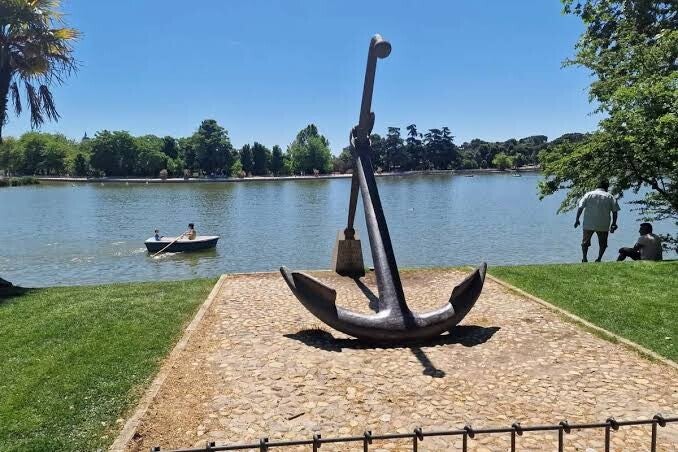
The lake is one of the park’s most popular areas. A walking path surrounds the water, while restaurants and terraces nearby offer refreshments and views.
The lake has recreational and sporting functions, but visitors must follow regulations concerning boating, fishing and access to the water. Swimming is not permitted. Municipal authorities have recently undertaken rehabilitation works around the lake, so some sections may occasionally be affected.
Explore the Woodland Trails
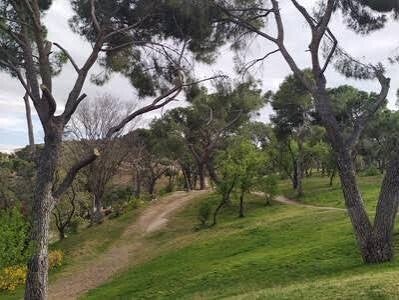
The park contains an extensive network of walking, running and cycling routes. Visitors can choose short lakeside walks or longer routes into quieter wooded areas.
Trails farther from the principal entrances may feel surprisingly rural. Carry water, use a navigation application or map and avoid unfamiliar isolated routes after dark.
Visit Cerro Garabitas
Cerro Garabitas is one of the park’s elevated areas. It is associated with the history of the Spanish Civil War and provides views across Madrid.
Visit Madrid Zoo Aquarium
Madrid Zoo Aquarium is located within Casa de Campo and requires a separate admission ticket. Opening hours and prices vary by season, date, ticket category and online promotion.
Visit Parque de Atracciones de Madrid
Madrid’s amusement park is also located inside Casa de Campo. It offers rides, family attractions and seasonal entertainment. The nearest Metro station is Batán on Line 10. Admission requires a separate ticket, and operating days vary considerably throughout the year.
Environmental Activities
The Casa de Campo Environmental Information and Education Centre offers exhibitions, guided walks, workshops and family activities.
Published public-attention hours can vary during the week. Some activities require advance registration, even when they are free.
Madrid Teleférico
The Madrid cable car traditionally links Paseo del Pintor Rosales with Casa de Campo and provides panoramic views of the Royal Palace, river and western Madrid.
However, the Teleférico is currently listed as temporarily closed for renovation work. Visitors should not plan their journey around it until an official reopening is announced.
Opening and Closing Times
Madrid Río
Madrid Río is an open public park and riverside corridor. Its general outdoor paths are normally accessible throughout the day and do not have conventional attraction-style opening and closing hours.
However:
- Children’s play areas may have usage restrictions.
- Water features operate seasonally.
- Sports facilities may have separate schedules.
- Matadero Madrid and other cultural venues maintain their own hours.
- Areas may close temporarily because of maintenance, flooding, extreme weather or public events.
For comfort and safety, visiting between sunrise and late evening is recommended.
Casa de Campo
Casa de Campo is open to pedestrians throughout the year without interruption. Private motor traffic is restricted, although authorised vehicles and access to specific attractions may operate under separate regulations.
Madrid Zoo Aquarium, Parque de Atracciones, sports centres, restaurants and environmental facilities each have their own opening times. Some operate daily during busy seasons but only on selected days during quieter periods.
Weather alerts, fire risk, maintenance work or public events can occasionally affect access to individual areas.
Entry Fees
General Park Admission
Entry to both Madrid Río and Casa de Campo is free.
There is no charge to:
- Walk through the parks
- Use general pedestrian paths
- Cycle on permitted routes
- Visit public viewpoints
- Walk around Casa de Campo Lake
- Cross the historic and modern bridges
- Use most ordinary public recreational spaces
Attractions Requiring Payment
Separate fees may apply to:
- Madrid Zoo Aquarium
- Parque de Atracciones de Madrid
- Matadero performances and ticketed exhibitions
- Sports facilities
- Bicycle rental
- Organised tours
- Boating or authorised water activities
- Special festivals and events
- Food and refreshments
Prices vary according to the date, visitor’s age, activity and booking method. Online tickets are often cheaper than tickets purchased at an attraction’s entrance.
How to Get There Locally
Madrid Río by Metro and Train
Because Madrid Río is several kilometres long, the best station depends on the section you intend to visit.
Useful stations include:
- Príncipe Pío – Metro Lines 6 and 10, Ramal and Cercanías
- Puerta del Ángel – Metro Line 6
- Marqués de Vadillo – Metro Line 5
- Pirámides – Metro Line 5 and Cercanías
- Legazpi – Metro Lines 3 and 6
- Almendrales – Metro Line 3
- Usera – Metro Line 6
For Matadero Madrid and the southern section of the park, Legazpi is generally the most convenient station. Matadero is also accessible from Madrid-Delicias railway station and several city-bus routes.
Casa de Campo by Metro
Useful stations include:
- Lago – Line 10: Best for Casa de Campo Lake and nearby restaurants.
- Casa de Campo – Lines 5 and 10: Convenient for the western side, zoo area and some trails.
- Batán – Line 10: Best for Parque de Atracciones.
- Príncipe Pío – Lines 6 and 10, Ramal and Cercanías: Convenient for entering through Puente del Rey and combining the park with Madrid Río.
- Alto de Extremadura – Line 6: Provides access from the southern side.
By Bicycle
Madrid Río is one of Madrid’s most useful cycling corridors. It connects with several urban cycling routes and provides access towards Casa de Campo.
BiciMAD stations can be found around the surrounding neighbourhoods, but docking availability changes throughout the day. Check whether your rental conditions permit the length and type of journey you intend to make.
By Bus
Numerous EMT buses serve Príncipe Pío, Legazpi, Marqués de Vadillo, Puerta del Ángel and the neighbourhoods surrounding both parks.
By Car
Public transport is usually more convenient. Much of Casa de Campo is closed to private through-traffic, and parking near popular entrances and attractions can become difficult on weekends and holidays.
Drivers must comply with Madrid’s low-emission and access regulations.
International Connections
From Madrid-Barajas Airport
Visitors arriving at Adolfo Suárez Madrid–Barajas Airport can take Metro Line 8 to Nuevos Ministerios.
From Nuevos Ministerios:
- Take Line 10 to Príncipe Pío, Lago, Batán or Casa de Campo.
- For southern Madrid Río and Matadero, continue through the Metro network to Legazpi.
A taxi or private transfer is more convenient for travellers carrying luggage, but journey times depend on traffic.
From Chamartín–Clara Campoamor Station
Metro Line 10 provides a direct connection from Chamartín to Príncipe Pío, Lago, Batán and Casa de Campo.
From Atocha Station
From Atocha, Cercanías trains connect to Pirámides and Príncipe Pío. For Matadero Madrid, visitors can use Metro Line 1 and change to Line 3 for Legazpi, or use local buses and taxis.
From International Coach Stations
Madrid’s coach terminals at Estación Sur, Avenida de América and Moncloa are connected to the Metro network. Moncloa is especially convenient for western Madrid and the northern approaches to Casa de Campo.
Suggested One-Day Itinerary
Morning: Casa de Campo
Begin at Lago Metro station and walk around Casa de Campo Lake. Continue along one of the marked woodland trails or visit the Environmental Information Centre.
Families may choose to spend part of the day at the zoo or amusement park, although either attraction can occupy most of a full day.
Lunch: Casa de Campo Lake
Have lunch at one of the restaurants close to the lake or carry a picnic. If picnicking, use an appropriate area and take all waste with you.
Afternoon: Puente del Rey and Madrid Río
Walk from the eastern side of Casa de Campo towards Puente del Rey. Continue along the river past the Royal Palace viewpoints, Puente de Segovia and Puente de Toledo.
Evening: Matadero Madrid
Complete the route at Matadero Madrid. Explore the cultural complex, check for an exhibition or performance and have dinner in the Legazpi area.
The complete route is long. Travellers with children, limited mobility or little time should select either the northern or southern section rather than attempting everything in one day.
Best Time to Visit
Spring and autumn offer the most comfortable temperatures for walking and cycling.
During summer:
- Visit early in the morning or later in the evening.
- Carry plenty of water.
- Wear sunscreen, sunglasses and a hat.
- Avoid strenuous activity during the hottest part of the afternoon.
During winter, temperatures can be cold in the morning and after sunset. Rain can make woodland trails muddy and slippery.
Weekday mornings are usually quieter. Weekends are livelier around Casa de Campo Lake, playgrounds and Matadero Madrid.
Dos When Visiting
- Wear comfortable walking shoes.
- Carry sufficient drinking water, especially in Casa de Campo.
- Use sunscreen and sun protection during warmer months.
- Download a map or use GPS before exploring distant woodland trails.
- Use marked pedestrian and cycling paths.
- Give way appropriately when sharing paths with walkers, runners and cyclists.
- Supervise children near the river, lake, bridges and cycle routes.
- Check weather alerts before visiting.
- Check attraction schedules separately before travelling.
- Respect wildlife and vegetation.
- Keep dogs under control and follow rules governing leads and designated areas.
- Dispose of rubbish responsibly.
- Use public transport whenever possible.
- Carry a charged mobile phone when exploring quieter areas.
- Choose daylight hours for long routes through Casa de Campo.
- Take photographs from safe locations, away from cycle lanes and road crossings.
Don’ts When Visiting
- Do not swim in the Manzanares River or Casa de Campo Lake.
- Do not light fires, barbecues or camping stoves outside expressly authorised conditions and areas.
- Do not disturb, feed or capture wildlife.
- Do not pick plants or damage trees.
- Do not litter or leave picnic waste behind.
- Do not cycle at excessive speed in pedestrian areas.
- Do not enter fenced, unstable or restricted Civil War structures.
- Do not walk alone on remote trails after dark.
- Do not assume every attraction is open daily.
- Do not rely on the Teleférico until its official reopening has been confirmed.
- Do not allow children to approach the river or lake unsupervised.
- Do not play loud music in natural or residential areas.
- Do not block pathways or bridges when taking photographs.
- Do not ignore heat warnings, storm alerts or temporary closures.
- Do not leave valuables unattended during sports, picnics or café visits.
Plan Your Madrid Holiday with Virtual World Travel Agency
Would you like to explore Madrid Río, Casa de Campo and the many other attractions of Madrid?
Virtual World Travel Agency can help you arrange accommodation, transport, car rental, sightseeing, activities, event tickets and a personalised holiday itinerary.
WhatsApp or call: +34 664 663 275
Email: info@virtual-world.pl
Holiday planner form:
Request a personalised holiday plan
Self-booking platform:
Book hotels, car rentals and events
Discover Madrid beyond its historic centre. Walk beside the Manzanares, cycle through landscaped gardens, enjoy the woodland of Casa de Campo and experience the greener side of Spain’s vibrant capital with Virtual World Travel Agency.
Add comment
Comments