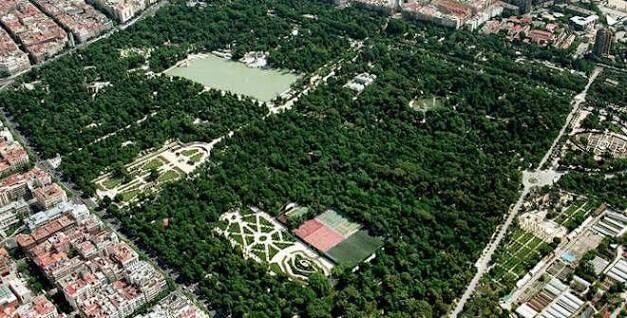
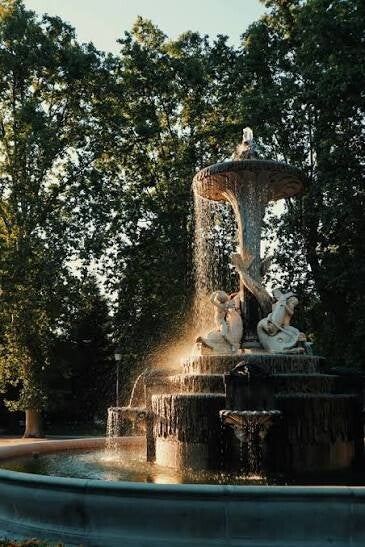
El Retiro Park—Parque de El Retiro or Jardines del Buen Retiro—is Madrid’s most celebrated historic park and one of the finest urban green spaces in Europe.
Covering approximately 125 hectares and containing more than 15,000 trees, El Retiro combines royal history, monumental architecture, ornamental gardens, lakes, fountains, sculptures, exhibition halls, children’s play areas and recreational facilities.
It is an ideal destination for couples, families, solo travellers, photographers, runners, art lovers and anyone seeking a peaceful break from Madrid’s busy streets.
Since 2021, El Retiro and Paseo del Prado have jointly formed the UNESCO World Heritage cultural landscape known as the Landscape of Light.
A Brief History of El Retiro Park
The history of El Retiro is closely connected with the Spanish monarchy.
During the seventeenth century, King Philip IV and his powerful minister, the Count-Duke of Olivares, developed a royal recreational estate on the eastern side of Madrid.
The complex became known as the Buen Retiro Palace, meaning “Palace of the Pleasant Retreat.” It provided the king and royal court with a place for relaxation, entertainment and ceremonial occasions away from the formal environment of the Royal Alcázar.
Construction began during the 1630s. The palace complex included:
- Royal apartments
- Formal gardens
- Pavilions
- Theatres
- Artificial lakes
- Performance spaces
- Areas for mock naval battles
- Spaces for court celebrations
The large lake now known as the Estanque Grande was used for royal entertainment, water performances and staged naval spectacles.
Much of the palace was damaged during the Peninsular War in the early nineteenth century, when French forces occupied the area. Only a few important buildings survived, including the Casón del Buen Retiro and the Salón de Reinos.
The gardens remained connected to the monarchy until the political revolution of 1868, when Queen Isabella II was removed from the throne. The state transferred ownership of the park to Madrid City Council on 8 November 1868, making it a public park.
During the nineteenth and twentieth centuries, the park was redesigned and expanded with fountains, gardens, exhibition buildings, monuments and public amenities.
El Retiro and UNESCO’s Landscape of Light
On 25 July 2021, UNESCO recognised El Retiro Park and Paseo del Prado as a World Heritage cultural landscape.
Known as the Landscape of Light, the area demonstrates the relationship between:
- Nature
- Science
- Art
- Education
- Public recreation
- Urban planning
The designation acknowledges how gardens, scientific institutions, museums and public spaces were brought together within Madrid’s urban environment.
Where Is El Retiro Park Located?
The park is situated immediately east of Madrid’s historic centre.
A commonly listed address is:
Plaza de la Independencia, 7
28001 Madrid
Spain
However, El Retiro is very large and has numerous entrances along:
- Calle de Alcalá
- Calle de O’Donnell
- Avenida de Menéndez Pelayo
- Calle de Alfonso XII
- Plaza de la Independencia
The best entrance depends on what you want to see first.
Puerta de la Independencia
Best for:
- Puerta de Alcalá
- Parterre Garden
- Central park routes
Puerta de Alcalá
Convenient for visitors arriving from Calle de Alcalá or Retiro Metro station.
Puerta de España
Best for:
- Estanque Grande
- Monument to Alfonso XII
- Paseo de la Argentina
Puerta de Felipe IV
Best for:
- Parterre Garden
- Prado Museum
- Church of San Jerónimo el Real
Puerta del Ángel Caído
Convenient for:
- Fountain of the Fallen Angel
- Rose Garden
- Atocha side of the park
Entrances on Avenida de Menéndez Pelayo
Useful for:
- Sports facilities
- Children’s play areas
- Cecilio Rodríguez Gardens
- Residential Retiro neighbourhood
Connecting with El Retiro Locally
By Metro
The most useful Metro stations are:
Retiro
- Line 2
- Convenient for the northern and northwestern entrances
Ibiza
- Line 9
- Useful for the eastern side of the park
Estación del Arte
- Line 1
- Convenient for the Prado Museum, Atocha and southwestern entrances
Atocha
- Line 1
- Useful for the southern side
Other stations within walking distance include:
- Banco de España
- Príncipe de Vergara
- Sainz de Baranda
Madrid’s official visitor information identifies Atocha, Estación del Arte, Ibiza and Retiro among the principal Metro connections.
By Cercanías Train
Use Madrid-Atocha station and walk towards the southern or southwestern entrances.
Depending on the exit and destination within the park, the walk may take approximately 10–20 minutes.
By Bus
Many EMT bus routes serve the roads surrounding El Retiro. Useful services include:
- 001
- 1
- 2
- 9
- 10
- 14
- 15
- 19
- 20
- 26
- 27
- 28
- 32
- 34
- 37
- 45
- 51
- 52
- 53
- 61
- 63
- 74
- 146
- 150
- 152
- 203
- C1
- C2
- C03
- E1
The best route depends on your chosen entrance. Check Madrid’s official transport planner on the day of travel.
By Bicycle
BiciMAD docking stations are available around the park, including near:
- Retiro Metro
- Calle Espalter
- Prado Museum
- Puerta del Ángel Caído
- Jardines de Cecilio Rodríguez
- Avenida de Menéndez Pelayo
- Ibiza
Cycling may be permitted on designated park routes, but cyclists must respect pedestrians, speed restrictions and temporary controls.
By Taxi
Ask the driver for the specific entrance or landmark you want to visit, such as:
- Puerta de la Independencia
- Estanque del Retiro
- Palacio de Cristal
- Puerta del Ángel Caído
Simply requesting “Retiro Park” may leave you far from your preferred attraction.
Connecting with Madrid Internationally
By Air
International visitors usually arrive through Adolfo Suárez Madrid-Barajas Airport.
The airport is connected to central Madrid by:
- Metro
- Cercanías commuter train from Terminal 4
- Airport Express bus
- EMT public buses
- Official taxis
- Private transfers
- Recognised ride-booking services
Visitors using the Airport Express bus can travel towards Atocha and continue to the park on foot or by local transport.
Metro passengers can connect to Retiro, Ibiza, Estación del Arte or Atocha stations.
By International and High-Speed Train
Madrid-Puerta de Atocha-Almudena Grandes is the closest major long-distance railway station to El Retiro.
High-speed services connect Madrid with:
- Barcelona
- Valencia
- Seville
- Málaga
- Zaragoza
- Alicante
- Granada
- Córdoba
- Other Spanish destinations
International railway passengers commonly connect through Barcelona or northern Spain.
Visitors arriving at Madrid-Chamartín-Clara Campoamor can continue to Atocha by Cercanías or use the Metro.
By Long-Distance Coach
Major coach stations include:
- Estación Sur de Autobuses
- Avenida de América
- Moncloa
Continue by Metro, EMT bus or taxi.
El Retiro Park Opening and Closing Times
El Retiro opens every day, subject to weather and safety conditions.
Spring and Summer: April to September
06:00–00:00
Autumn and Winter: October to March
06:00–22:00
Visitors should begin moving towards an exit before closing time. Gates are locked after the park closes.
Individual gardens, exhibition halls, libraries, cafés, sports centres and visitor facilities within the park follow their own schedules.
Weather-Related Closures
El Retiro may be partially or completely closed during hazardous weather, particularly when there are:
- Strong winds
- Extreme temperatures
- Storms
- Risks from falling branches
- Other dangerous meteorological conditions
Certain areas may be cordoned off even when the wider park remains open.
Madrid City Council updated its adverse-weather protocol in June 2026. Alerts and closures are communicated through official municipal channels, the city’s geoportal and information screens positioned near park entrances.
Never enter a closed or cordoned area. Check the park’s status before travelling, especially on windy or stormy days.
El Retiro Park Entry Fees
General Park Admission
Free
There is no charge to enter the park, walk through its public gardens or visit its outdoor monuments.
Palacio de Velázquez
Admission to exhibitions is generally free.
Palacio de Cristal
Admission is normally free, but the building may close for restoration, installation work or safety reasons.
Rowing Boats
Hiring a rowing boat on the Estanque Grande requires payment.
Prices, schedules and operating conditions may change according to season, maintenance and weather. Check the official booking service or lake ticket office on arrival.
Guided Tours and Activities
Some Madrid City Council walking tours are free but require advance registration.
Private tours, sports facilities, workshops, restaurants and special experiences may charge separate fees.
Essential Things to See
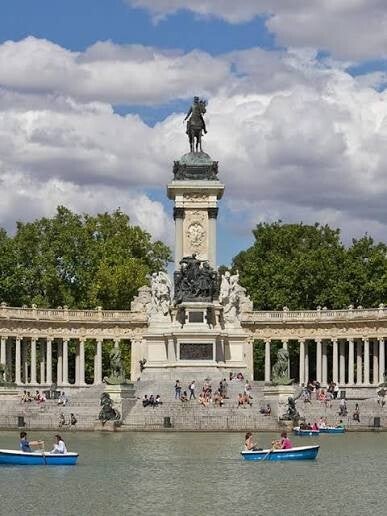
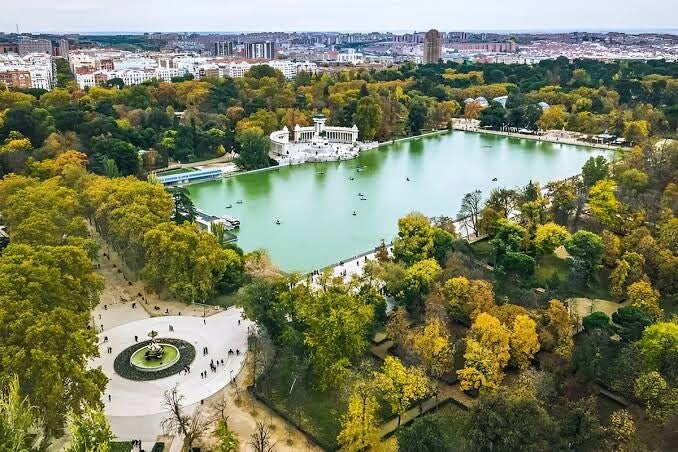
Estanque Grande
The Great Pond is one of El Retiro’s most recognisable features.
Visitors can:
- Walk around the lake
- Hire a rowing boat
- Watch canoeing and training activities
- Relax at nearby cafés
- Photograph the Monument to Alfonso XII
The lake was originally developed for royal water spectacles and court entertainment.
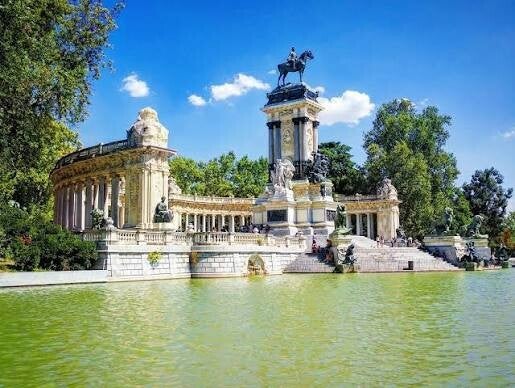
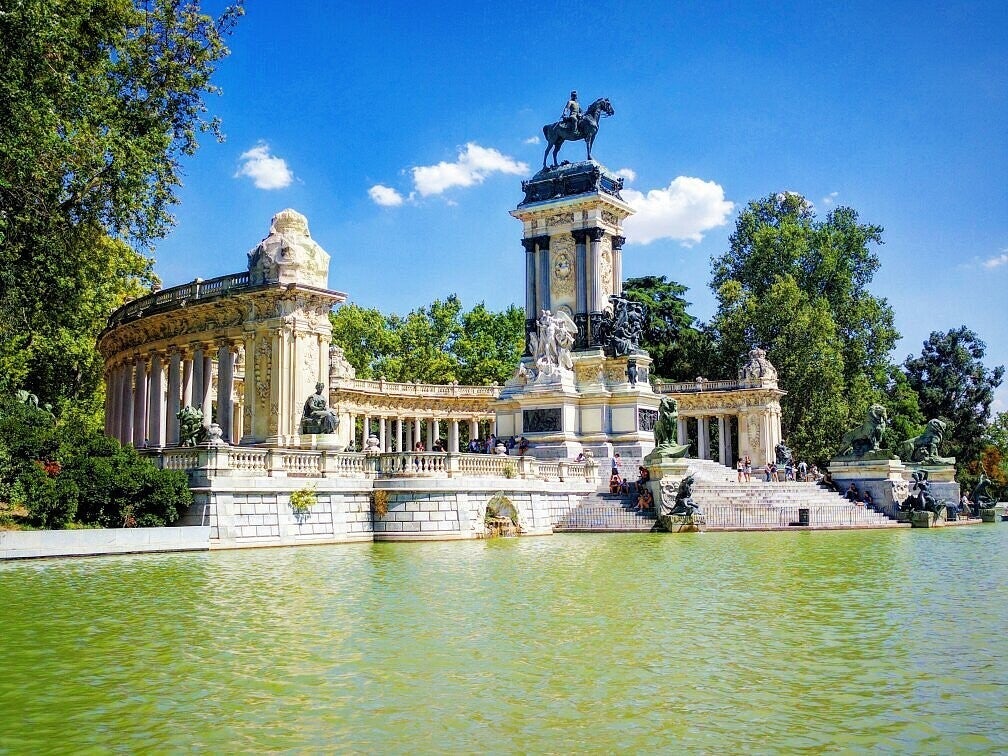
Monument to Alfonso XII
This monumental colonnade overlooks the eastern side of the lake.
Designed by architect José Grasés Riera, it consists of an equestrian statue of King Alfonso XII surrounded by columns and sculptural groups.
The steps facing the lake are a popular meeting and relaxation place.
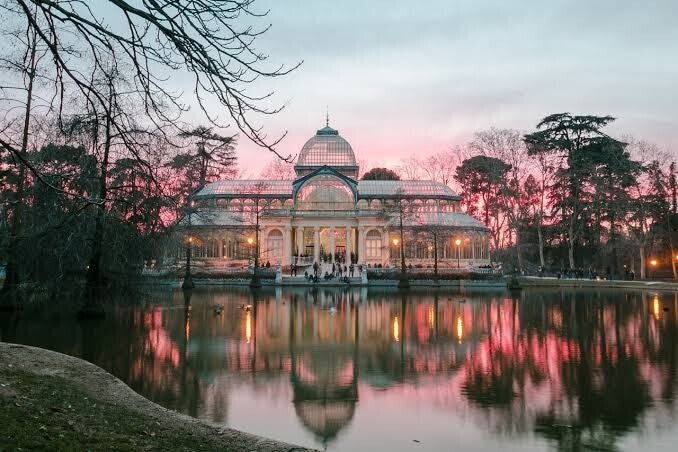
Palacio de Cristal
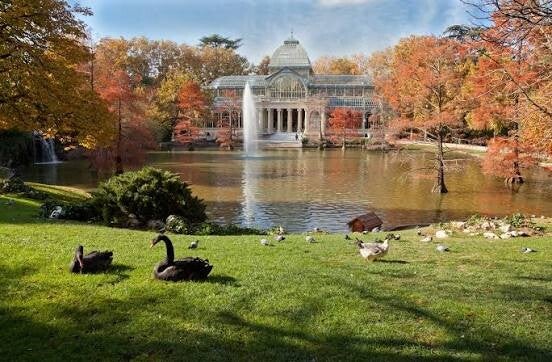
The Crystal Palace was designed by Ricardo Velázquez Bosco for the 1887 Philippine Exposition.
It was originally created as a greenhouse for tropical plants. Its iron, glass and ceramic structure makes it one of Spain’s finest examples of nineteenth-century iron architecture.
It is now used by the Reina Sofía Museum for contemporary art installations.
Palacio de Velázquez
Also designed by Ricardo Velázquez Bosco, the building opened for the 1883 National Mining Exhibition.
Its combination of brick, iron, glass and decorative ceramics reflects late nineteenth-century exhibition architecture.
It now hosts temporary exhibitions organised by the Reina Sofía Museum.
Fountain of the Fallen Angel
The Fuente del Ángel Caído depicts Lucifer falling from Heaven.
The sculpture was created by Ricardo Bellver and inspired by John Milton’s Paradise Lost. It is one of the park’s most unusual monuments.
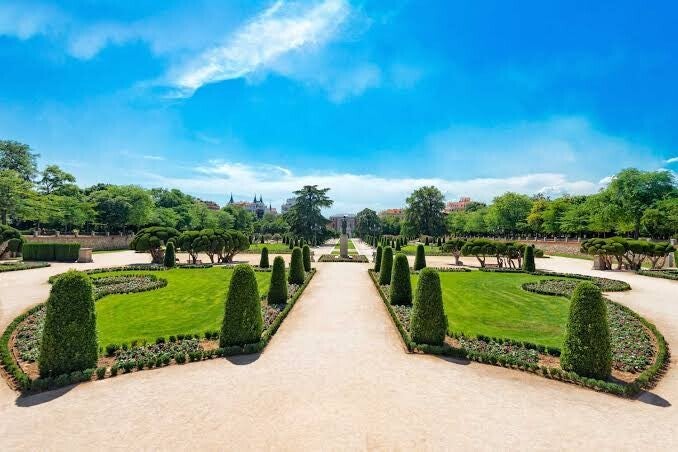
Parterre Garden
The formal French-style Parterre occupies the site of part of the former Buen Retiro Palace gardens.
Its carefully arranged hedges, paths and trees offer a contrast to the more naturalistic sections of the park.
The Historic Ahuehuete
The Parterre contains an old Mexican cypress traditionally regarded as one of Madrid’s oldest trees.
Stories connect it with the Napoleonic occupation, although some details belong to local tradition rather than fully documented history.
Ancient Olive Tree
The park also contains an olive tree estimated to be more than 600 years old. It was planted near Puerta del Ángel Caído and is now considered the oldest living tree in El Retiro.
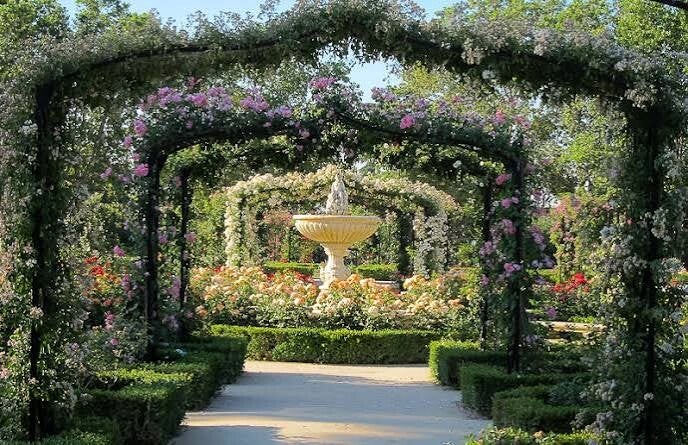
Rosaleda
The Rose Garden contains numerous varieties of roses arranged around paths, fountains and decorative structures.
Late spring and early summer generally provide the best display.
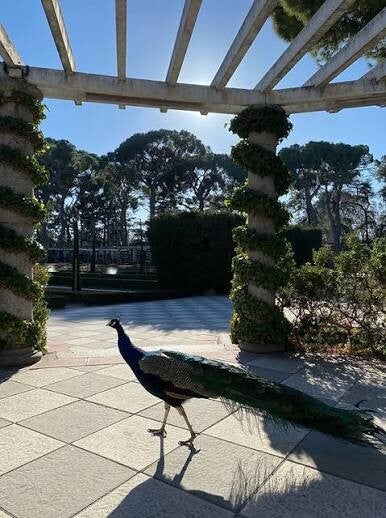
Cecilio Rodríguez Gardens
These enclosed classical gardens feature:
- Formal landscaping
- Fountains
- Pergolas
- Sculptures
- Peacocks
Their opening times may be shorter than those of the main park.
Jardines de Herrero Palacios
These gardens occupy part of the former Casa de Fieras—Madrid’s historic zoological garden.
Some structures associated with the old zoo remain visible.
Montaña de los Gatos
This artificial hill and landscaped area was originally developed during the nineteenth century. It has undergone restoration and provides another example of El Retiro’s changing recreational design.
Fisherman’s House
The colourful Casita del Pescador stands beside a small pond in the romantic garden created for King Ferdinand VII.
Bosque del Recuerdo
The Forest of Remembrance honours the victims of the terrorist attacks in Madrid on 11 March 2004, as well as the police officer killed during the later Leganés operation.
It is a place for silence and reflection.
Teatro de Títeres
The park’s puppet theatre presents family programmes, especially during weekends and holidays.
Performance times and ticket arrangements should be checked in advance.
Activities in El Retiro
Visitors can enjoy:
- Walking
- Jogging
- Rowing
- Cycling
- Skating
- Outdoor reading
- Photography
- Birdwatching
- Family play areas
- Art exhibitions
- Puppet theatre
- Guided botanical walks
- Cultural activities
- Seasonal events
The park contains cafés, kiosks, terraces, picnic areas, public facilities and sports spaces.
Suggested Two-Hour Walking Route
- Enter through Puerta de la Independencia.
- Walk through the Parterre Garden.
- Continue to the Estanque Grande.
- See the Monument to Alfonso XII.
- Walk towards Palacio de Velázquez.
- Continue to Palacio de Cristal.
- Visit the Fountain of the Fallen Angel.
- Exit towards Atocha or the Prado Museum.
Suggested Half-Day Visit
- Begin at Puerta de Alcalá.
- Enter through Puerta de la Independencia.
- Explore the Parterre.
- Walk along Paseo de la Argentina.
- Hire a rowing boat, if available.
- Visit Palacio de Velázquez.
- See Palacio de Cristal.
- Explore the Cecilio Rodríguez Gardens.
- Visit the Rose Garden.
- Pause at the Bosque del Recuerdo.
- Exit towards Atocha or Barrio de las Letras.
Best Time to Visit
Spring
Excellent for flowers, comfortable temperatures and the Rose Garden.
Summer
Visit early in the morning or during the evening. Midday heat can be intense.
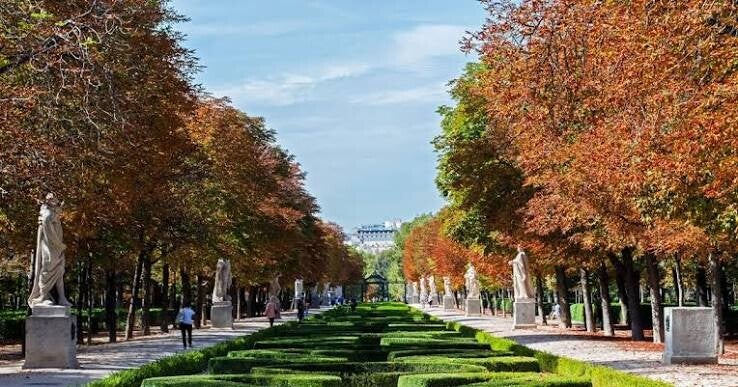
Autumn
One of the most attractive seasons because of the changing leaf colours.
Winter
The park is quieter, although daylight hours are shorter and some facilities operate reduced schedules.
Early Morning
Best for:
- Jogging
- Quiet walks
- Birdwatching
- Photography
- Avoiding crowds
Late Afternoon
Best for:
- Warm photographic light
- Social atmosphere
- Lakeside relaxation
- Combining the park with an evening meal
Dos When Visiting
- Check the official weather-alert status before travelling.
- Wear comfortable walking shoes.
- Carry water, especially during summer.
- Use sunscreen and a hat in hot weather.
- Download or photograph a park map.
- Choose your entrance according to the attractions you want to see.
- Follow marked paths and safety signs.
- Respect cordoned areas.
- Supervise children near lakes and fountains.
- Keep dogs under control and follow posted rules.
- Use designated dog areas where appropriate.
- Dispose of rubbish in the correct bins.
- Respect plants, trees and wildlife.
- Keep to a safe speed when cycling or skating.
- Give pedestrians priority.
- Check exhibition-building hours separately.
- Reserve guided activities in advance.
- Carry a light layer outside summer.
- Leave enough time to reach an exit before closing.
- Use the park’s new QR-based audio guide and interactive maps where available.
Don’ts When Visiting
- Do not enter during an official weather closure.
- Do not cross barriers or enter cordoned areas.
- Do not shelter beneath large trees during strong winds or storms.
- Do not climb trees, monuments or historic structures.
- Do not pick flowers or remove plants.
- Do not feed birds or other wildlife.
- Do not swim in the lake or fountains.
- Do not enter the water outside authorised boating activities.
- Do not leave children unattended near the lake.
- Do not cycle at excessive speed.
- Do not block busy pathways.
- Do not play amplified music at a disruptive volume.
- Do not leave litter or food waste.
- Do not light fires or use unauthorised barbecues.
- Do not damage lawns, garden beds or sculptures.
- Do not fly drones without formal permission.
- Do not assume every internal garden or exhibition space follows the main park schedule.
- Do not photograph private events or individuals closely without permission.
- Do not rely on an old weather forecast or opening schedule.
- Do not wait until closing time to begin finding an exit.
Combining El Retiro with Nearby Attractions
A well-planned day can include:
Morning
- Prado Museum
- Church of San Jerónimo el Real
Lunch
- Barrio de las Letras
- Paseo del Prado
- Park café or terrace
Afternoon
- El Retiro Park
- Palacio de Cristal
- Estanque Grande
Evening
- Puerta de Alcalá
- Cibeles Palace
- Gran Vía
- Salamanca district
Alternatively, combine El Retiro with the Thyssen-Bornemisza Museum, Royal Botanical Garden or Reina Sofía Museum.
Book Your Madrid Holiday with Virtual World Travel Agency
Would you like to experience El Retiro Park and Madrid’s other unforgettable historical, cultural and natural attractions?
Virtual World Travel Agency can assist you with accommodation, car rentals, event tickets, customised itineraries and memorable Madrid holidays.
WhatsApp or Call: +34 664 663 275
Email: info@virtual-world.pl
Holiday Planner Form:
Plan your holiday with us
Self-Booking Platform for Hotels, Car Rentals and Events:
Book hotels, car rentals and events online
Virtual World Travel Agency — helping you travel with confidence, convenience and unforgettable experiences.
Add comment
Comments