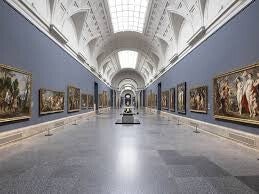
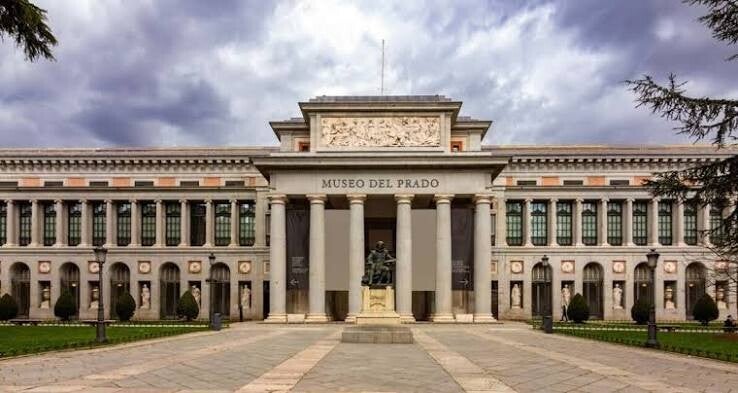
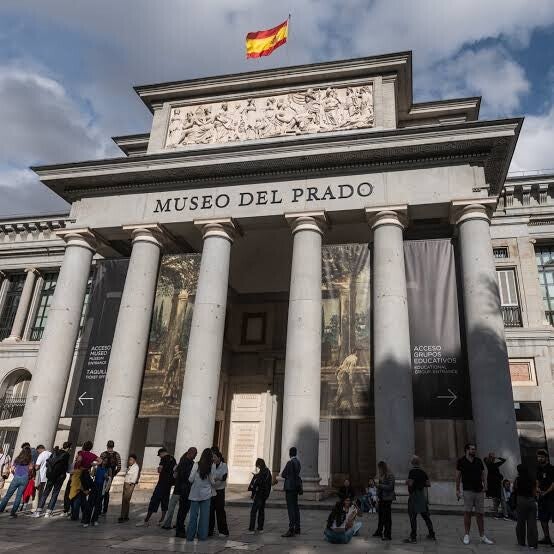
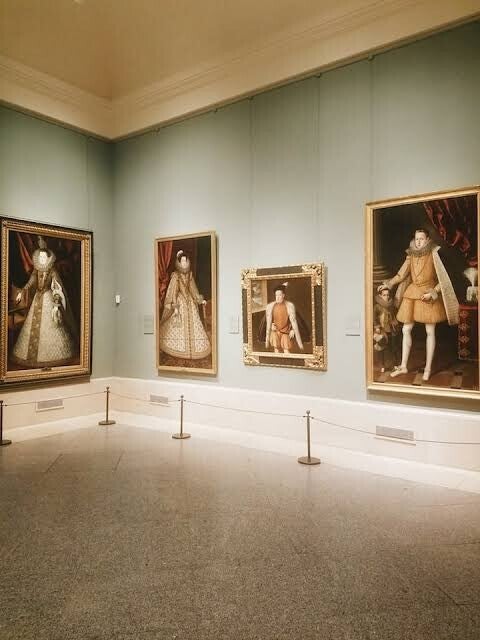
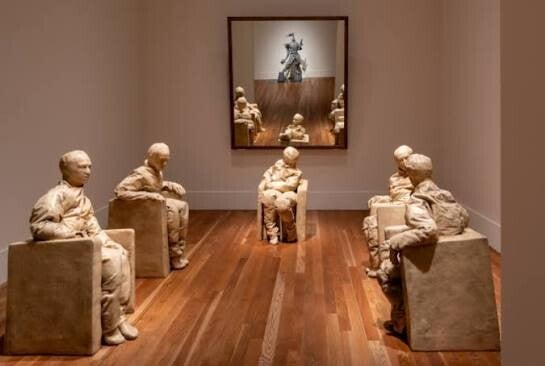
The Museo Nacional del Prado is one of the world’s greatest art museums and an essential destination for anyone visiting Madrid. Its galleries contain masterpieces by Velázquez, Goya, El Greco, Rubens, Titian, Bosch, Raphael, Fra Angelico and many other celebrated European artists.
The Prado is not simply a building filled with beautiful paintings. It is also a record of Spanish royal collecting, European political relationships, Catholic spirituality and the development of Western art from the Middle Ages to the nineteenth century.
Because its collection is enormous, a successful visit requires some planning. Rather than attempting to see every gallery, choose a selection of artists and masterpieces that match your interests.
A Brief History of the Prado Museum
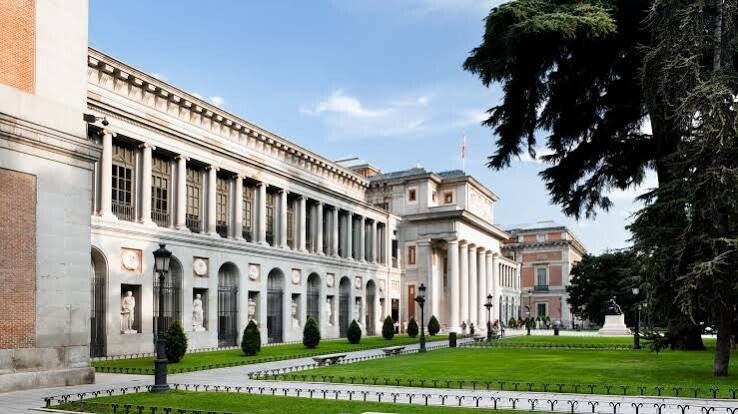
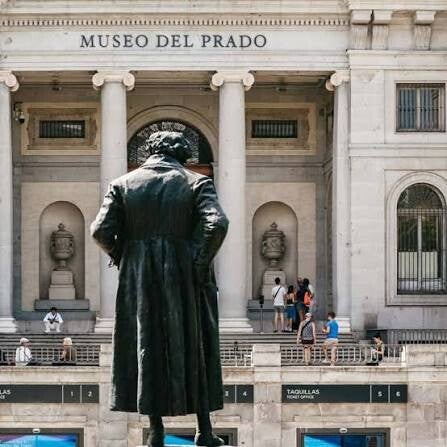
The Prado’s principal building was designed by the Spanish architect Juan de Villanueva in 1785.
King Charles III commissioned it as part of an ambitious plan to create an area devoted to science and knowledge along the Paseo del Prado. The building was originally intended to house the Royal Cabinet of Natural History rather than an art museum.
Construction was interrupted during the Peninsular War, when Napoleon’s forces occupied Madrid. The building suffered damage and was used for military purposes.
King Ferdinand VII later decided to convert it into a museum for the Spanish royal art collection. His wife, Queen María Isabel of Braganza, strongly encouraged the creation of the new institution.
It opened to the public on 10 November 1819 as the Royal Museum of Painting and Sculpture. Its first catalogue contained 311 paintings, although the royal collection was considerably larger.
The museum was renamed the Museo Nacional del Prado. Its holdings grew through royal collections, acquisitions, donations and the transfer of artworks from other institutions.
During the Spanish Civil War, many important artworks were removed from the galleries and protected in the museum’s basement. As the danger increased, selected works were evacuated from Madrid to Valencia, Catalonia and eventually Geneva. They were safely returned to Spain after the war.
The museum celebrated its 200th anniversary in 2019. Today, its holdings include approximately 8,600 paintings and more than 700 sculptures, alongside drawings, prints, decorative arts, photographs and archival material.
The Museum’s Architecture
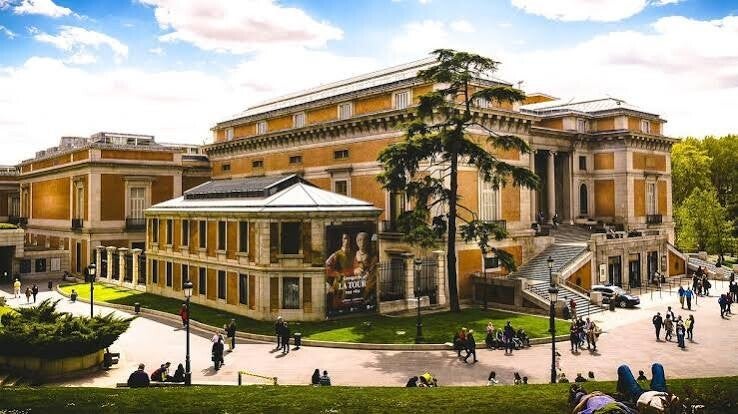
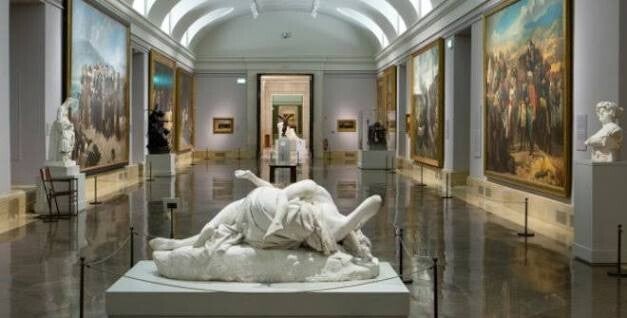
The historic Villanueva Building remains the centre of the Prado Museum.
A major extension designed by architect Rafael Moneo opened in 2007. It connects the museum with the restored cloister of the nearby Church of San Jerónimo el Real.
The extension provides space for:
- Temporary exhibitions
- Restoration facilities
- An auditorium
- Visitor services
- A café and restaurant
- Museum offices
The Prado also manages the Casón del Buen Retiro, a surviving section of the former Buen Retiro Palace. It now houses the museum’s library and research facilities.
Where Is the Prado Museum Located?
Museo Nacional del Prado
Paseo del Prado, s/n
28014 Madrid
Spain
The museum stands along the Paseo del Prado, one of Madrid’s most important cultural avenues.
It forms part of the city’s Golden Triangle of Art, together with:
- Thyssen-Bornemisza National Museum
- Reina Sofía National Art Centre Museum
The Prado also lies within the Landscape of Light, the cultural landscape formed by Paseo del Prado and El Retiro Park that was inscribed on the UNESCO World Heritage List in 2021.
Nearby attractions include:
- El Retiro Park
- Royal Botanical Garden
- Cibeles Palace
- Neptune Fountain
- Church of San Jerónimo el Real
- CaixaForum Madrid
- Congress of Deputies
- Barrio de las Letras
- Atocha railway station
How to Get There Locally
By Metro
The nearest Metro stations are:
Estación del Arte
- Line 1
- Approximately 10 minutes on foot
Atocha
- Line 1
- Convenient for travellers arriving near the railway station
Banco de España
- Line 2
- Approximately 10–15 minutes on foot along Paseo del Prado
Estación del Arte is normally the most convenient Metro station for the museum.
By Cercanías Train
Use Madrid-Atocha station and walk north along Paseo del Prado.
The walking time is approximately 10–15 minutes, depending on the station exit and your pace.
By Bus
Numerous EMT bus routes serve Paseo del Prado and surrounding streets, including:
- 001
- 6
- 10
- 14
- 19
- 26
- 27
- 32
- 34
- 37
- 45
- C03
- E1
Several night-bus routes also serve the wider area. Routes can change because of events and roadworks, so consult Madrid’s official transport planner before travelling.
By Bicycle
BiciMAD docking stations are available around:
- Calle Felipe IV
- Calle Espalter
- Calle Almadén
- Calle Jesús
- Cuesta de Moyano
Bicycles must be parked in an authorised location. They cannot be taken inside the museum.
By Taxi
Ask the driver for Museo del Prado or Paseo del Prado. Use an official Madrid taxi or recognised ride-booking service.
On Foot
Approximate walking times are:
- El Retiro Park: 5–10 minutes
- Thyssen-Bornemisza Museum: 5–10 minutes
- Reina Sofía Museum: 15 minutes
- Atocha station: 10–15 minutes
- Puerta del Sol: 15–20 minutes
- Plaza Mayor: 25 minutes
- Gran Vía: 20–25 minutes
- Cibeles Palace: 10 minutes
Connecting with Madrid Internationally
By Air
International visitors normally arrive through Adolfo Suárez Madrid-Barajas Airport.
The airport is connected to central Madrid by:
- Metro
- Cercanías commuter train from Terminal 4
- Airport Express bus
- EMT public buses
- Official taxis
- Private transfers
- Recognised ride-booking platforms
A convenient option from Terminal 4 is to take a Cercanías train towards Madrid-Atocha and then walk or continue by local transport.
The Airport Express bus also stops near Atocha, providing relatively easy access to the Prado district.
By International and High-Speed Train
Madrid-Puerta de Atocha-Almudena Grandes is the city’s principal station for many high-speed and long-distance services. It is within walking distance of the Prado Museum.
High-speed trains connect Madrid with:
- Barcelona
- Valencia
- Seville
- Málaga
- Zaragoza
- Alicante
- Córdoba
- Granada
- Numerous other Spanish destinations
International rail passengers commonly connect through Barcelona or another northern Spanish station.
Travellers arriving at Madrid-Chamartín-Clara Campoamor can continue to Atocha by Cercanías train or use the Metro.
By Long-Distance Coach
Coaches arrive at stations including:
- Estación Sur de Autobuses
- Avenida de América
- Moncloa
Continue by Metro, EMT bus or taxi.
Prado Museum Opening and Closing Times
The museum’s regular opening hours are:
Monday to Saturday
10:00–20:00
Sundays and Public Holidays
10:00–19:00
The ticket office opens at approximately 09:45.
Visitors are admitted until 30 minutes before closing. The museum begins clearing the galleries approximately 10 minutes before closing time.
Full Closing Days
The museum is closed on:
- 1 January
- 1 May
- 25 December
Reduced Opening Hours
On the following dates, the museum normally opens from 10:00–14:00:
- 6 January
- 24 December
- 31 December
Opening arrangements may change because of exceptional circumstances, maintenance or official events. Check the Prado’s official website before travelling.
Prado Museum Entry Fees
General Admission
€15
The general ticket normally provides access to the permanent collection and temporary exhibitions included in the museum visit.
General Admission with Official Guidebook
€24
Reduced Admission
€7.50
Reduced admission may apply to eligible visitors, including certain students and qualifying members of large families. Documentary evidence is required.
Audio Guide
The audio-guide service is generally available for an additional €5.
Guided Collection Visit
Official guided visits may be available for the admission price plus approximately €10 per person.
The schedule, language and availability should be checked when reserving.
Free Admission Periods
Free general admission is usually available to all visitors during the final two hours of the day:
- Monday to Saturday: 18:00–20:00
- Sundays and public holidays: 17:00–19:00
Free-entry periods are extremely popular. Queues can be long, and admission remains subject to capacity. Arriving early is advisable.
A free ticket may not include every temporary exhibition or special activity. Check the conditions when booking.
Other Free-Admission Categories
The museum offers free admission to several qualifying groups, subject to current conditions and documentation. These may include:
- Visitors under 18
- Eligible students aged 18–25
- Visitors with recognised disabilities
- An essential companion of a qualifying visitor with a disability
- Unemployed persons with official documentation
- Certain teachers
- Members of qualifying museum and heritage organisations
- Accredited professional guides
- Journalists engaged in professional work
Entitlement conditions can change. Consult the official Prado website and bring valid identification.
Art Walk Pass
Visitors planning to see Madrid’s three principal art museums may consider the Paseo del Arte Pass.
It includes one visit to:
- Prado Museum
- Thyssen-Bornemisza National Museum
- Reina Sofía Museum
The published price is approximately €32.80, but confirm the current price and validity before purchasing.
What to See at the Prado Museum
The museum is too extensive to cover fully in one short visit. Select the works that interest you most.
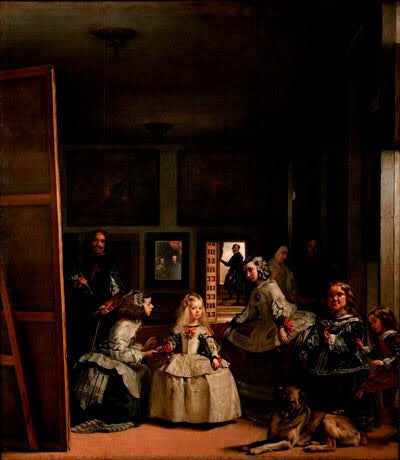
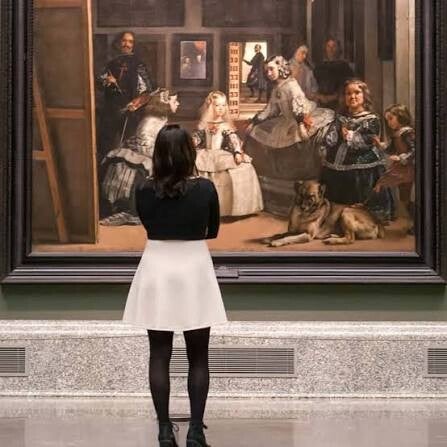
Las Meninas by Diego Velázquez
Painted in 1656, Las Meninas is one of the most studied paintings in Western art.
It presents the Infanta Margarita with her attendants while Velázquez appears painting a large canvas. The mirror, viewpoints, relationships between the figures and implied presence of the king and queen create a complex meditation on art, reality and royal authority.
The Third of May 1808 by Francisco de Goya
Goya’s powerful painting depicts the execution of Spanish civilians by French troops following the Madrid uprising against Napoleon’s occupation.
It is a landmark image of war, suffering and resistance.
The Family of Charles IV by Francisco de Goya
This large royal portrait combines ceremony, personality and careful observation. Goya included himself in the background, recalling Velázquez’s presence in Las Meninas.
The Garden of Earthly Delights by Hieronymus Bosch
This extraordinary triptych moves from the Garden of Eden through a mysterious world of pleasure to a terrifying vision of Hell.
Its symbolism continues to inspire scholarly debate.
The Descent from the Cross by Rogier van der Weyden
This masterpiece of Early Netherlandish painting is renowned for its emotional intensity, precise detail and carefully arranged figures.
The Annunciation by Fra Angelico
Fra Angelico’s work combines spiritual stillness, delicate colour, architecture and garden symbolism.
The Nobleman with His Hand on His Chest by El Greco
This portrait is one of El Greco’s best-known paintings and an enduring image of Spanish dignity and identity.
Titian’s Mythological Paintings
The Prado contains an exceptional collection by Titian, largely connected with commissions and collecting by Spanish monarchs.
Rubens and Flemish Painting
The museum’s Flemish collection reflects the political relationships between the Spanish monarchy and the Low Countries. It includes important works by Rubens, Van Dyck, the Bruegel family and other artists.
Goya’s Black Paintings
These unsettling paintings originally decorated the walls of Goya’s home, Quinta del Sordo. They include Saturn Devouring His Son and other deeply personal, haunting images.
Suggested Routes Through the Museum
One-Hour Highlights Visit
Concentrate on:
- Fra Angelico
- Bosch
- Titian
- El Greco
- Velázquez
- Rubens
- Goya
Choose approximately eight to ten works. Do not attempt to see the entire building.
Two-Hour Visit
Add:
- Early Netherlandish painting
- Spanish Golden Age painting
- Italian Renaissance works
- Goya’s portraits and Black Paintings
Three-Hour Visit
Include:
- Sculpture
- Decorative arts
- Nineteenth-century Spanish painting
- A temporary exhibition
- Time for a café break
Madrid’s official tourism service notes that the Prado provides suggested one-, two- and three-hour itineraries because of the size of its collection.
Best Time to Visit
At Opening Time
Arrive before 10:00 with a timed ticket. The museum generally becomes busier later in the morning.
Around Lunchtime
Some visitors leave for lunch, although school and tour groups may still be present.
Late Afternoon
The museum may become busy as the free-entry period approaches.
Weekdays
Weekday mornings outside major holidays usually provide a calmer experience than weekends.
Free-Entry Hours
These are ideal for budget-conscious visitors but not necessarily for a quiet experience. Expect queues and reduced time inside.
Visitor Services
The Prado provides:
- Information desks
- Lifts
- Accessible routes
- Wheelchairs
- Cloakrooms and lockers
- Audio guides
- Guided visits
- Free Wi-Fi
- Café and restaurant facilities
- Museum shops
- Baby-changing facilities
- Nursing facilities
Visitors with accessibility requirements should check the museum’s accessible-visit information before arrival.
Dos When Visiting
- Purchase a timed ticket in advance.
- Use only the Prado’s official website or authorised sellers.
- Arrive at least 15–20 minutes before your reserved entry.
- Bring identification if claiming reduced or free admission.
- Decide which masterpieces you want to see before arriving.
- Download or study the museum map.
- Wear comfortable shoes.
- Use the cloakroom or lockers when instructed.
- Keep your voice low in the galleries.
- Follow the recommended visitor route.
- Stand at a respectful distance from the artworks.
- Make space for other visitors.
- Bring earphones if using a digital guide.
- Ensure your phone is charged.
- Take occasional breaks to prevent museum fatigue.
- Check the temporary-exhibition programme.
- Ask museum staff for help rather than entering restricted areas.
- Allow at least two hours for a first visit.
Don’ts When Visiting
- Do not take photographs or record videos in the museum galleries. Prado regulations prohibit photography and filming in the galleries.
- Do not use flash, tripods or selfie sticks.
- Do not touch paintings, frames, sculptures or display cases.
- Do not bring large luggage into the galleries.
- Do not carry a backpack on your back where it might strike an artwork.
- Do not bring food or uncovered drinks into exhibition areas.
- Do not smoke or use electronic cigarettes.
- Do not make or receive loud telephone calls.
- Do not play music through speakers.
- Do not run in the galleries.
- Do not block doorways or stand too close to paintings for extended periods.
- Do not use pens near works of art; use a pencil if sketching is permitted.
- Do not bring animals except authorised assistance animals.
- Do not expect to see the entire collection in one visit.
- Do not wait until the final 30 minutes to arrive.
- Do not depend on an old printed map, price list or exhibition schedule.
Combining the Prado with Nearby Attractions
A well-planned day can include:
Morning
- Prado Museum
- Church of San Jerónimo el Real
Lunch
- Barrio de las Letras
- Museum café
- Paseo del Prado area
Afternoon
Choose one:
- El Retiro Park
- Royal Botanical Garden
- Thyssen-Bornemisza Museum
- CaixaForum Madrid
- Reina Sofía Museum
Trying to visit all three major art museums properly in one day can be exhausting. Two days provide a more enjoyable experience.
Book Your Madrid Holiday with Virtual World Travel Agency
Would you like to visit the Prado Museum and experience the artistic, historical and cultural treasures of Madrid?
Virtual World Travel Agency can assist you with accommodation, car rentals, museum and event tickets, customised holidays and memorable Madrid itineraries.
WhatsApp or Call: +34 664 663 275
Email: info@virtual-world.pl
Holiday Planner Form:
Plan your holiday with us
Self-Booking Platform for Hotels, Car Rentals and Events:
Book your travel services online
Virtual World Travel Agency — helping you travel with confidence, convenience and unforgettable experiences.
Add comment
Comments