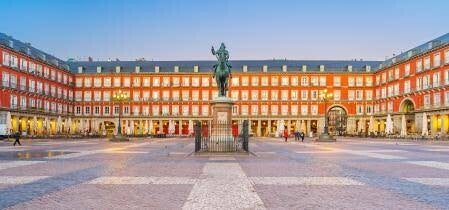
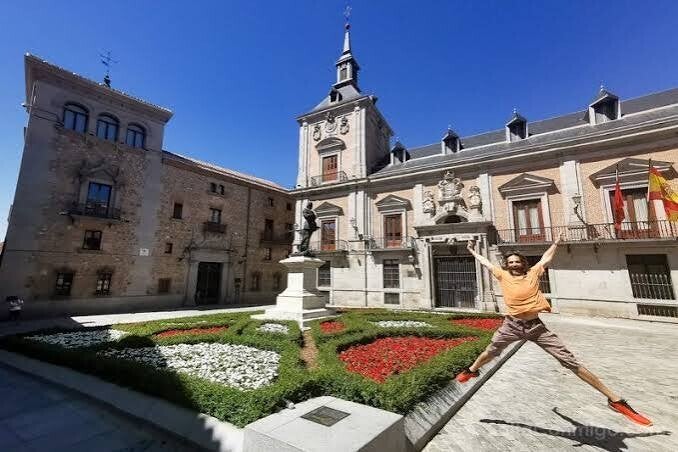
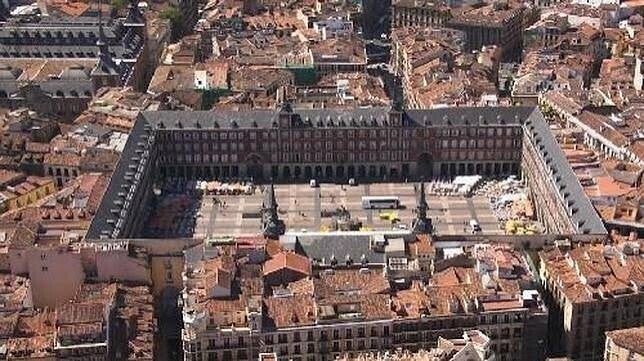
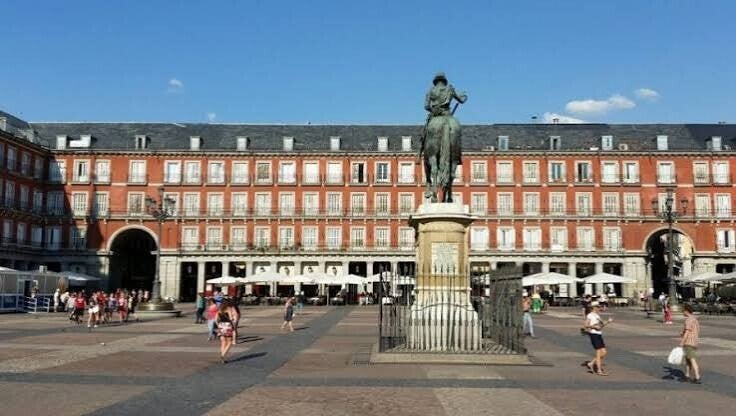
Plaza Mayor and Madrid de los Austrias offer one of the finest introductions to the history, architecture, food and traditional character of Madrid.
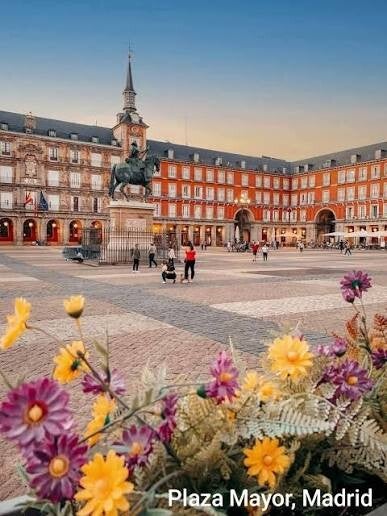
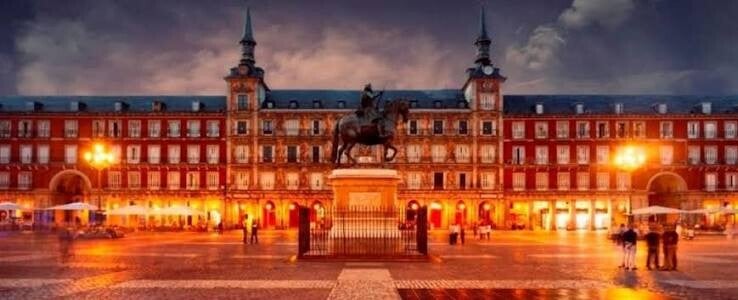
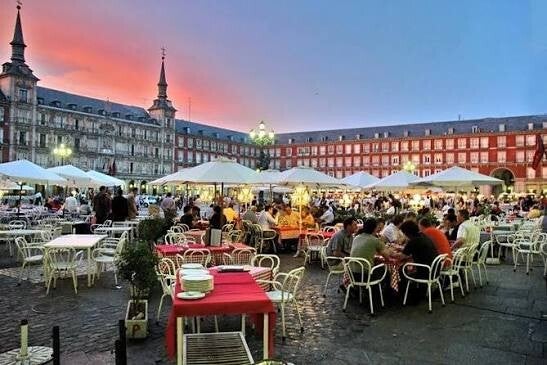
At the centre of the district is Plaza Mayor, Madrid’s magnificent arcaded square. Around it stretches Madrid de los Austrias—Habsburg Madrid—the historic neighbourhood developed when Madrid became the centre of the Spanish royal court.
Unlike a conventional museum, this is a living part of the city. Visitors can walk through historic streets, admire palaces and churches, sit at outdoor cafés, visit traditional shops and experience neighbourhood life without purchasing a general admission ticket.
A Brief History of Plaza Mayor
Plaza Mayor developed from an earlier commercial area called the Plaza del Arrabal. It was situated outside the walls of medieval Madrid, near the roads leading to Toledo and Atocha. Its position made it a natural meeting place for traders and residents.
When King Philip II transferred the Spanish royal court from Toledo to Madrid in 1561, the city needed more organised civic and ceremonial spaces. In 1580, Philip II commissioned architect Juan de Herrera to redesign the old market square.
The Casa de la Panadería—House of the Bakery—was the first major building constructed in the square. Work began around 1590. However, Plaza Mayor acquired its recognisable form during the reign of Philip III.
In 1617, architect Juan Gómez de Mora was commissioned to complete a unified rectangular square surrounded by red-brick buildings, balconies and arcaded walkways. The principal work was completed in 1619.
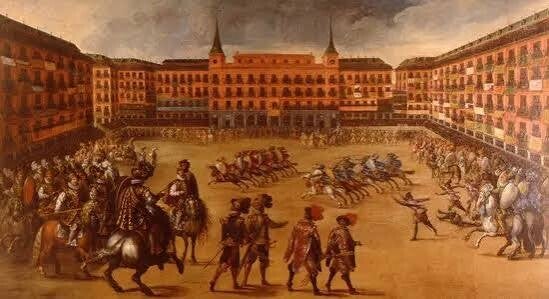
Over the centuries, Plaza Mayor has served as a setting for:
- Markets
- Royal proclamations
- Public celebrations
- Religious ceremonies
- Theatrical performances
- Bullfights
- Military events
- Public trials and executions
- Festivals and concerts
The square suffered three major fires. The most destructive occurred in 1790 and reduced approximately one-third of the square to ashes. Architect Juan de Villanueva led its reconstruction, lowering and standardising the surrounding buildings and creating the enclosed appearance that visitors see today.
A major renovation between 1967 and 1969 created underground parking and raised the level of the square’s paving.
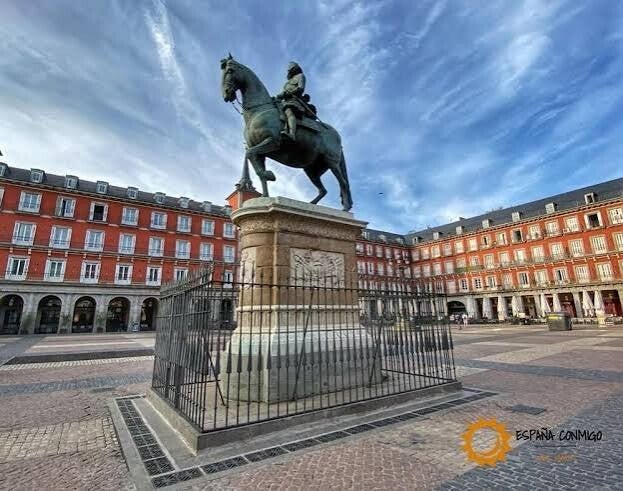
The Statue of King Philip III
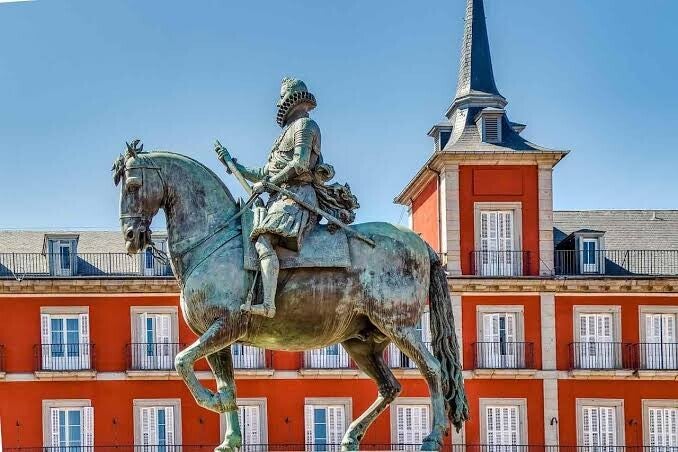
The equestrian statue in the centre represents King Philip III, under whose reign the square was completed.
Flemish sculptor Giambologna began the statue, and his Italian student Pietro Tacca completed it in 1616. It originally stood near Casa de Campo but was transferred to Plaza Mayor in 1848 by order of Queen Isabella II.
The statue is now one of Madrid’s most recognisable monuments.
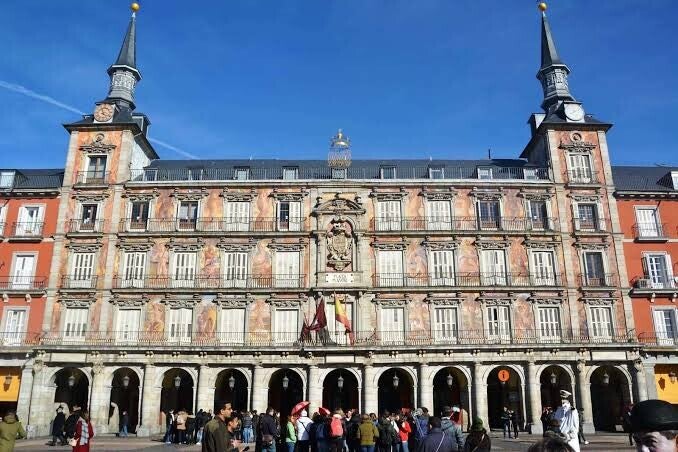
Casa de la Panadería
Casa de la Panadería is the most distinctive building in Plaza Mayor. Its towers, painted façade and central position make it the visual focal point of the square.
Despite its name, the building was not simply an ordinary bakery. Its ground floor once housed Madrid’s principal bread shop, while its upper rooms were used for official and royal purposes.
The present façade features colourful frescoes created by artist Carlos Franco in 1992. They include mythological figures associated with Madrid’s history and identity.
Today, Casa de la Panadería houses the Plaza Mayor Tourist Information Centre and an official shop selling Madrid souvenirs and products made by local artisans.
Arco de Cuchilleros
The Arco de Cuchilleros—Arch of the Knife Makers—is the most famous entrance to Plaza Mayor.
Its steep steps connect the elevated square with Calle de Cuchilleros below. The street received its name from the knife makers who produced tools for the butchers working in and around Plaza Mayor.
The arch provides one of the most atmospheric entrances into the square and is an excellent place for photographs.
Casa de la Carnicería
Standing opposite Casa de la Panadería is Casa de la Carnicería—House of the Butchery.
It was connected with the butchers’ guild and the storage and distribution of meat. Its architectural design closely resembles Casa de la Panadería, helping to create the square’s balanced appearance.
What Is Madrid de los Austrias?
Madrid de los Austrias means “Madrid of the Habsburgs.” It refers to the historic area that developed during the reigns of Spain’s Habsburg monarchs in the sixteenth and seventeenth centuries.
It is not an officially enclosed neighbourhood with precise boundaries. Instead, it describes the historic quarter around Plaza Mayor, Calle Mayor, Plaza de la Villa, the Royal Palace and nearby streets.
The district reflects Madrid’s transformation from a relatively modest Castilian town into the administrative centre of an international empire.
Its character is defined by:
- Narrow streets
- Secluded squares
- Brick-and-stone buildings
- Historic churches and monasteries
- Traditional restaurants
- Former noble residences
- Small specialist shops
- Royal and civic architecture
Madrid’s official tourism service describes Austrias as the city’s oldest area, combining the Royal Palace with the popular atmosphere of Plaza Mayor and its surrounding streets.
Where Are Plaza Mayor and Madrid de los Austrias Located?
Plaza Mayor is located in Madrid’s central Sol neighbourhood:
Plaza Mayor
28012 Madrid
Spain
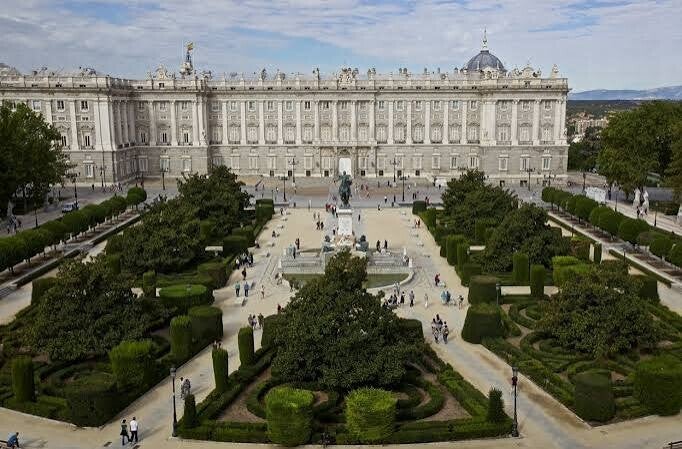
Madrid de los Austrias surrounds the square and extends west towards the Royal Palace and Almudena Cathedral.
The area is within easy walking distance of:
- Puerta del Sol
- Mercado de San Miguel
- Plaza de la Villa
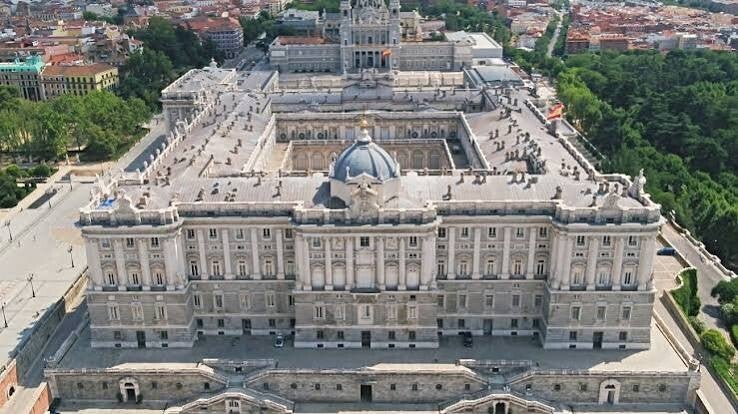
- Royal Palace of Madrid
- Almudena Cathedral
- Teatro Real
- Plaza de Oriente
- Monastery of the Incarnation
- Basilica of San Miguel
- San Francisco el Grande
- La Latina
How to Get There Locally
By Metro
The most convenient stations are:
Sol
- Line 1
- Line 2
- Line 3
Ópera
- Line 2
- Line 5
- Line R
Tirso de Molina
- Line 1
From Sol station, Plaza Mayor is approximately five to ten minutes away on foot. Ópera is convenient when beginning near the Royal Palace, while Tirso de Molina provides access from the southern side of the historic centre.
By Cercanías Train
Use Madrid-Sol station, followed by a short walk through Calle Mayor or nearby pedestrian streets.
By Bus
Routes serving the Plaza Mayor area include:
- 002
- 17
- 18
- 23
- 31
- 35
- 50
- 65
- M1
- M3
- N26
Routes may change because of roadworks, events or traffic restrictions, so consult Madrid’s official transport planner before travelling.
By Bicycle
BiciMAD docking stations can be found around:
- Plaza de la Provincia
- Calle Mayor
- Plaza de San Miguel
Cycling inside crowded pedestrian areas may be impractical. Park the bicycle correctly and explore the narrow historic streets on foot.
On Foot
Walking is the best way to explore Madrid de los Austrias.
Approximate walking times to Plaza Mayor are:
- Puerta del Sol: 5–10 minutes
- Royal Palace: 10–15 minutes
- Almudena Cathedral: 10–15 minutes
- Gran Vía: 15 minutes
- Plaza de España: 20 minutes
- Prado Museum: 25–30 minutes
Connecting with Madrid Internationally
By Air
International visitors normally arrive at Adolfo Suárez Madrid-Barajas Airport.
The airport is connected to central Madrid by:
- Metro
- Cercanías commuter train from Terminal 4
- Airport Express bus
- EMT public buses
- Official taxis
- Private transfers
- Recognised ride-booking services
After arriving in central Madrid, continue to Sol or Ópera by Metro, bus, taxi or on foot.
By International and Long-Distance Train
Madrid’s two principal long-distance railway stations are:
- Madrid-Puerta de Atocha-Almudena Grandes
- Madrid-Chamartín-Clara Campoamor
High-speed trains connect Madrid with Barcelona, Valencia, Seville, Málaga, Zaragoza, Alicante and many other Spanish cities.
International rail passengers can connect through Barcelona, Figueres or other cross-border routes before continuing to Madrid.
From Atocha, use Metro Line 1 towards Sol. From Chamartín, use Metro or Cercanías services to central Madrid.
By Coach
Long-distance and international coaches arrive at stations including:
- Estación Sur de Autobuses
- Avenida de América
- Moncloa
From these stations, continue to the historic centre by Metro or taxi.
Opening and Closing Times
Plaza Mayor
Plaza Mayor is an open public square. It has:
- No formal opening time
- No general closing time
- Public access throughout the day and night
Access may occasionally be restricted during major events, security operations, construction work or official celebrations.
Restaurants, cafés and shops surrounding the square set their own opening hours.
Madrid de los Austrias
Madrid de los Austrias is an open urban neighbourhood rather than a gated attraction. Its public streets and squares can be explored at any time.
However, individual attractions—including churches, monasteries, museums, palaces and markets—have their own opening times and closure days.
Daylight hours are best for appreciating the architecture. The early evening is excellent for enjoying illuminated streets, restaurants and tapas bars.
Plaza Mayor Tourist Information Centre
Casa de la Panadería is generally open:
- Monday–Sunday: 09:00–20:00
Admission is free. Certain services within the building may operate on more limited schedules.
Opening times may change on public holidays, particularly Christmas Eve, Christmas Day, New Year’s Eve and New Year’s Day.
Entry Fees
Plaza Mayor
General admission: Free
There is no charge to enter, walk through or photograph Plaza Mayor.
Madrid de los Austrias
General neighbourhood access: Free
There is no admission fee for walking through the streets and public squares of Madrid de los Austrias.
However, separate charges may apply for attractions such as:
- Royal Palace of Madrid
- Royal Collections Gallery
- Almudena Cathedral Museum and dome
- Monastery of Las Descalzas Reales
- Royal Monastery of the Incarnation
- Teatro Real tours
- Basilica museums and guided visits
- Organised walking tours
Food, drinks, shopping, performances and special experiences are paid separately.
What to See in Plaza Mayor
Casa de la Panadería
Admire the towers, frescoes and historic façade. Visit the tourist information centre for maps and advice.
Statue of Philip III
Study the equestrian monument in the centre and take photographs from different sides of the square.
Casa de la Carnicería
Observe how its design balances Casa de la Panadería on the opposite side.
Arco de Cuchilleros
Walk through the arch and explore the atmospheric stairways and restaurants below the square.
The Arcades
Walk beneath the covered arcades to discover restaurants, souvenir shops, stamp dealers, coin shops and traditional businesses.
Seasonal Events
Plaza Mayor hosts concerts, cultural events, Easter activities and its famous Christmas market. Check the city calendar before visiting.
Essential Places in Madrid de los Austrias
Plaza de la Villa
This peaceful square contains important historic buildings, including:
- Casa de la Villa
- Casa de Cisneros
- Torre de los Lujanes
The buildings represent different periods in Madrid’s architectural development.
Mercado de San Miguel
This historic iron-and-glass market is now a popular gastronomic destination. It can be crowded and relatively expensive, but it is attractive and convenient for sampling different foods.
Royal Palace
The official royal residence is one of the district’s principal attractions. A separate admission ticket is required for an interior visit.
Almudena Cathedral
The cathedral stands opposite the Royal Palace. Entry to the main worship area is normally free, with a requested donation. The museum and dome require paid admission.
Monastery of the Incarnation
Founded in the seventeenth century, this royal monastery contains religious art and historic interiors. Visits are controlled and normally require a ticket.
Descalzas Reales Monastery
This former royal residence became a convent and preserves an important collection of paintings, tapestries and religious objects.
Basilica of San Miguel
This elegant Baroque church is known for its curved façade and ornate interior.
San Francisco el Grande
The basilica is famous for its enormous dome and collection of religious paintings, including works associated with important Spanish artists.
Collegiate Church of San Isidro
This church served as Madrid’s cathedral until Almudena Cathedral was consecrated in 1993.
Teatro Real
Madrid’s historic opera house stands between Ópera station and the Royal Palace. Performances and guided tours require tickets.
Mirador de la Cornisa
The viewpoint between the Royal Palace and Almudena Cathedral provides impressive views towards Campo del Moro and Casa de Campo.
Food and Drink to Try
Madrid de los Austrias is an excellent area for discovering traditional Madrid food.
Look for:
- Bocadillo de calamares—fried calamari sandwich
- Cocido madrileño—Madrid-style chickpea and meat stew
- Tortilla española
- Croquetas
- Patatas bravas
- Jamón ibérico
- Churros with hot chocolate
- Vermouth
- Traditional tapas
Madrid’s official tourism service highlights calamari sandwiches, historic taverns and Chocolatería San Ginés among the district’s characteristic culinary experiences.
Restaurants directly inside Plaza Mayor can be more expensive than establishments a few streets away. Check the displayed menu and prices before ordering.
Suggested Walking Route
Allow approximately three to five hours for a relaxed visit.
- Begin at Puerta del Sol.
- Walk along Calle Mayor.
- Enter Plaza Mayor.
- Visit Casa de la Panadería.
- See the statue of Philip III.
- Exit through Arco de Cuchilleros.
- Visit Mercado de San Miguel.
- Continue to Plaza de la Villa.
- Walk towards Almudena Cathedral.
- Visit the Royal Palace and Plaza de Oriente.
- Finish at Teatro Real or continue towards the Temple of Debod.
For a longer route, add the Basilica of San Miguel, San Francisco el Grande, La Latina and the Monastery of Las Descalzas Reales.
Best Time to Visit
Early Morning
Visit before the main crowds arrive. This is ideal for photography and appreciating the architecture.
Late Afternoon
The light becomes warmer and the terraces become more animated.
Evening
The illuminated square is atmospheric, and the surrounding restaurant district becomes lively.
Christmas Season
The Christmas market makes Plaza Mayor particularly festive, but the area can become exceptionally busy.
Sunday Morning
Traditional stamp and coin trading may take place beneath the arcades, continuing a long-established local custom.
Dos When Visiting
- Wear comfortable shoes suitable for cobbled and uneven streets.
- Begin early if you prefer quieter photographs.
- Explore the streets beyond Plaza Mayor.
- Obtain a map from the tourist information centre.
- Compare menus and prices before sitting at a restaurant.
- Keep receipts for meals and purchases.
- Try a traditional calamari sandwich or another local speciality.
- Check individual opening hours before visiting churches and museums.
- Carry water during Madrid’s hot summer months.
- Use sunscreen and seek shade in summer.
- Respect residents living in the historic buildings.
- Ask permission before photographing street performers closely.
- Keep valuables in a secure, closed bag.
- Use official guides when booking a historical walking tour.
- Leave enough time to enjoy the neighbourhood without rushing.
Don’ts When Visiting
- Do not assume that every attraction is open simply because the public streets are accessible.
- Do not leave your phone or wallet exposed on a café table.
- Do not carry an open handbag or backpack in dense crowds.
- Do not accept unsolicited assistance at cash machines or ticket machines.
- Do not block entrances, arches or narrow streets while taking photographs.
- Do not photograph worshippers during religious services.
- Do not enter churches wearing inappropriate beach clothing.
- Do not touch historic façades, statues or religious objects.
- Do not feed birds or leave food waste in the square.
- Do not buy from unlicensed sellers.
- Do not automatically accept a restaurant table without examining the menu.
- Do not make excessive noise late at night in residential streets.
- Do not cycle rapidly through crowded pedestrian areas.
- Do not depend on outdated opening hours or admission prices.
- Do not limit your visit to Plaza Mayor—the surrounding Austrias district is an essential part of the experience.
Book Your Madrid Holiday with Virtual World Travel Agency
Would you like to experience Plaza Mayor, Madrid de los Austrias and the other unforgettable attractions of Spain’s capital?
Virtual World Travel Agency can assist you with accommodation, car rentals, event tickets, customised holidays and memorable Madrid experiences.
WhatsApp or Call: +34 664 663 275
Email: info@virtual-world.pl
Holiday Planner Form:
Plan your holiday with us
Self-Booking Platform for Hotels, Car Rentals and Events:
Book your travel services online
Virtual World Travel Agency — helping you travel with confidence, convenience and unforgettable experiences.
Add comment
Comments