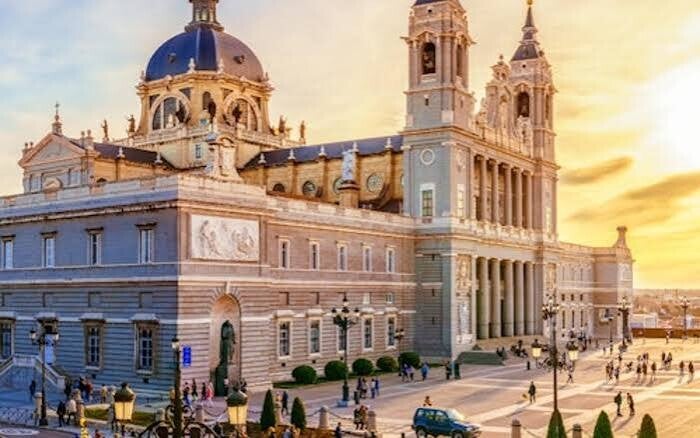
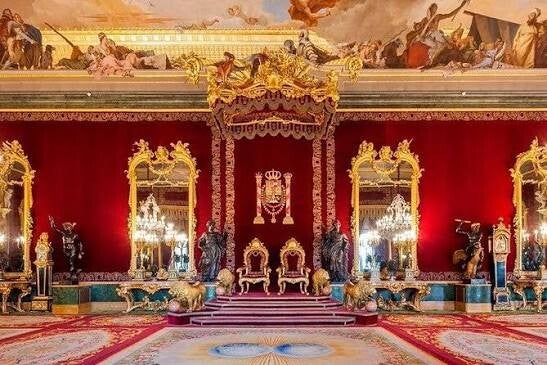
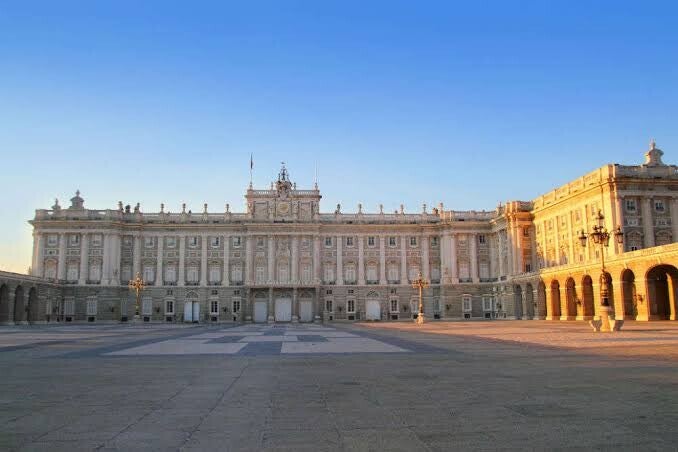
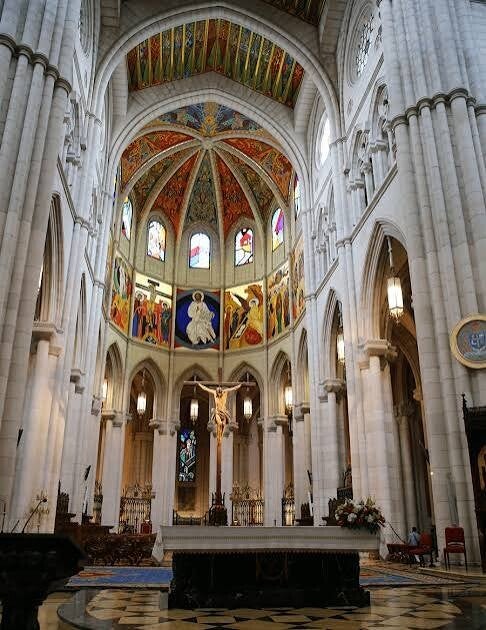
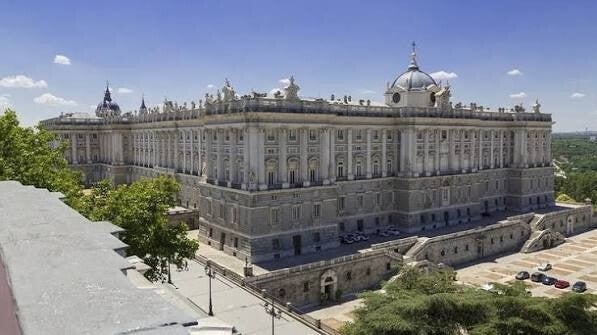
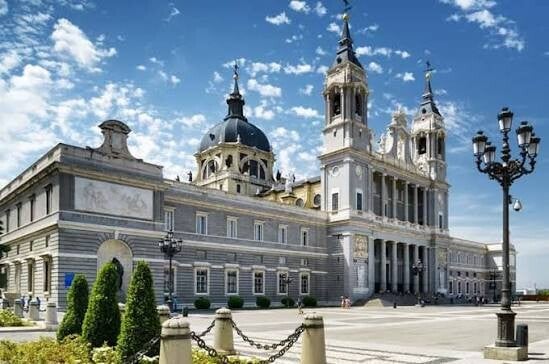
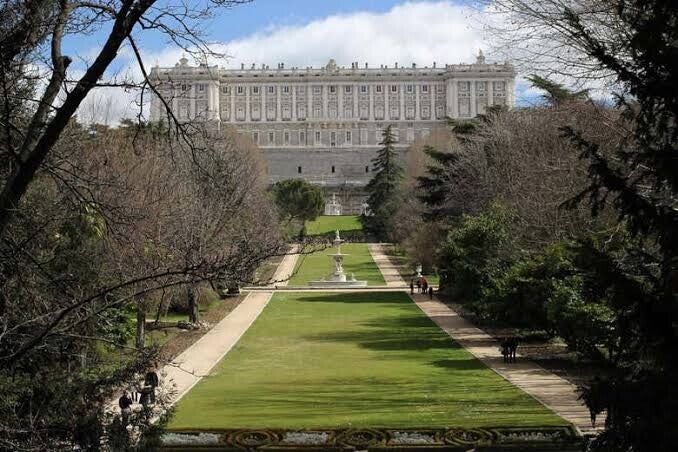
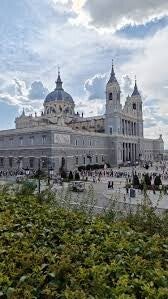
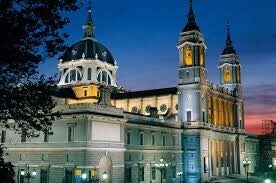
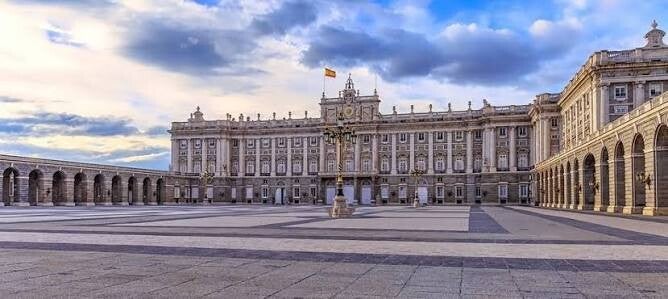
The Royal Palace of Madrid and Almudena Cathedral form one of the most impressive architectural and historical ensembles in Spain. Standing opposite each other beside Plaza de la Armería, they bring together the history of the Spanish monarchy and the religious life of the nation’s capital.
Visitors can explore royal apartments, ceremonial halls, historic artworks and armouries before crossing the square to experience the cathedral’s colourful interior, chapels, museum and panoramic dome.
A Brief History of the Royal Palace of Madrid
The Royal Palace stands on a site that has been associated with political authority for more than a thousand years.
During the ninth century, the Muslim ruler Muhammad I of Córdoba constructed a defensive fortress in this area. Madrid was then known as Mayrit or Magerit. Following the Christian conquest of Madrid in the eleventh century, the fortress was gradually transformed and expanded.
It eventually became the Royal Alcázar of Madrid, the principal residence of the Spanish monarchy. However, the Alcázar was destroyed by a major fire on Christmas Eve in 1734.
King Philip V commissioned a magnificent new palace on the same site. Construction began in 1738, under the Italian architect Filippo Juvarra and his successor, Giovanni Battista Sacchetti. King Charles III became the first monarch to live in the completed palace in 1764.
Although Spain’s present Royal Family does not normally live there, the Royal Palace remains the official residence of the Spanish monarch. It continues to be used for state ceremonies, official receptions and important national occasions.
Visitors can explore areas such as the Throne Room, Hall of Columns, Royal Chapel, Royal Armoury and richly decorated state apartments. Its collections include paintings, furniture, clocks, tapestries, musical instruments and other treasures associated with the Spanish Crown.
Because the palace is still used for official functions, rooms or the entire complex may occasionally close with limited notice.
A Brief History of Almudena Cathedral
The official name of the cathedral is the Cathedral of Saint Mary the Royal of the Almudena—Catedral de Santa María la Real de la Almudena.
Its name is traditionally associated with the Arabic word al-mudayna, meaning “the citadel” or “small fortress.” According to local tradition, an image of the Virgin Mary was hidden within the city wall during the Muslim period and rediscovered after Madrid returned to Christian rule.
Plans to build a major cathedral in Madrid existed for centuries, but construction did not begin until 1883. The original design was largely Neo-Gothic. Later architects modified the exterior to harmonise with the neighbouring Royal Palace, giving it a more Classical appearance.
The project took more than a century to complete. Pope John Paul II consecrated Almudena Cathedral on 15 June 1993, making it one of Europe’s youngest consecrated cathedrals.
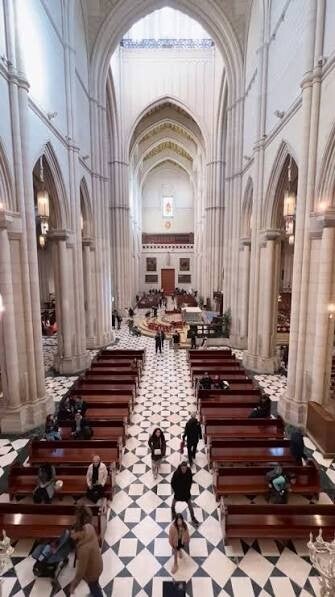
The cathedral is the seat of the Roman Catholic Archdiocese of Madrid. Its interior is notable for its contemporary colours, chapels, religious artwork and distinctive painted ceiling. The museum and dome provide further insight into the history of the Church in Madrid and offer impressive views over the city.
Where Are They Located?
The two landmarks are located beside each other in the historic centre of Madrid.
Royal Palace of Madrid
Plaza de Oriente / Plaza de la Armería
28013 Madrid, Spain
Almudena Cathedral
Calle de Bailén, 10
28013 Madrid, Spain
They are situated within the historic Austrias district, within walking distance of Plaza Mayor, Mercado de San Miguel, Plaza de España, Puerta del Sol, Teatro Real and the Temple of Debod.
Because the palace and cathedral are directly opposite each other, it is practical to visit both during the same morning or afternoon.
How to Get There Locally
By Metro
The most convenient Metro station is Ópera, served by:
- Line 2
- Line 5
- Ramal or Line R connecting Ópera and Príncipe Pío
From Ópera station, it is approximately a five-to-ten-minute walk to the palace and cathedral.
By Bus
Useful bus routes serving the area include:
- 3
- 25
- 31
- 39
- 50
- 65
- 148
- M3
- N16 night service
The exact route depends on your starting point, so check the official Madrid transport planner before travelling.
By Cercanías Train
Visitors arriving by commuter train can use:
- Madrid-Sol, followed by a walk or Metro journey
- Príncipe Pío, followed by the Metro, bus or a walk towards the palace
On Foot
The Royal Palace is approximately:
- 10 minutes from Plaza Mayor
- 15 minutes from Puerta del Sol
- 15 minutes from Plaza de España
- 20 minutes from Gran Vía, depending on your starting point
Walking is one of the best ways to appreciate the surrounding historic district.
By Taxi
Ask the driver for Palacio Real de Madrid or Catedral de la Almudena. Use an official taxi or a recognised ride-booking platform.
Connecting with Madrid Internationally
By Air
International visitors normally arrive through Adolfo Suárez Madrid-Barajas Airport, approximately 12 kilometres northeast of central Madrid.
The airport is connected to central Madrid by:
- Metro
- Cercanías commuter trains from Terminal 4
- Airport Express bus
- EMT public buses
- Official taxis
- Private transfers and ride-booking services
From the airport, travel to the city centre generally takes between 30 and 60 minutes, depending on your terminal, chosen transport and traffic.
By International and Long-Distance Train
Madrid is connected with major Spanish and European destinations through its long-distance railway network.
The principal stations are:
- Madrid-Puerta de Atocha-Almudena Grandes
- Madrid-Chamartín-Clara Campoamor
High-speed trains connect Madrid with Barcelona, Valencia, Seville, Málaga, Zaragoza, Alicante and many other destinations. International travellers arriving through France can connect through Barcelona or other northern Spanish stations.
From Atocha or Chamartín, continue by Metro, Cercanías, bus or taxi.
Royal Palace Opening and Closing Times
The published 2026 visitor timetable is:
Winter: October to March
- Monday to Saturday: 10:00–18:00
- Sunday: 10:00–16:00
Summer: April to September
- Monday to Saturday: 10:00–19:00
- Sunday: 10:00–16:00
The ticket office and visitor admission close one hour before the palace closes. A typical self-guided visit to the palace rooms takes approximately 45 minutes, although visitors interested in the collections should allow longer.
Scheduled Royal Palace Closures in 2026
The palace is scheduled to close completely on:
- 1 January
- 6 January
- 1 May
- 25 December
On 24 and 31 December, the palace closes at 15:00, with the ticket office closing at 14:00.
Additional closures may occur because of official state ceremonies. Check the official calendar shortly before visiting.
Royal Palace Entry Fees
Self-Guided Visit
- Standard admission: €18
- Reduced admission: €9
- Eligible free admission: €0
The reduced rate generally applies to children aged 5–16, visitors over 65 and qualifying students under 25. Identification and evidence of eligibility are required.
Children under five and several other qualifying categories receive free admission. Visitors with a recognised disability of 33% or more may also qualify for free admission, together with an essential companion when properly documented.
Guided Visit
- Standard guided admission: €26
- Reduced guided admission: €17
- Eligible free-category visitor with guided-tour supplement: €8
Official guided visits are available at selected times in Spanish, English and Italian. Arrive at least 15 minutes before the time printed on your ticket.
Combined Tickets
A combined ticket for the Royal Palace and the Royal Collections Gallery costs:
- Standard: €24
- Reduced: €12
- Eligible free rate: €0
A combined Palace and Royal Kitchen ticket is also advertised from €24, with applicable concessions. Prices and inclusions can change, so review the selected ticket carefully before payment.
Free Visiting Period
Eligible citizens of the European Union, qualifying EU residents or work-permit holders, and citizens of Ibero-American countries may visit free of charge during designated periods:
- April to September: Monday–Thursday, 17:00–19:00
- October to March: Monday–Thursday, 16:00–18:00
Proof of nationality, residence or work authorisation is required. This arrangement applies to self-guided admission and tickets are obtained at the ticket office. Entry remains subject to capacity.
Almudena Cathedral Opening and Closing Times
Main Cathedral
- September to June: Monday–Sunday, 10:00–20:30
- July and August: Monday–Sunday, 10:00–21:00
Tourist visits are not permitted during Mass, liturgies, weddings, funerals and other religious services. The cathedral’s liturgical calendar always takes priority over sightseeing.
Cathedral Museum and Dome
- Monday to Saturday: 10:00–14:30
- Sunday: Closed
- Religious holidays and services: May be closed
The museum route includes the museum, sacristy, chapterhouse and cathedral dome. Guided visits require advance reservations.
Almudena Cathedral Entry Fees
Main Cathedral
General entry to the cathedral is free, but a voluntary donation of €1 is requested to support its maintenance.
A free Wi-Fi audio guide is available in Spanish, English, French and Italian.
Museum, Sacristy, Chapterhouse and Dome
The current published charges are:
- Standard admission: €8
- Reduced admission: €5
- School groups: €4 per pupil
- Children under ten and other eligible categories: Free with identification
Reduced admission applies to qualifying visitors such as those aged 10–16, visitors over 65, eligible students under 25, people with disabilities, unemployed visitors, large families and pre-booked groups. Conditions apply and documentary evidence may be requested.
Because cathedral prices, worship schedules and access arrangements can change, check the official cathedral website before travelling.
What to See at the Royal Palace
Do not miss:
- The Throne Room
- The Hall of Columns
- The Royal Chapel
- The Gasparini Room
- The Royal Armoury
- Historic clocks, tapestries and furniture
- Paintings and decorative art
- Plaza de la Armería
- Plaza de Oriente and its gardens
- The Campo del Moro Gardens, when accessible
- The nearby Royal Collections Gallery
Photography without flash is generally permitted for personal use, except in areas where it is expressly prohibited. Tripods and selfie sticks are not allowed.
What to See at Almudena Cathedral
Important features include:
- The colourful main nave and ceiling
- The image of Our Lady of Almudena
- The main altar
- Contemporary chapels and religious art
- The Cathedral Museum
- The sacristy and chapterhouse
- The dome and panoramic viewpoint
- The Neo-Romanesque crypt beneath the cathedral
The crypt has a separate entrance on Calle Mayor. Allow additional time if you intend to visit it.
Suggested Order for Your Visit
A practical half-day programme would be:
- Arrive at the Royal Palace before your reserved admission time.
- Spend approximately 60–90 minutes exploring the palace.
- Walk through Plaza de la Armería.
- Enter Almudena Cathedral, provided no service is taking place.
- Visit the museum and dome during their morning opening hours.
- Continue to the cathedral crypt or the remains of Madrid’s Arab wall.
- Walk towards Plaza Mayor and Mercado de San Miguel for lunch.
- Finish with sunset views from the Temple of Debod.
If you want to visit the cathedral museum and dome, plan the cathedral portion before 14:30.
Dos When Visiting
- Book Royal Palace tickets through the official platform in advance.
- Check for closures caused by official ceremonies.
- Arrive at least 15 minutes before your reserved time.
- Bring identification if claiming a reduced or free ticket.
- Wear comfortable shoes.
- Dress respectfully when entering the cathedral.
- Switch your phone to silent mode during your cathedral visit.
- Respect worshippers, clergy and private prayer.
- Follow security instructions inside the palace.
- Bring personal earphones and sufficient phone battery if using a digital audio guide.
- Keep your belongings secure in crowded areas.
- Allow at least two to three hours to experience both landmarks properly.
- Check the weather if planning to visit the cathedral dome or surrounding gardens.
Don’ts When Visiting
- Do not bring large suitcases, oversized bags or bulky packages to the palace.
- Do not arrive just before the final admission time.
- Do not use flash photography in the palace.
- Do not use tripods or selfie sticks.
- Do not photograph in areas where it is prohibited.
- Do not touch furniture, artworks or historic objects.
- Do not eat or drink inside the palace rooms or cathedral.
- Do not speak loudly inside the cathedral.
- Do not walk around the cathedral as a tourist during Mass.
- Do not photograph worshippers closely without permission.
- Do not assume that published hours guarantee entry during official or religious events.
- Do not purchase tickets from unofficial street sellers.
- Do not leave phones, wallets or bags unattended around busy tourist areas.
Book Your Madrid Holiday with Virtual World Travel Agency
Would you like to experience the Royal Palace, Almudena Cathedral and Madrid’s other unforgettable attractions?
Virtual World Travel Agency can assist you with accommodation, car rental, event tickets and customised holiday planning.
WhatsApp or Call: +34 664 663 275
Email: info@virtual-world.pl
Holiday Planner Form:
Let us plan your holiday
Self-Booking Platform for Hotels, Car Rentals and Events:
Book your travel services online
Virtual World Travel Agency — helping you travel with confidence, convenience and unforgettable experiences.
Add comment
Comments