

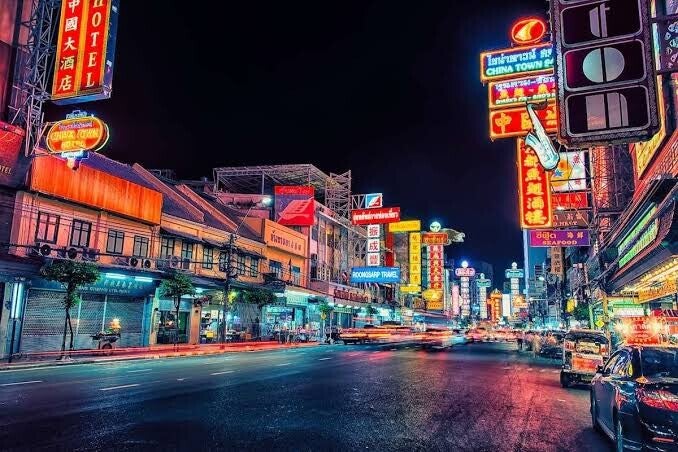
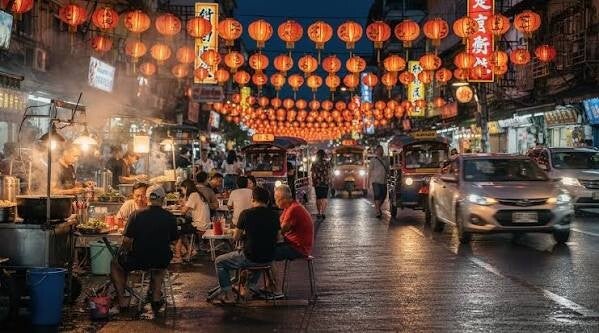
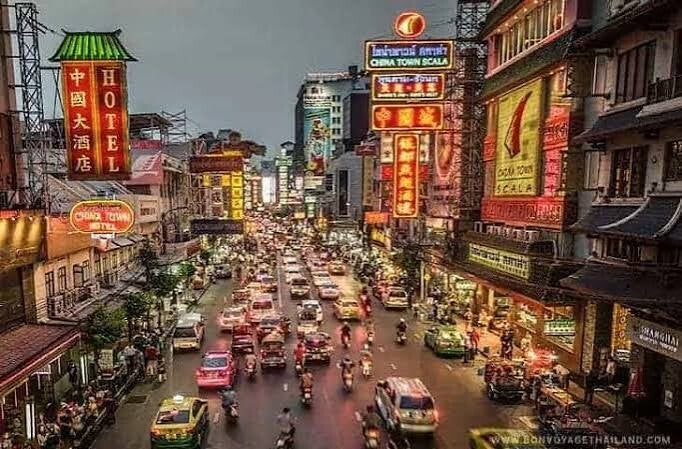
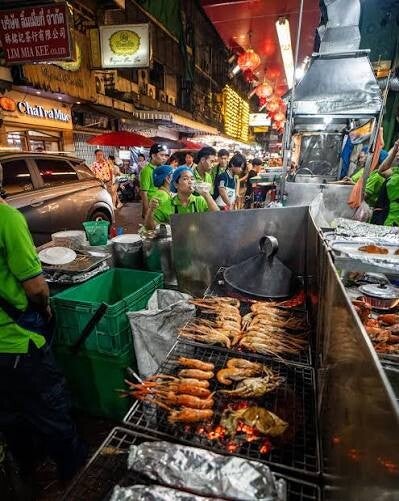
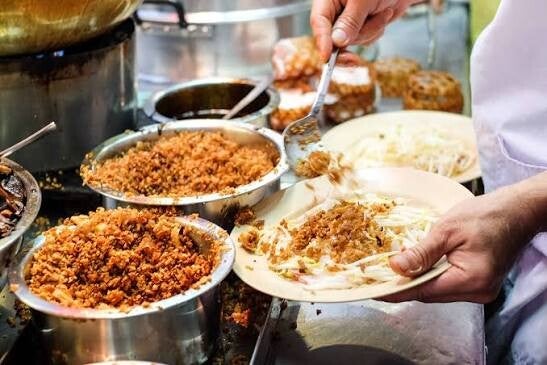
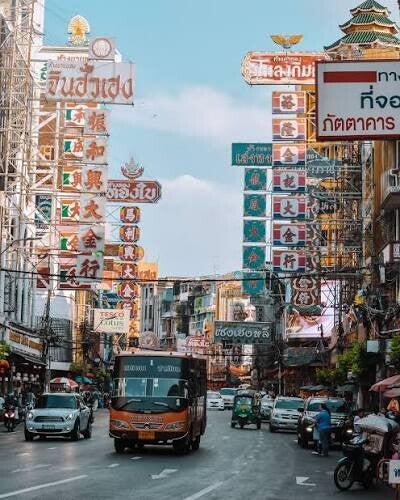
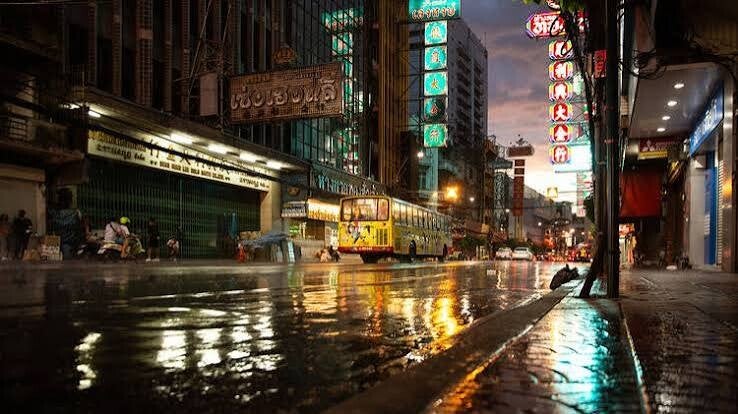


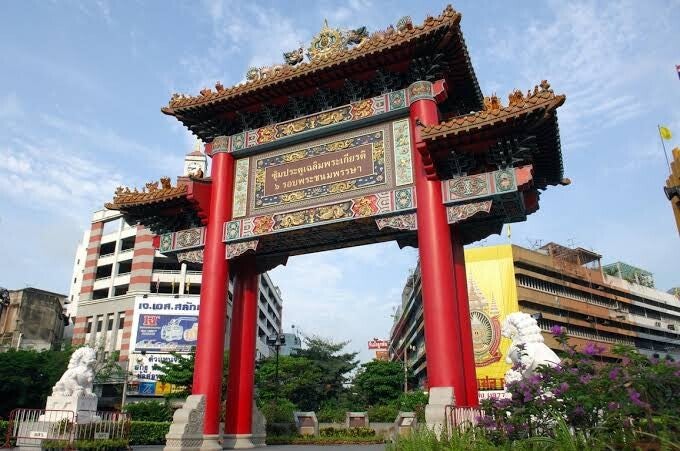
Follow the signs towards Yaowarat Road and Bangkok begins to change around you. Gold shops and old markets sit alongside shrines, family businesses and food stalls. By evening, the streets fill with people deciding what to eat next. Yaowarat is a place to explore on foot, with enough time to turn into a side lane when something catches your eye.
A brief history
Bangkok’s Chinatown grew through generations of Chinese migration, trade and settlement. Chinese-Thai families established businesses, places of worship and food traditions that remain part of the neighbourhood today. Yaowarat Road became its best-known thoroughfare, but Chinatown’s character extends into the surrounding markets and lanes. The Tourism Authority of Thailand describes the district as both a busy shopping area and a major street-food destination.
This is a living neighbourhood, rather than a preserved historic attraction. People still shop, work and worship here. Visiting with curiosity and consideration will reveal more than a walk down the main road alone.
Where is Yaowarat?
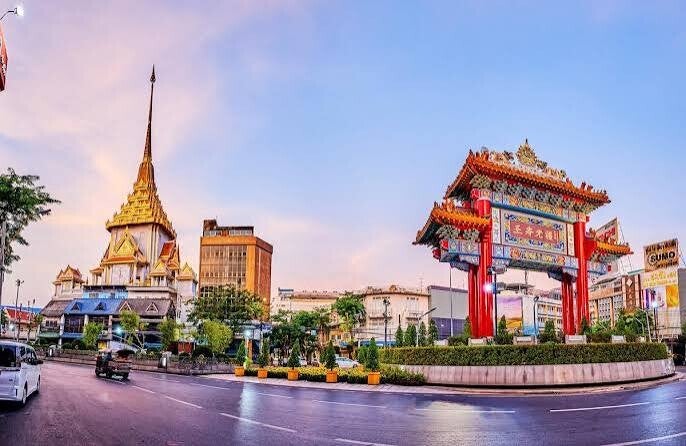
Yaowarat is in Bangkok’s historic Chinatown district. Yaowarat Road is the main reference point, with markets, shrines, restaurants and shops spread through adjoining streets. The Chinatown Gate offers a recognisable starting point; from there, you can make your way into the busier lanes and food areas.
How to get there
From within Bangkok: Take the MRT Blue Line to Wat Mangkon station. The rail operator lists Exit 1 for Yaowarat Road and the Old Market, Exit 2 for nearby market lanes, and Exit 3 for Wat Mangkon Kamalawat. This makes the MRT a practical choice when road traffic is heavy.
You can also arrive by taxi or booked car. If your day includes a Chao Phraya boat journey, Rachawong Pier provides another approach to the Chinatown commercial district; allow for a walk from the pier.
From abroad: Fly into Bangkok, checking whether your ticket arrives at Suvarnabhumi Airport (BKK) or Don Mueang Airport (DMK). Travel to your accommodation first, then use the MRT or a taxi to reach Yaowarat. If you land late at night, check transport operating times before deciding to visit Chinatown immediately.
What should you see and do?
Start with a walk rather than a fixed list of food stops. Around Yaowarat you can:
-
Explore the Old Market and adjoining lanes to see the district’s everyday trade.
-
Visit Wat Mangkon Kamalawat and other cultural landmarks, observing the rules of each place of worship.
-
Sample street food such as noodles, seafood and Chinese-Thai desserts. Browse first, then choose a stall that suits your tastes and budget.
-
See the neighbourhood after dark, when many food vendors begin serving and the illuminated streets take on a different atmosphere.
Allow two to three hours for a relaxed evening food walk. Add more time if you plan to visit markets and shrines during the day.
Opening and closing times
Yaowarat is a neighbourhood, so it has no single opening or closing time. Shops, markets, shrines and restaurants each set their own hours. Daytime is useful for browsing businesses and cultural sites; late afternoon and evening are popular for street food. The Tourism Authority notes that some Chinatown restaurants open from around 5:00 p.m. into the night, but that is an example, not a timetable for every vendor. Check a particular shop or restaurant before travelling across the city for it.
Entry fees and what to budget
There is no general admission fee to walk through Yaowarat. You pay for the food, shopping, transport or guided tour you choose. A shrine or other individual venue may have its own rules or charges, so look for information at its entrance.
For a food visit, bring a flexible budget and check menu prices before ordering. Small purchases from several stalls can be an enjoyable way to try different dishes, but costs add up quickly if you order without checking portions and prices.
Dos and don’ts in Chinatown
Do:
-
Wear comfortable shoes and take care on crowded pavements and road crossings.
-
Carry a payment method suitable for small purchases; check what each vendor accepts.
-
Ask about ingredients if you have allergies or dietary requirements.
-
Respect worshippers, shrine rules and signs about photography.
-
Use the side streets as well as Yaowarat Road, while remaining aware of traffic and your surroundings.
-
Check opening times if there is one particular restaurant or shop you hope to visit.
Don’t:
-
Block a busy stall or narrow pavement while deciding what to order.
-
Photograph worshippers or workers at close range without permission.
-
Assume every food stall is open every evening.
-
Enter a shrine as though it were simply a photo location.
-
Step into the road for a picture without checking for vehicles.
Plan your Bangkok holiday with us
Would you like to combine Yaowarat’s food and culture with Bangkok’s temples, river journeys and other neighbourhoods? Virtual World Travel Agency can help you plan a holiday around your dates and interests.
WhatsApp or call: +34 664 663 275
Email: info@virtual-world.pl
Holiday planner form: Tell us about your trip
Self-booking platform: Browse hotels, car rentals and events
Individual business hours, menus and prices change. Check any must-visit venue shortly before your trip.
Add comment
Comments