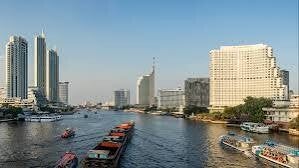
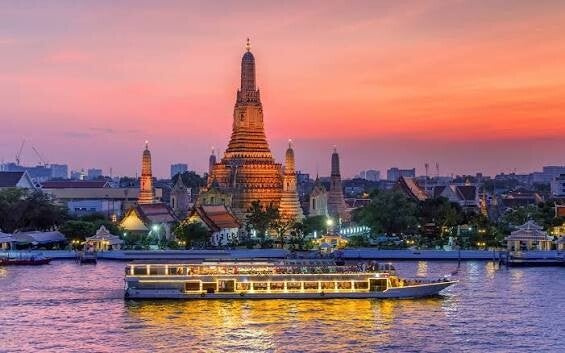
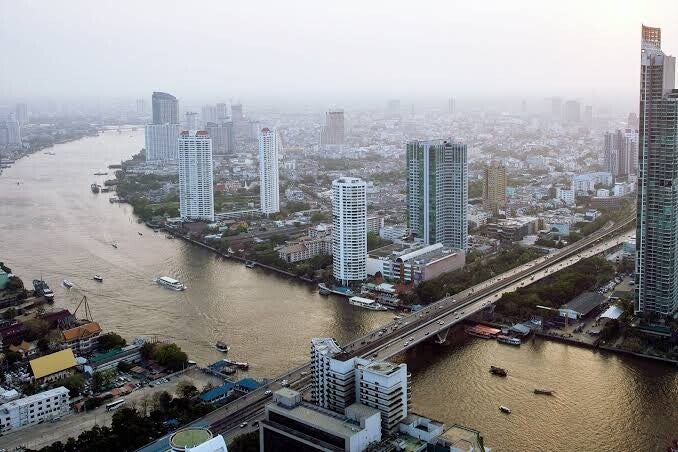
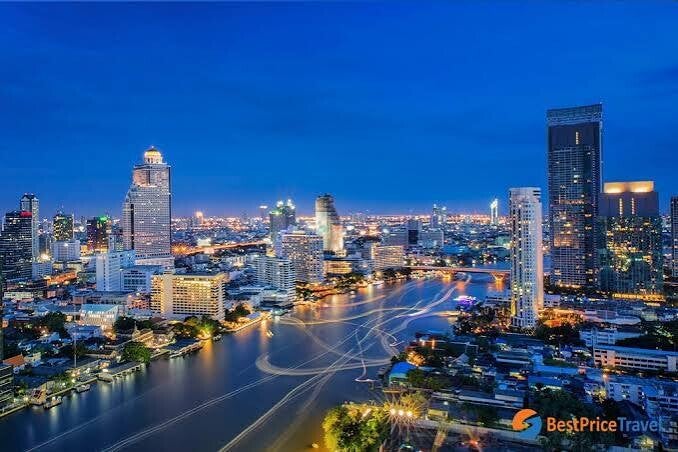
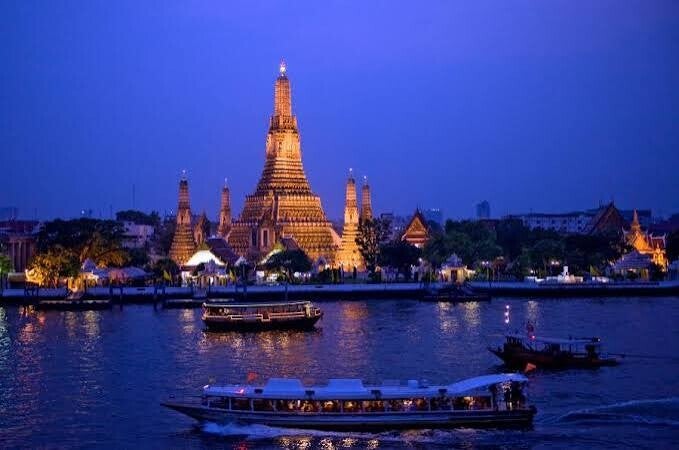
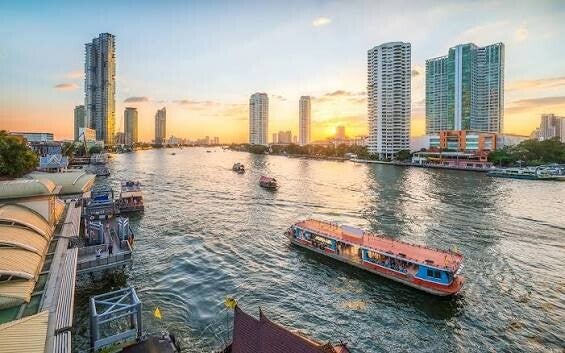
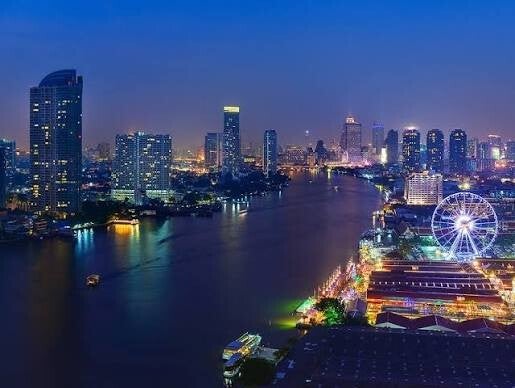
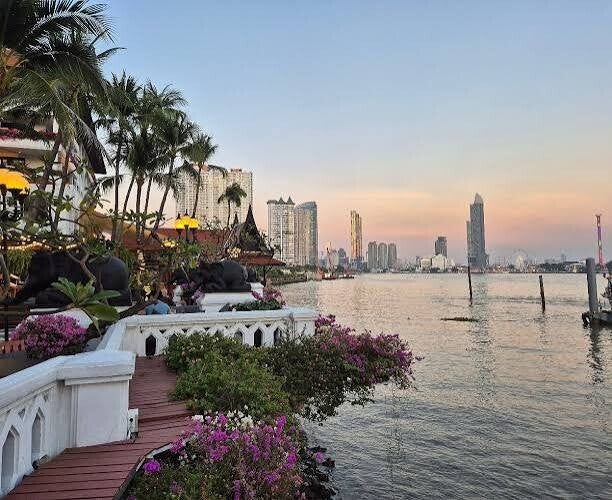
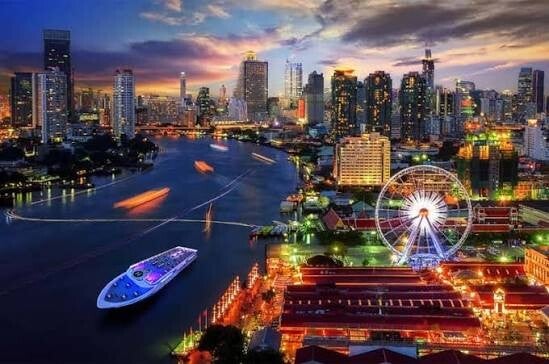
A journey on the Chao Phraya River is one of the most rewarding ways to experience Bangkok. Boats pass temple roofs, historic neighbourhoods, working piers and modern riverside buildings. You can use the river simply to reach an attraction, or make the journey itself the highlight of your day.
A brief history
The Chao Phraya has long shaped life in central Thailand. It provided a route for travel and trade, while connected canals helped communities and markets develop along its banks. When Bangkok became the capital in 1782, the river was central to the new city’s location and defences. Today it remains a working transport route as well as a place where visitors can see different chapters of Bangkok’s history side by side. Bangkok’s city administration describes the express boat as an important transport service through the heart of the city.
Where is it?
The Chao Phraya flows through Bangkok, dividing many well-known visitor areas between its eastern and western banks. Around the historic centre, the Grand Palace and Wat Pho are on the eastern side, while Wat Arun stands across the water in Thon Buri. Farther along the river are residential districts, hotels, markets and connections to other parts of the city.
How to reach the river
From within Bangkok: A convenient starting point for many travellers is Sathorn Pier, near BTS Saphan Taksin. From there, check the pier signs for the boat service and direction you need. The historic district can also be reached through piers such as Tha Chang and Tha Tien, while cross-river ferries link some attractions on opposite banks. Boat routes and stopping patterns differ, so tell staff your intended destination before boarding. The Grand Palace’s official visitor guidance describes the Saphan Taksin and Sathorn Pier connection.
From abroad: Fly into Bangkok through Suvarnabhumi Airport (BKK) or Don Mueang Airport (DMK). Continue to your accommodation using a suitable airport rail connection, taxi or arranged transfer, then reach a river pier by BTS, MRT, taxi or on foot, depending on where you are staying. There is no direct international arrival point on this sightseeing stretch of the river. Suvarnabhumi Airport lists the Airport Rail Link among its city transport options.
What to see along the way
For a first visit, consider a route that connects several experiences without trying to see everything in one day:
-
The Grand Palace and Wat Phra Kaew: A major stop for Bangkok’s royal history and architecture. Check its separate admission, schedule and dress code.
-
Wat Pho: Visit the Reclining Buddha and explore the temple grounds near the river.
-
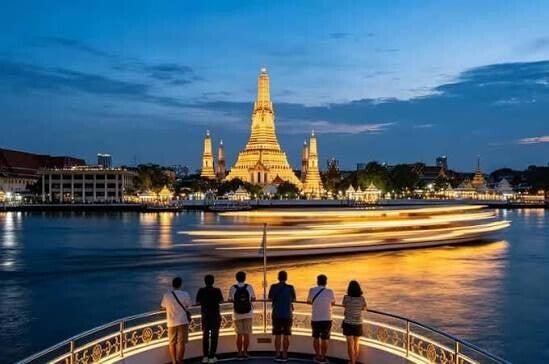
Wat Arun: Cross to the west bank to see the Temple of Dawn up close, then look back across the water towards the historic centre.
-
Riverside neighbourhoods: Leave time to walk beyond the major attractions, eat locally and observe daily life around the piers.
-
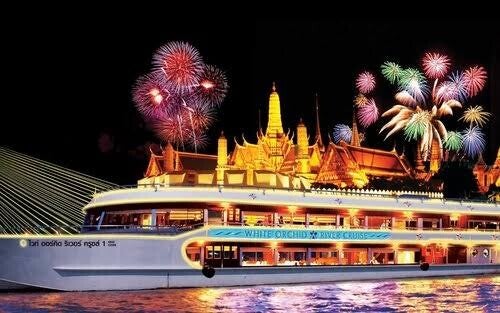
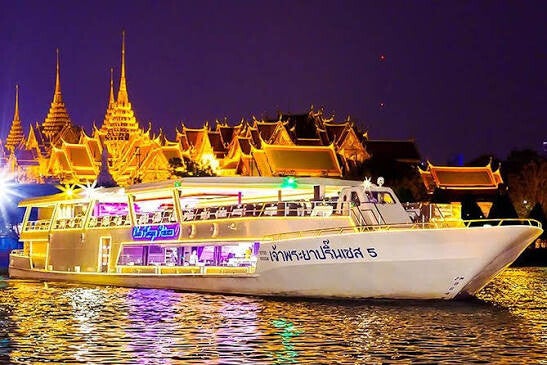
An evening view: Enjoy the riverfront after dark from a public area or a restaurant. If you choose a dinner cruise, compare its route, menu, departure pier and total price before booking.
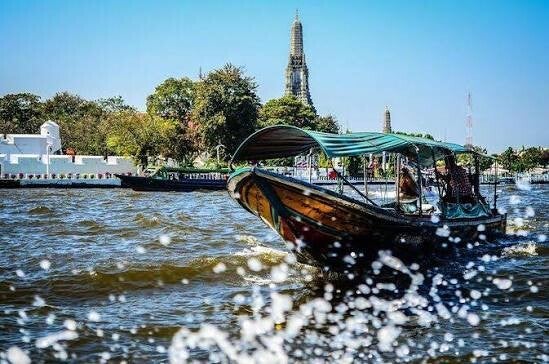
The river is also useful for reaching attractions without spending every journey in road traffic. A public express boat, a tourist hop-on, hop-off boat, a short ferry crossing and a private cruise are different services with different fares and schedules.
Opening and closing times
The river itself has no opening or closing time. Its boats, piers, temples and other attractions do.
The Chao Phraya Express Boat operator publishes schedules by route. Its current service page refers to a timetable effective from 24 June 2026, but individual lines may operate on different days and at different times. Check your chosen operator’s latest route and timetable, especially for a return trip late in the day. Do not assume that a sightseeing boat, ferry or dinner cruise follows the express boat timetable.
Entry fees and boat fares
There is no admission fee to view the Chao Phraya River from a public riverside location. You pay for the particular boat trip, cruise or attraction you choose.
As one example, the Chao Phraya Express Boat currently lists an 18-baht flat fare for its Orange Line on its service page. That is a fare for a specific service, not a general price for all river travel. Tourist boat passes, cross-river ferries, dinner cruises and temple tickets are priced separately. Confirm the live fare, accepted payment method and ticket type at the operator’s official channel or pier before boarding.
Dos and don’ts on the river
Do:
-
Check the route, flag colour, destination pier and direction before joining a queue.
-
Keep your ticket until the end of the journey and follow crew instructions when boarding.
-
Hold the handrail and take care when stepping between the pier and a moving boat.
-
Keep phones and cameras secure, especially near the edge of the boat.
-
Allow extra time if you have a temple ticket or another timed booking.
-
Look up the final return service before planning an evening away from your hotel.
Don’t:
-
Assume every boat stops at every pier.
-
Step onto a boat until crew indicate that boarding is safe.
-
Lean far over the side for photographs or leave children unattended near the water.
-
Block walkways with luggage or large bags.
-
Confuse the price of an express boat ride with the price of a tourist pass or private cruise.
Plan your Bangkok holiday with us
Would you like to combine a Chao Phraya journey with Bangkok’s temples, food and neighbourhoods? Virtual World Travel Agency can help you plan a holiday around your dates and interests.
WhatsApp or call: +34 664 663 275
Email: info@virtual-world.pl
Holiday planner form: Tell us about your trip
Self-booking platform: Browse hotels, car rentals and events
Boat routes, operating hours and fares can change. Confirm them with the relevant operator before travelling.
Add comment
Comments