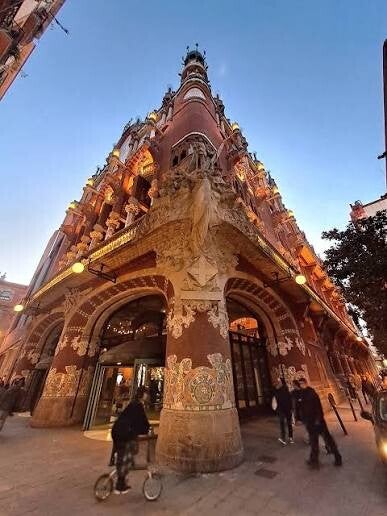
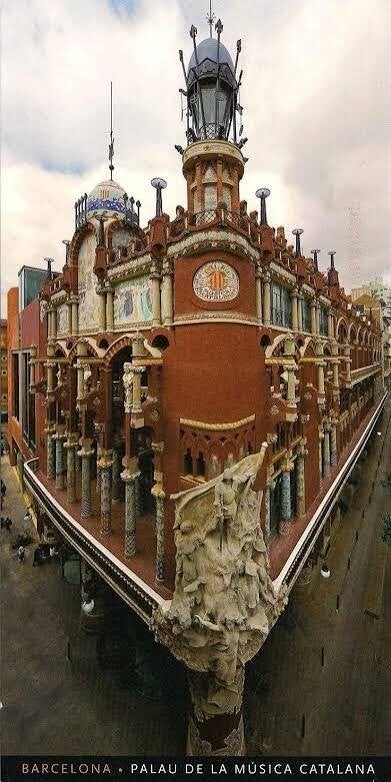
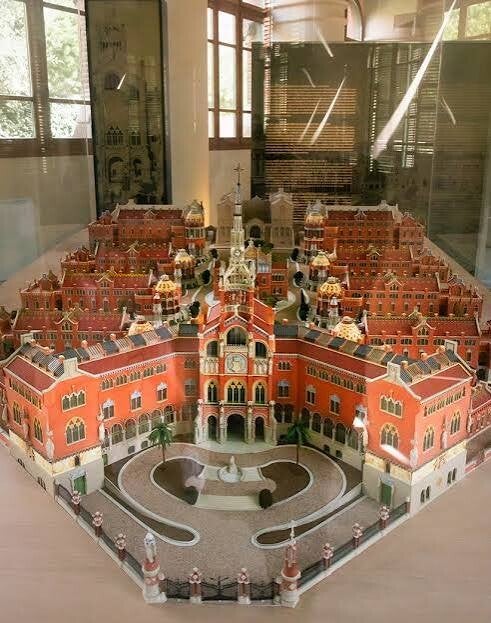
The Palau de la Música Catalana and the Recinte Modernista de Sant Pau are two of Barcelona’s greatest architectural treasures. Both were designed by Lluís Domènech i Montaner, one of the leading figures of Catalan Modernisme, and were jointly inscribed on the UNESCO World Heritage List in 1997.
Although they served completely different purposes—one as a concert hall and the other as a hospital—the buildings share a remarkable vision. Architecture, sculpture, mosaics, stained glass, ceramics, ironwork and natural light were combined to create spaces that were both beautiful and functional.
The Palau stands close to El Born and Barcelona’s historic centre, while Sant Pau is located near the Sagrada Família. They can easily be visited together using Barcelona’s public transport system.
Why Are These Two Buildings Important?
UNESCO describes the Palau de la Música Catalana and Hospital de Sant Pau as two of the finest contributions made to Barcelona’s architecture by Lluís Domènech i Montaner.
The Palau is an exuberant steel-framed concert hall filled with light, colour and decorative art. Sant Pau is an equally ambitious complex designed to promote patients’ physical and emotional recovery through sunlight, ventilation, gardens and carefully planned medical spaces. UNESCO World Heritage information
Together, the monuments provide an excellent introduction to Catalan Modernisme beyond the better-known works of Antoni Gaudí.
Part One: Palau de la Música Catalana
Where Is the Palau de la Música Catalana?
The Palau de la Música Catalana is located at:
Carrer del Palau de la Música, 4–6
08003 Barcelona, Spain
It stands in the Sant Pere area of Ciutat Vella, immediately north of the Gothic Quarter and close to El Born, Via Laietana and Plaça d’Urquinaona.
It is approximately:
- 5 minutes on foot from Urquinaona metro station
- 10 minutes from Barcelona Cathedral
- 10–15 minutes from Plaça de Catalunya
- 10–15 minutes from the centre of El Born
- 20 minutes from La Rambla
- 20–25 minutes by public transport from Sant Pau
The building is situated on a relatively narrow street. Its location makes the sudden appearance of its ornate façade particularly impressive.
A Brief History of the Palau
The Palau de la Música Catalana was constructed between 1905 and 1908 as the home of the Orfeó Català, a choral society founded in 1891 by Lluís Millet and Amadeu Vives.
The Orfeó Català was an important part of the Catalan cultural revival known as the Renaixença. Music, language, literature, architecture and the arts all contributed to a renewed sense of Catalan identity during this period.
The concert hall was largely financed through contributions from Barcelona’s citizens, industrialists and music lovers. This collective support helped establish the Palau as a cultural building connected with the wider community.
Domènech i Montaner used a modern iron and steel framework, allowing him to create a spacious interior with large windows. This innovative structure reduced the need for heavy supporting walls and enabled natural light to enter the auditorium.
The Palau was inaugurated in 1908 and continues to function as an active concert hall. It hosts classical music, choral performances, flamenco, popular music, recitals, family programmes and international artists.
What to See Inside the Palau
The Concert Hall
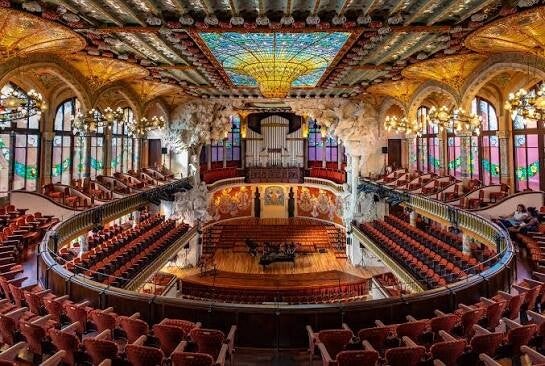
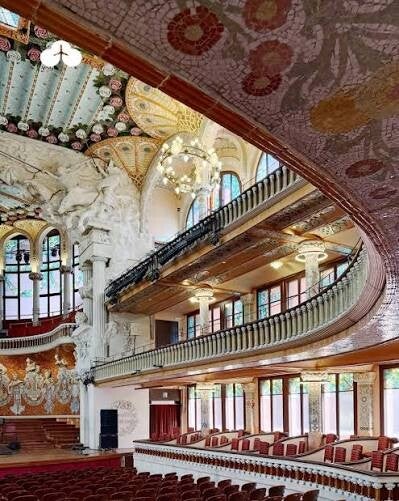
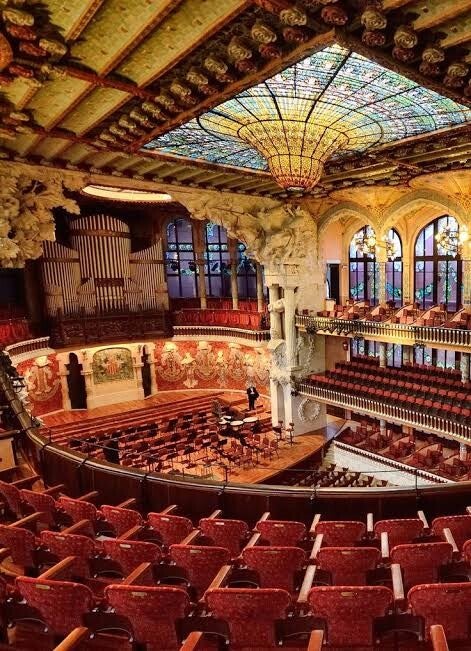
The main Concert Hall is the highlight of the visit. Almost every surface is decorated with sculpture, ceramics, stained glass or floral ornamentation.
Despite its elaborate appearance, the room retains a sense of balance. The auditorium’s horseshoe-shaped seating arrangement helps create an intimate relationship between performers and audiences.
The Stained-Glass Skylight
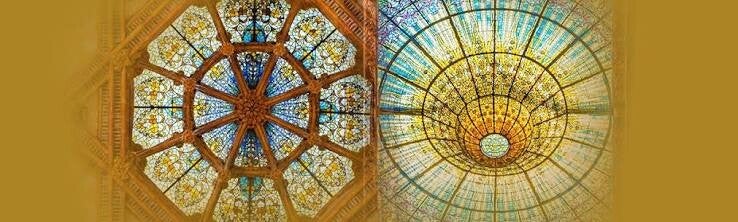
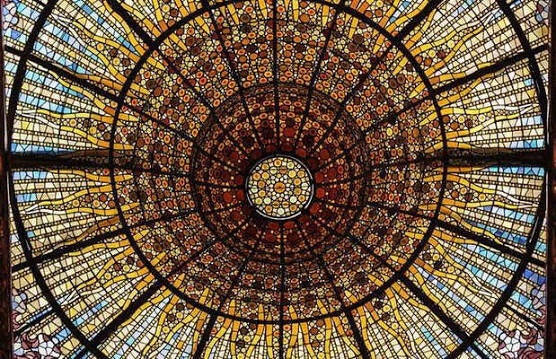
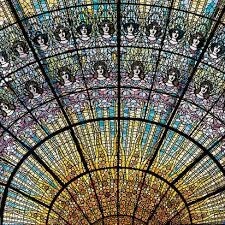
The enormous stained-glass skylight is one of the Palau’s most recognizable features. Designed in the form of an inverted dome, its golden centre resembles the sun descending into the auditorium.
The skylight allows natural daylight to illuminate the hall, making the Palau one of the world’s most unusual concert venues.
The Stage
The stage is surrounded by sculptural representations of classical and folk music. On one side appears Richard Wagner’s Ride of the Valkyries, while the other represents Catalan traditional music and the figure of Josep Anselm Clavé.
Behind the performers are sculpted female figures emerging from the wall. Their bodies are created in mosaic while their upper sections project outward in three dimensions.
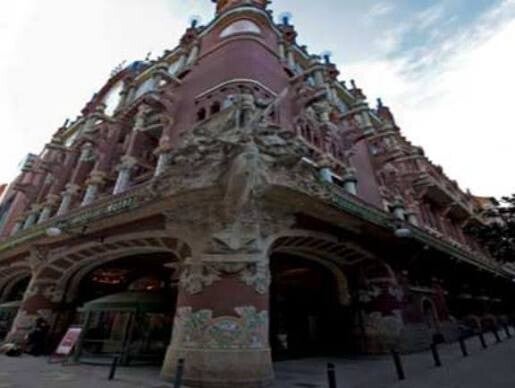
The Façade
The original façade combines exposed brick, colourful mosaics, sculpted figures, decorated columns and ironwork.
Look for the sculptural group known as La Cançó Popular Catalana, created by Miquel Blay. The figures symbolize people from different sections of Catalan society united through music.
The Lluís Millet Hall
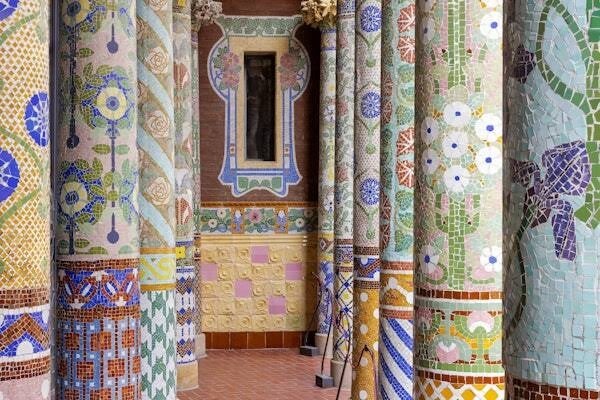
This elegant space is named after one of the founders of the Orfeó Català. Its large stained-glass windows open onto a balcony with colourful mosaic columns.
The Grand Staircase
The staircase creates a dramatic introduction to the concert hall. Stone, ceramic, glass and ornamental metalwork are combined to transform a functional passage into a complete artistic composition.
Ways to Experience the Palau
Visitors can experience the building through:
- A self-guided architectural visit
- A guided tour
- A concert or musical performance
- A family or educational activity
- A combined ticket with Sant Pau
- Special exhibitions or open-house events
An architectural visit normally takes 45–60 minutes. A guided tour provides more detailed information about the building’s history, symbolism and decorative arts.
Attending a concert offers the opportunity to experience the Palau for its original purpose. However, a concert ticket may not provide access to every area included in a daytime architectural visit.
Opening and Closing Hours of the Palau
The Palau is an active concert venue, so visitor access depends on rehearsals, performances, private events and ticket availability.
Guided architectural tours are generally scheduled daily between 09:00 and 15:30 and last approximately 50 minutes. Self-guided visit times depend on the calendar. Official Palau guided-tour information
The ticket office normally operates:
- Monday–Saturday: 08:30–21:00
- Sundays and public holidays: 08:30–15:30
- On concert days: it may reopen approximately two hours before the performance
These ticket-office hours should not be confused with architectural visiting hours. Always select a specific admission time when booking. Palau contact and opening information
Part Two: Hospital de Sant Pau
Where Is the Hospital de Sant Pau?
The historic complex is officially known as the Recinte Modernista de Sant Pau. It is located at:
Carrer de Sant Antoni Maria Claret, 167
08025 Barcelona, Spain
It stands in the Guinardó area, at the northern end of Avinguda de Gaudí. The avenue connects Sant Pau directly with the Sagrada Família.
The historic Modernista site must not be confused with the modern working Hospital de la Santa Creu i Sant Pau situated nearby. Visitors should follow signs for Recinte Modernista.
The site is approximately:
- 3–5 minutes from Sant Pau–Dos de Maig metro station
- 10 minutes on foot from Sagrada Família
- 20–25 minutes by public transport from the Palau de la Música
- 25 minutes by metro from Plaça de Catalunya
- 30–40 minutes from Barcelona-Sants station
A Brief History of Sant Pau
The institution’s history began in 1401, when six medieval hospitals were united to create the Hospital de la Santa Creu in Barcelona’s Raval district.
By the end of the nineteenth century, Barcelona’s population was expanding rapidly, and the medieval hospital could no longer meet the city’s medical needs.
Catalan banker Pau Gil left part of his estate for the construction of a modern hospital dedicated to Saint Paul. Domènech i Montaner was commissioned to design the new complex.
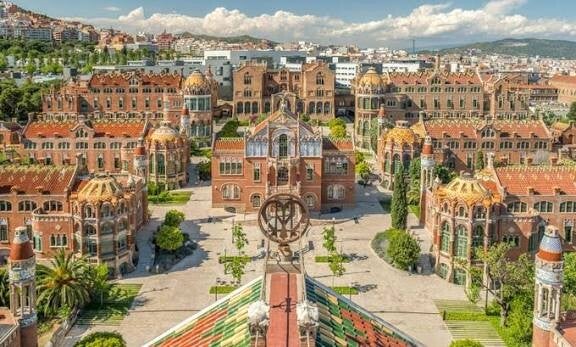
Construction of the first ten buildings began in 1902. Rather than designing one enormous hospital building, the architect created a garden city composed of separate pavilions connected by underground tunnels.
Each pavilion was devoted to a particular medical speciality. Separating different patients and illnesses helped reduce the risk of infection. Natural light, fresh air, ventilation and gardens were considered essential parts of healing.
Domènech i Montaner’s son, Pere Domènech i Roura, later continued the work. The completed hospital became one of the largest and most remarkable Modernista complexes in Europe.
Sant Pau served as a working hospital for almost a century. Medical services eventually moved into a new hospital building, allowing the historic complex to undergo an extensive restoration. It reopened as a cultural and heritage site in 2014.
What to See at Sant Pau
Administration Pavilion
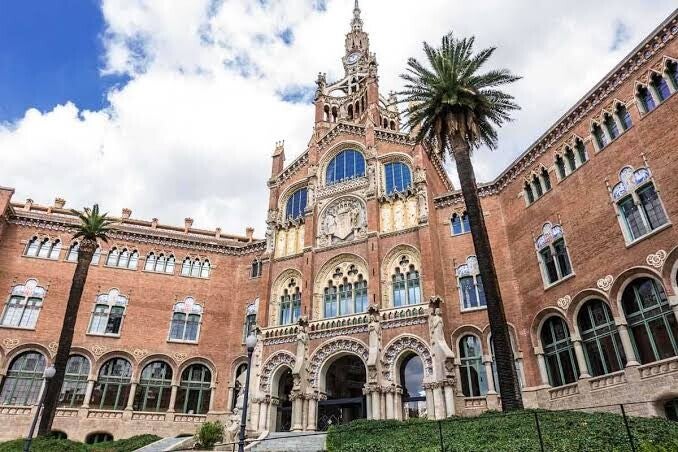
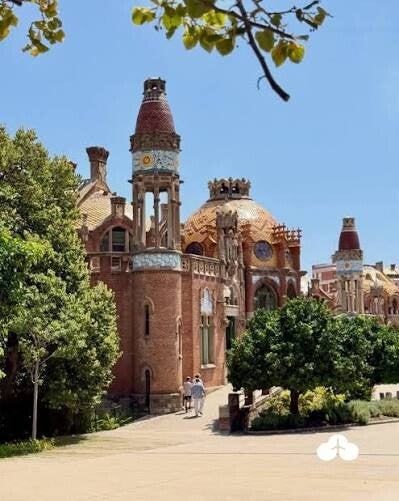
The Administration Pavilion forms the monumental entrance to the complex. Its towers, domes, mosaics, sculptures and decorative stonework introduce Domènech i Montaner’s vision.
Inside, visitors can see the grand staircase, ceremonial halls, vaulted ceilings, stained glass, ceramic decoration and the impressive Sala Domènech i Montaner.
Sala Hipòstila
This columned space was part of the hospital’s administrative and service areas. Its brick vaulting and structural design demonstrate how practical spaces were given architectural beauty.
Underground Tunnels
A network of underground galleries connected the hospital pavilions. The tunnels allowed patients, staff, medicine, food and equipment to move around the complex without disturbing the gardens above.
Walking through part of this tunnel network helps visitors understand how the hospital functioned.
Sant Salvador Pavilion
The Sant Salvador Pavilion introduces the history of the hospital and the development of medicine in Barcelona.
Its exhibitions explain how patients were treated and how Domènech i Montaner combined medical requirements with architectural design.
Sant Rafael Pavilion
This pavilion preserves aspects of the original patient wards. Its scale, windows, tiled surfaces and decorative features show the importance given to sunlight, cleanliness and ventilation.
Gardens and Outdoor Spaces
The pavilions are surrounded by landscaped gardens containing trees, medicinal plants and flowers.
The gardens were not merely decorative. They were intended to create a peaceful environment supporting patients’ emotional and physical recovery.
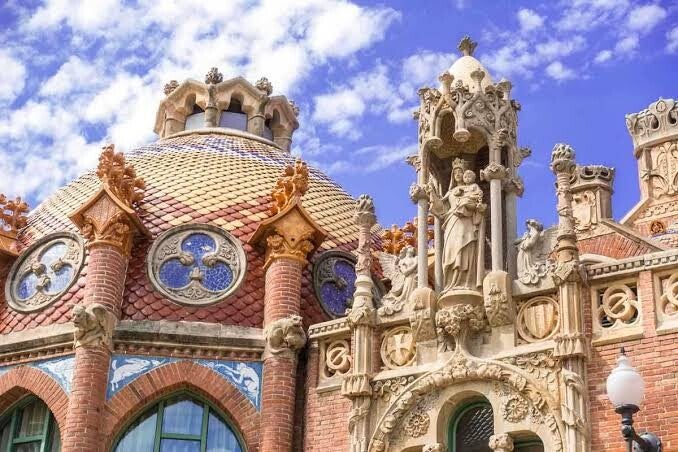
Mosaics, Ceramics and Sculpture
Look carefully at the decorative details. Images of saints, medicinal plants, animals, religious symbols and heraldic designs appear throughout the complex.
Ceramic surfaces were attractive but also practical because they were easier to clean than many traditional wall finishes.
Opening and Closing Hours of Sant Pau
Sant Pau generally operates the following visitor schedule:
- April–October: Daily, 09:30–18:30
- November–March: Daily, 09:30–17:00
- Last admission: Approximately 30 minutes before closing
Opening hours may change on public holidays or during concerts, filming, maintenance and private events. Official Sant Pau website
A self-guided visit normally takes 60–90 minutes. Allow up to two hours if you enjoy architecture, photography or detailed exhibitions.
Visiting Both Monuments
The two sites are approximately four kilometres apart. They should not be mistaken for adjoining buildings.
A combined visit requires around three to four hours, excluding meals and travel. Combined admission products may be available, but the Palau normally requires a selected date and entry time, while Sant Pau may offer more flexible admission. Palau and Sant Pau combined visitor information
Travelling Between the Palau and Sant Pau
By Metro
From the Palau:
- Walk to Urquinaona station.
- Take metro line L4 to Verdaguer.
- Change to line L5.
- Travel to Sant Pau–Dos de Maig.
- Walk approximately five minutes to the Recinte Modernista entrance.
By Taxi
A taxi generally takes 15–25 minutes, depending on traffic.
On Foot
Visitors who enjoy walking can travel through the Eixample toward the Sagrada Família and continue along Avinguda de Gaudí to Sant Pau.
The complete walk takes approximately 40–50 minutes. Allow additional time if stopping for photographs, refreshments or a visit to the Sagrada Família area.
How to Reach the Palau Locally
Metro
The nearest station is Urquinaona, served by lines L1 and L4. Jaume I on line L4 and Catalunya on lines L1 and L3 are also within walking distance.
Bus
Numerous city buses travel along Via Laietana, Ronda de Sant Pere and surrounding streets. Routes can change during roadworks and public events.
Walking
The Palau is easily reached from:
- Plaça de Catalunya: 10–15 minutes
- Barcelona Cathedral: 10 minutes
- El Born: 10–15 minutes
- La Rambla: 15–20 minutes
- Arc de Triomf: approximately 15 minutes
How to Reach Sant Pau Locally
Metro
The closest station is Sant Pau–Dos de Maig on line L5.
Sagrada Família station, served by lines L2 and L5, is approximately 10–15 minutes away on foot.
Bus
Useful routes include 19, 47, 50, 117 and 192, although services may change.
Walking from the Sagrada Família
Avinguda de Gaudí provides a pleasant pedestrian connection between the Sagrada Família and Sant Pau. The walk takes approximately 10 minutes and contains cafés, terraces, shops and views of both monuments.
International Connections
From Barcelona–El Prat Airport
To the Palau
International visitors can:
- Take the Aerobús to Plaça de Catalunya and walk approximately 10–15 minutes.
- Take the airport train from Terminal 2 to Passeig de Gràcia and continue by metro or taxi.
- Use metro line L9 Sud and transfer to lines serving the city centre.
- Take a taxi or private transfer directly to the Palau.
To Sant Pau
Visitors can:
- Take the airport train to Barcelona-Sants and change to metro line L5 for Sant Pau–Dos de Maig.
- Take metro line L9 Sud and transfer to line L5.
- Use the Aerobús to the city centre and continue by metro.
- Arrange a taxi or private transfer.
From Barcelona-Sants Station
To reach Sant Pau, take metro line L5 directly from Sants Estació to Sant Pau–Dos de Maig.
To reach the Palau, take line L5 to Verdaguer, change to line L4 and continue to Urquinaona. A taxi may be more convenient with luggage.
From the Cruise Port
Cruise passengers can use the Cruise Bus or Portbus from the terminal area to the Columbus Monument and then continue by taxi or metro.
A taxi is the simplest option when visiting either monument during a limited shore excursion.
From Estació del Nord
Barcelona Nord serves national and international coaches. From there, the Palau is approximately 15–20 minutes away on foot. Sant Pau can be reached by metro or taxi.
Best Time to Visit
Morning is generally the best time for architectural visits. Natural daylight reveals the stained glass and mosaics of the Palau, while Sant Pau’s gardens are particularly pleasant before the midday heat.
Weekday visits are usually quieter than weekends. During summer, visit Sant Pau early because parts of the route are outdoors.
Concert days can affect access to the Palau’s main auditorium. If seeing every architectural feature is your priority, confirm that the selected visit includes the Concert Hall.
Practical Dos and Don’ts
Do
- Reserve your Palau visit in advance.
- Check concert schedules before selecting a visiting time.
- Allow at least 50 minutes for the Palau.
- Allow 60–90 minutes for Sant Pau.
- Wear comfortable shoes for Sant Pau’s gardens and tunnels.
- Look carefully at the mosaics, sculptures and stained glass.
- Keep your combined ticket until both visits are complete.
- Confirm holiday schedules before travelling.
- Respect restricted areas and instructions from staff.
- Arrive early if attending a concert.
Don’t
- Do not confuse the historic Sant Pau site with the working hospital.
- Do not assume the two UNESCO monuments are beside each other.
- Do not use flash photography where it is prohibited.
- Do not touch mosaics, sculptures or historic surfaces.
- Do not enter patient or staff areas of the modern hospital.
- Do not talk, use a telephone or arrive late during a performance.
- Do not bring large luggage without checking storage arrangements.
- Do not rely exclusively on third-party opening-hour information.
- Do not block narrow streets around the Palau while taking photographs.
- Do not discard your ticket before completing both visits.
Plan Your Barcelona Holiday with Virtual World Travel Agency
Would you like professional assistance planning your Barcelona holiday? Virtual World Travel Agency can help you arrange accommodation, transportation, car rentals, attraction tickets, events and personalized holiday experiences.
WhatsApp or call: +34 664 663 275
Email: info@virtual-world.pl
Holiday planner form:
Request a personalized holiday plan
Self-booking platform for hotels, car rentals and events:
Search and book your travel services
Experience two masterpieces of Catalan Modernisme—where music, architecture, healthcare and human creativity meet—with Virtual World Travel Agency.
Add comment
Comments