Montjuïc is one of Barcelona’s most fascinating areas—a green urban mountain where history, art, architecture, sport and nature come together. Rising above the city’s harbour, it offers panoramic viewpoints, peaceful gardens, internationally important museums, Olympic landmarks and one of Barcelona’s most historic fortresses.
Unlike a single attraction, Montjuïc is an extensive district containing many independent places of interest. The mountain itself can be explored freely, while museums, the castle, cable cars and other attractions have separate admission charges and opening hours.
Where Is Montjuïc?
Montjuïc is located southwest of Barcelona’s city centre, between Plaça d’Espanya, the neighbourhood of Poble-sec and the Port of Barcelona.
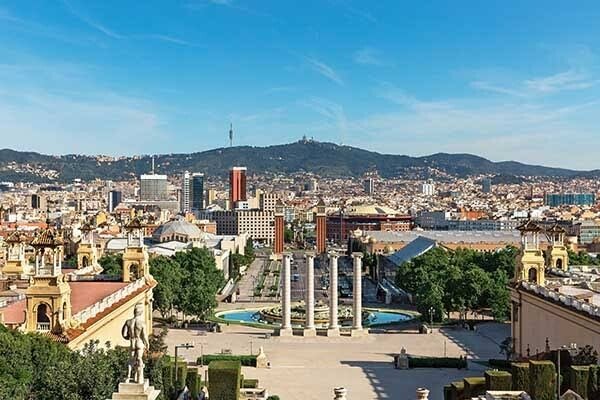
The hill rises to approximately 177 metres above sea level, offering excellent views over Barcelona, the Mediterranean coastline and the commercial harbour. Its elevated position and proximity to the port have made it strategically important throughout Barcelona’s history.
The principal gateways to Montjuïc include:
- Plaça d’Espanya, for the Magic Fountain, MNAC and Poble Espanyol
- Paral·lel, for the Montjuïc Funicular
- Avinguda de Miramar, for the Montjuïc Cable Car
- Poble-sec, for walking routes, gardens and cultural venues
- Port Vell and Barceloneta, through the Port Cable Car
A Brief History of Montjuïc
The history of Montjuïc stretches back many centuries. Archaeological evidence indicates that the hill was used in ancient times, including as a source of sandstone for constructing buildings in Roman Barcelona.
The origin of the name “Montjuïc” is debated. One widely accepted interpretation connects it with the medieval Catalan expression meaning “Mountain of the Jews,” referring to a historic Jewish cemetery once situated on the hillside. Another interpretation links the name to the Latin Mons Jovicus, or “Hill of Jupiter.”
Because of its commanding views over the city and port, Montjuïc became an important defensive location. A basic fortification was erected during the seventeenth century, particularly around the period of the Catalan Revolt of 1640. It was subsequently expanded and transformed into Montjuïc Castle.
The fortress was used to defend Barcelona, but it also became associated with political repression, imprisonment and executions. One of its most remembered prisoners was Lluís Companys, president of Catalonia, who was executed at Montjuïc Castle in 1940 after being captured by the Nazis and handed over to the Franco regime.
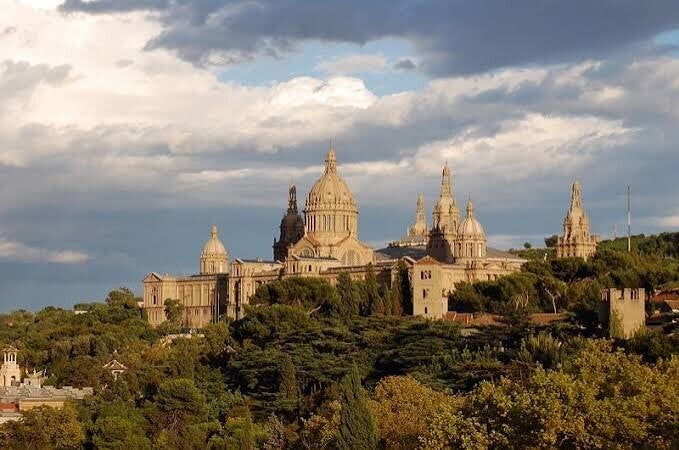
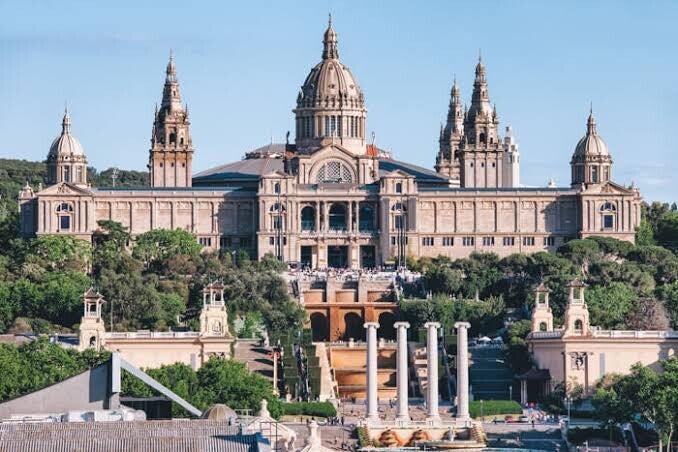
Montjuïc was dramatically transformed for the 1929 Barcelona International Exposition. The Palau Nacional, Magic Fountain, Poble Espanyol, exhibition pavilions, ceremonial staircases and several other monumental structures were developed during this period.
The mountain was transformed again in preparation for the 1992 Barcelona Olympic Games. New sporting facilities were constructed, older venues were renovated and the surrounding public spaces were improved. The Olympic Games helped establish Barcelona as a major international destination.
Today, the landscape of Montjuïc combines memories of military conflict and political repression with art, sport, recreation and natural beauty. Barcelona’s official tourism information describes it as a place where the monumental legacy of the 1929 International Exhibition stands alongside the Olympic heritage of 1992. Discover Parc de Montjuïc
What to See and Do on Montjuïc
Montjuïc Castle
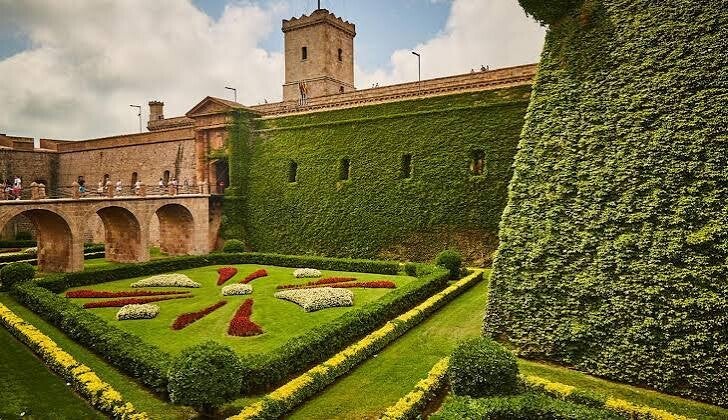
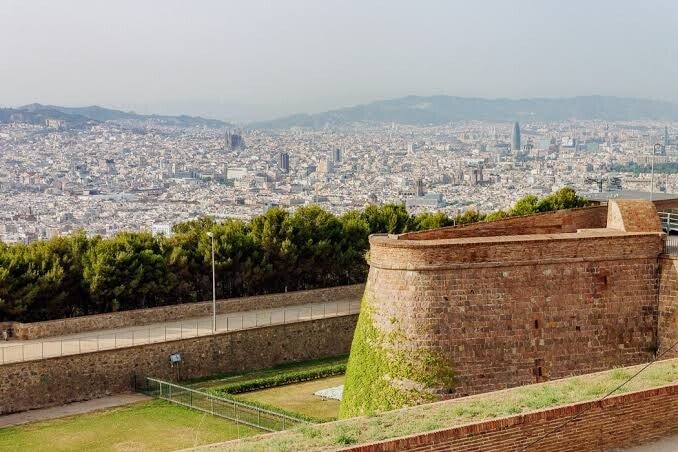
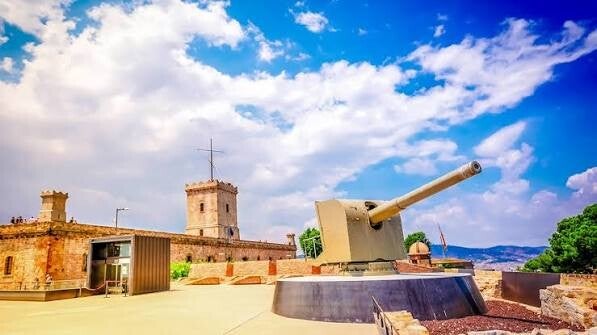
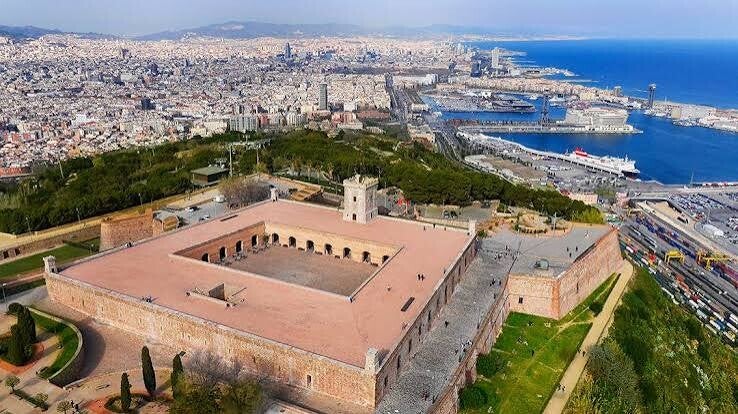
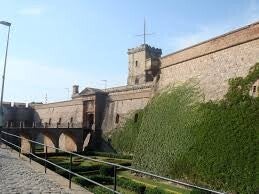
Montjuïc Castle stands at the summit of the hill. The present fortress dates mainly from the eighteenth century, although earlier defensive structures occupied the site.
Visitors can explore the parade ground, defensive walls, bastions, exhibition rooms and viewing terraces. The castle offers outstanding views of Barcelona’s port, coastline and city.
Its exhibitions introduce the history of the fortress and its relationship with Barcelona. Because the castle is also a place associated with political imprisonment and execution, it should be approached as both a tourist attraction and a site of remembrance.
Allow approximately one to one-and-a-half hours for the castle.
Montjuïc Cable Car
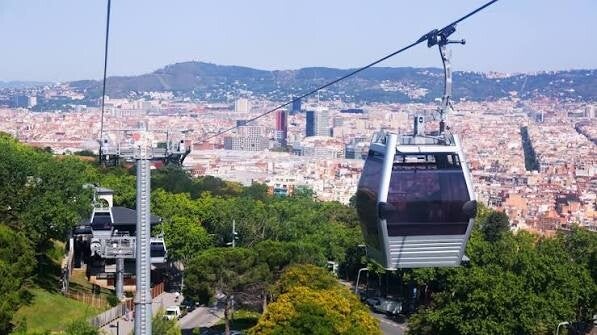
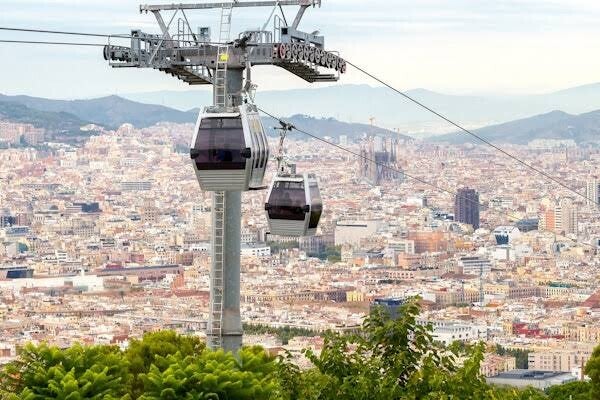
The Montjuïc Cable Car, or Telefèric de Montjuïc, travels from Parc de Montjuïc to the castle. Its cabins provide panoramic views of Barcelona, the Mediterranean Sea, the port and many of the city’s most famous landmarks.
The route covers approximately 750 metres. On the return journey, passengers may normally stop at Mirador de l’Alcalde before continuing to Parc de Montjuïc.
The lower station is at Avinguda de Miramar 30. It can be reached using the Montjuïc Funicular from Paral·lel metro station or by buses 55 and 150. Official Montjuïc Cable Car information
The Montjuïc Cable Car should not be confused with the older Port Cable Car, which crosses between Barceloneta, the harbour and Miramar.
Museu Nacional d’Art de Catalunya
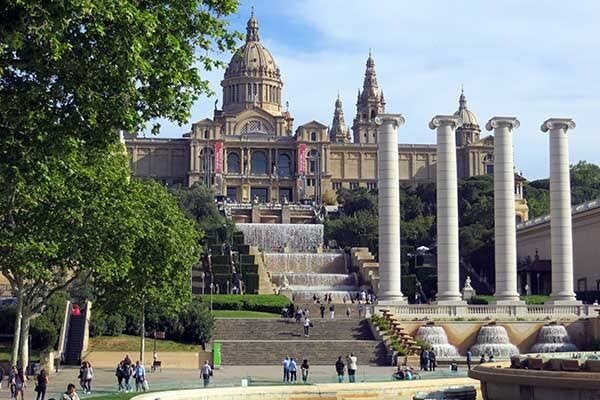
The Museu Nacional d’Art de Catalunya, commonly known as MNAC, occupies the magnificent Palau Nacional above Plaça d’Espanya.
The museum contains one of the world’s most important collections of Romanesque art, including medieval mural paintings transferred from churches in the Catalan Pyrenees. Its collections also include Gothic, Renaissance, Baroque, Modernist and twentieth-century works.
Even visitors who do not enter the museum can enjoy impressive city views from the terraces and stairways outside the Palau Nacional.
Allow at least two hours for the museum, or half a day for a more detailed visit. MNAC visitor information
The Magic Fountain of Montjuïc
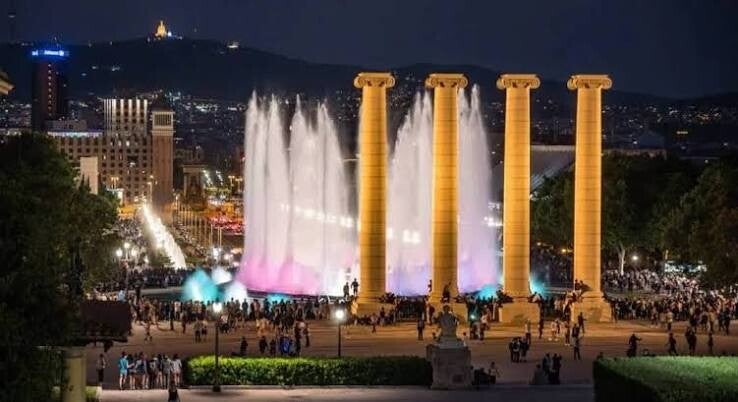
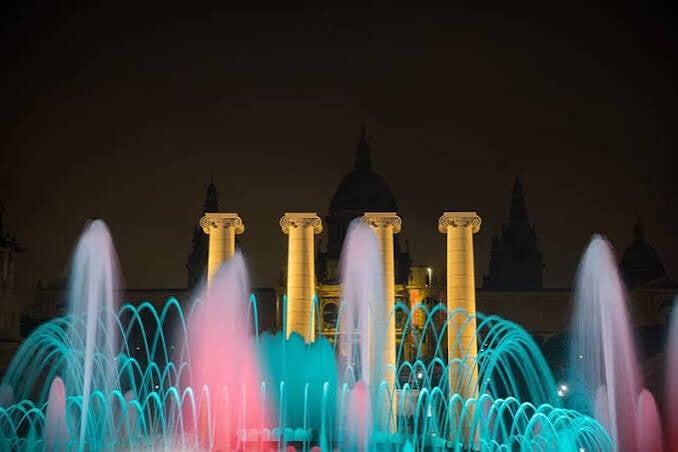
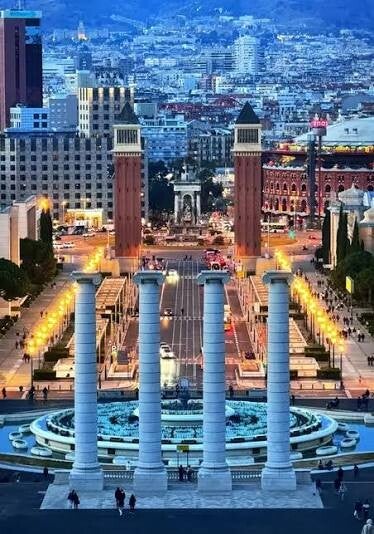
The Magic Fountain was designed by Carles Buïgas and inaugurated for the 1929 International Exposition. Its displays combine water, coloured lighting and music.
The fountain is located at Plaça de Carles Buïgas, between Plaça d’Espanya and the Palau Nacional. The surrounding stairways and fountains create one of Barcelona’s most impressive ceremonial landscapes.
Shows do not take place continuously. Schedules may change according to the season, municipal regulations, water restrictions, maintenance and special events. Visitors should therefore check Barcelona’s official programme shortly before travelling. Magic Fountain visitor information
Fundació Joan Miró
The Fundació Joan Miró is one of Barcelona’s most important modern-art museums. It contains an extensive collection of works by Catalan artist Joan Miró, including paintings, sculptures, ceramics, drawings and textiles.
The bright Mediterranean-style building was designed by architect Josep Lluís Sert in collaboration with Miró. Its white walls, terraces, courtyards and natural light form an important part of the experience.
The museum also presents temporary exhibitions and works by contemporary artists. Plan your Fundació Joan Miró visit
Poble Espanyol
Poble Espanyol was created for the 1929 International Exposition as an architectural representation of Spain. It contains reproductions and interpretations of buildings, streets and squares inspired by different Spanish regions.
Today, it functions as an open-air cultural centre with artisan workshops, restaurants, shops, contemporary art, family activities and special events. Visitors can watch craftspeople working with glass, leather, ceramics, jewellery and other materials.
It is particularly suitable for families and visitors interested in architecture, crafts and cultural entertainment. Poble Espanyol practical information
The Olympic Ring
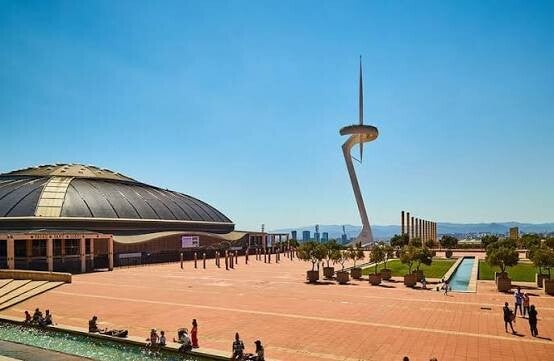
The Anella Olímpica, or Olympic Ring, was at the centre of the 1992 Barcelona Olympic Games. Major landmarks include:
- Estadi Olímpic Lluís Companys
- Palau Sant Jordi
- Bernat Picornell swimming pools
- INEFC sports complex
- The Communications Tower designed by Santiago Calatrava
- Plaça d’Europa and its landscaped surroundings
The Olympic Stadium was originally constructed for the 1929 International Exposition and later extensively renovated for the 1992 Games. Explore Montjuïc’s Olympic Ring
Access to venues may be restricted when concerts, sporting competitions or private events are taking place.
Barcelona Olympic and Sports Museum
Located beside the Olympic Stadium, the museum tells the story of the Olympic movement and the history of sport. Interactive exhibitions, sporting objects and audiovisual displays make it especially interesting for families and sports enthusiasts.
The German Pavilion
The Barcelona Pavilion was designed by Ludwig Mies van der Rohe and Lilly Reich for the 1929 International Exposition. Although the original structure was dismantled after the event, it was carefully reconstructed during the 1980s.
Its marble, glass, water and open-plan design made it one of the most influential architectural works of the twentieth century.
Montjuïc’s Gardens
Montjuïc contains some of Barcelona’s most attractive gardens:
- Jardins de Joan Maragall
- Jardins de Laribal
- Jardins de Mossèn Cinto Verdaguer
- Jardins de Mossèn Costa i Llobera
- Jardins del Teatre Grec
- Jardí Botànic de Barcelona
- Jardí Botànic Històric
- Mirador de l’Alcalde
The Mossèn Costa i Llobera Gardens are especially notable for their extensive collection of cacti and succulent plants. Some gardens have controlled entrances and specific closing times, while others are generally accessible during daylight hours.
Montjuïc Cemetery
Montjuïc Cemetery was opened in 1883. It contains elaborate family tombs, sculptures, chapels and memorials representing different periods of Barcelona’s history.
Important Catalan cultural, political and artistic figures are buried there. Visitors should remember that it remains an active cemetery and behave respectfully.
Opening and Closing Times
Montjuïc does not have one universal opening or closing time. Most roads, public viewpoints and open spaces are accessible throughout the day, but individual attractions maintain their own schedules.
The following hours are a practical guide for planning a visit. They were checked in September 2026 but may change on holidays, during maintenance or for special events.
AttractionUsual opening hoursMontjuïc Park and public hill areasGenerally accessible daily; individual gardens may close at sunsetMontjuïc CastleMarch–October: daily 10:00–20:00; November–February: daily 10:00–18:00Montjuïc Cable CarSeasonal; approximately 10:00–21:00 from June to September, with earlier closing during other monthsMNACMay–September: Tuesday–Saturday 10:00–20:00; October–April: Tuesday–Saturday 10:00–18:00; Sundays and public holidays 10:00–15:00; normally closed MondaysFundació Joan MiróTuesday–Saturday 10:00–20:00; Sunday 10:00–19:00; normally closed MondayPoble EspanyolOpens daily from 10:00; closing time varies according to season and scheduled eventsMagic FountainSeasonal evening performances; days and times must be checked before visitingOlympic venuesExterior public spaces generally accessible; interiors depend on eventsBotanical GardenSeasonal daytime timetable; closing times vary throughout the year
Ticket offices may close between 30 and 60 minutes before the attraction. Cable-car service may be suspended during strong winds, adverse weather or maintenance.
Always confirm current times through official websites on the day of your visit.
How to Reach Montjuïc Locally
From Plaça d’Espanya
Plaça d’Espanya is the most convenient starting point for the Magic Fountain, MNAC, Poble Espanyol and the lower section of Montjuïc.
Take metro line L1 or L3 to Espanya station. From the station, visitors can walk along Avinguda de la Reina Maria Cristina toward the fountains and Palau Nacional.
Escalators assist with part of the climb, although they may occasionally be out of service.
By Metro and Funicular
Take metro line L2 or L3 to Paral·lel station. From there, follow the signs to the Montjuïc Funicular.
The funicular climbs to Parc de Montjuïc, close to the Joan Miró Foundation and the lower station of the Montjuïc Cable Car.
The funicular is integrated into Barcelona’s public transport network, so a valid metro ticket or travel pass can normally be used. The cable car requires a separate ticket.
By Public Bus
Useful routes include:
- Bus 150: Plaça d’Espanya to Montjuïc Castle
- Bus 55: Connects parts of the city with Parc de Montjuïc
- Buses 13 and 23: Serve several attractions around the mountain
- Barcelona Bus Turístic: Stops near many important Montjuïc landmarks
Routes and diversions can change during concerts, festivals and sporting events.
By Port Cable Car
The Port Cable Car connects the area around Barceloneta and Port Vell with Miramar on Montjuïc. It offers impressive harbour views but is not part of the standard public transport system.
It is a separate service from the Montjuïc Cable Car to the castle.
By Taxi or Private Transfer
A taxi is convenient for families, elderly travellers and visitors with limited mobility. Ask the driver for the specific attraction rather than simply saying “Montjuïc,” because the hill covers a large area.
Walking or Cycling
Montjuïc can be explored on foot, but some paths are steep. Comfortable footwear, drinking water and sun protection are essential.
Cyclists should expect significant climbs. Public bicycles may have restrictions regarding where they can be parked or used.
International Connections to Montjuïc
From Barcelona–El Prat Airport
International visitors arriving at Barcelona–El Prat Airport have several options:
- Take the Aerobús to Plaça d’Espanya, an excellent starting point for Montjuïc.
- Use metro line L9 Sud and transfer to line L1 or L3 for Espanya.
- Take the airport train from Terminal 2 to Barcelona-Sants, then transfer to metro line L3 for Espanya or Paral·lel.
- Use a taxi or prearranged private transfer directly to your chosen Montjuïc attraction.
From Barcelona-Sants Railway Station
Barcelona-Sants receives high-speed trains from Madrid, France and other Spanish and European destinations.
Take metro line L3 directly from Sants Estació to Espanya or Paral·lel. A taxi journey is also relatively short, depending on traffic.
From the Cruise Port
Montjuïc rises immediately beside Barcelona’s port, but walking from some cruise terminals is impractical because of distance and port traffic.
Cruise passengers can:
- Take a taxi directly to Montjuïc Castle, MNAC or another attraction.
- Use the cruise-port shuttle and connect with public transport near La Rambla.
- Travel to Paral·lel station for the Montjuïc Funicular.
- Reach the Port Cable Car near Barceloneta, subject to its schedule.
By International Coach or Car
Long-distance coaches normally arrive at Barcelona Nord or Barcelona-Sants. Continue by metro, bus or taxi.
Visitors travelling by car should use designated public car parks. Parking may be restricted during major concerts, football matches and public events.
When Is the Best Time to Visit?
Spring and autumn offer comfortable temperatures for walking. During summer, visit early in the morning or later in the afternoon because many parts of the mountain have limited shade.
Morning is best for museums, gardens and quieter exploration. Late afternoon provides beautiful city views, while evening is ideal when a fountain performance, concert or special event is scheduled.
Montjuïc is too extensive to explore completely in a short visit. Select attractions according to your interests and allow sufficient time for travelling between them.
Practical Dos and Don’ts
Do
- Wear comfortable shoes suitable for hills, stairs and uneven paths.
- Carry water, particularly during the summer.
- Check museum, castle, fountain and cable-car schedules before travelling.
- Reserve popular attractions and exhibitions in advance.
- Allow additional travel time when concerts or sporting events are scheduled.
- Use sunscreen, a hat and light clothing during warmer months.
- Keep your ticket until completing your cable-car or funicular journey.
- Respect memorial sites, the cemetery and historic areas.
- Take time to enjoy the gardens and panoramic viewpoints.
Don’t
- Do not assume every Montjuïc attraction is within a few minutes’ walk.
- Do not confuse the Montjuïc Cable Car with the Port Cable Car.
- Do not rely on an old Magic Fountain timetable.
- Do not enter restricted Olympic or event areas.
- Do not leave valuables unattended at viewpoints, cafés or picnic areas.
- Do not underestimate the steep climb to the castle.
- Do not climb walls, monuments or historic structures for photographs.
- Do not leave litter in the gardens or public spaces.
- Do not fly a drone without checking Barcelona’s aviation and municipal regulations.
Plan Your Barcelona Holiday with Virtual World Travel Agency
Would you like professional assistance planning your Barcelona holiday? Virtual World Travel Agency can help you organize accommodation, transport, attraction tickets, car rentals, events and personalized holiday experiences.
WhatsApp or call: +34 664 663 275
Email: info@virtual-world.pl
Holiday planner form:
Request your personalized holiday plan
Self-booking platform for hotels, car rentals and events:
Search and book your travel services
Discover Montjuïc’s history, gardens, museums and breathtaking views with a journey thoughtfully planned by Virtual World Travel Agency.
Add comment
Comments