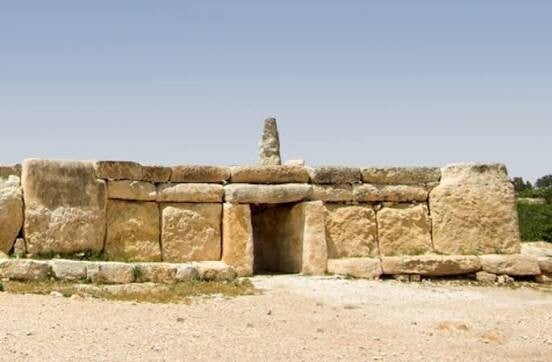
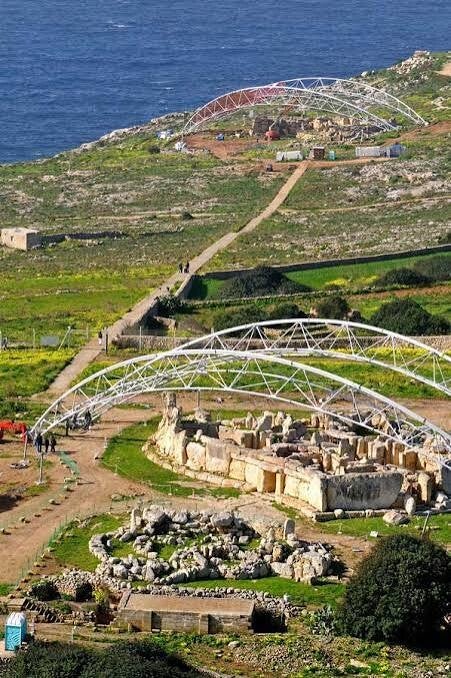
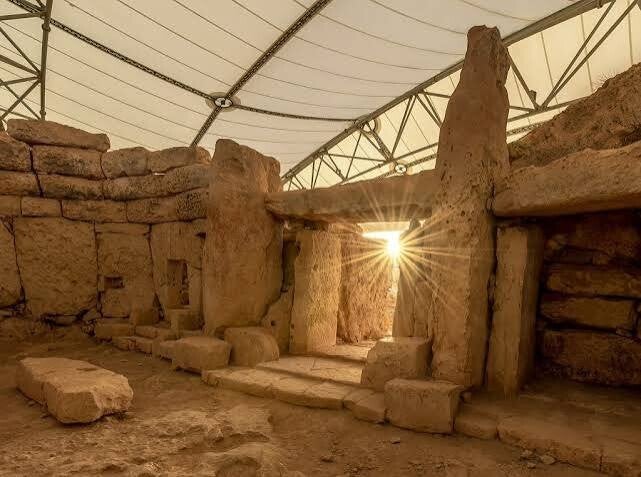
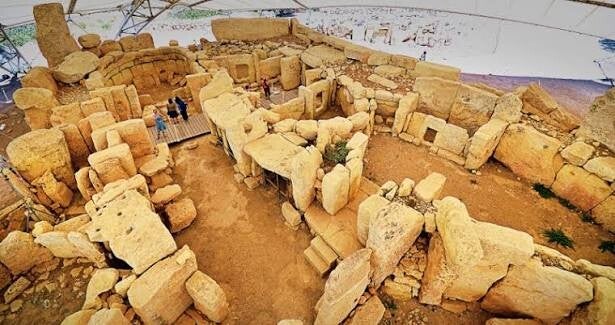
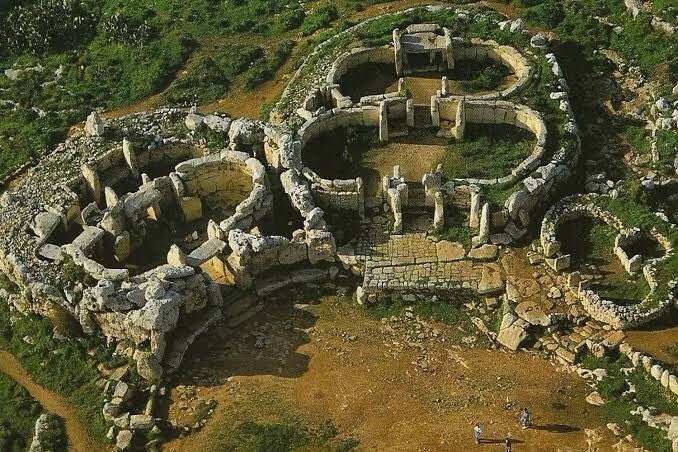
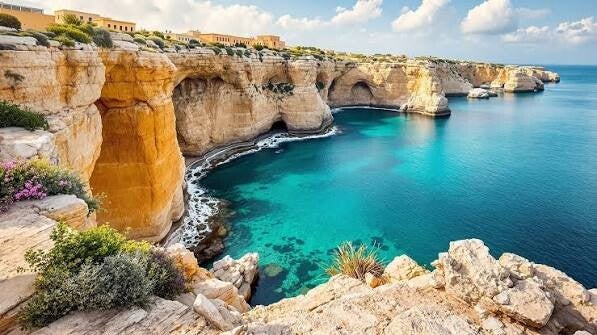
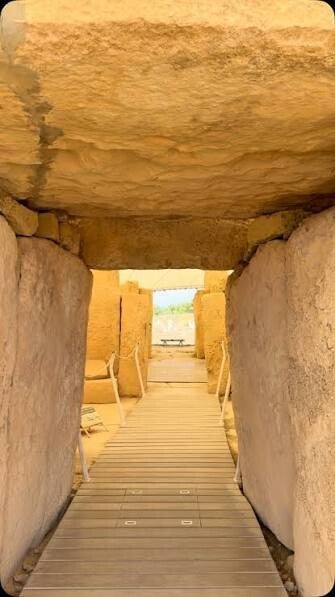
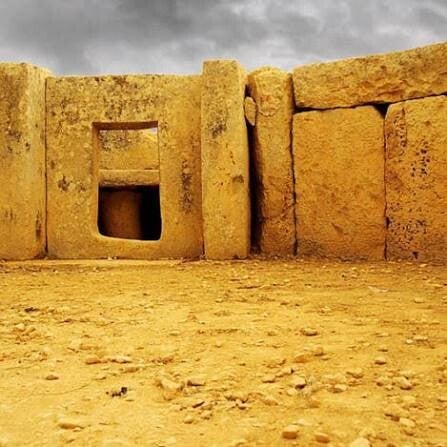
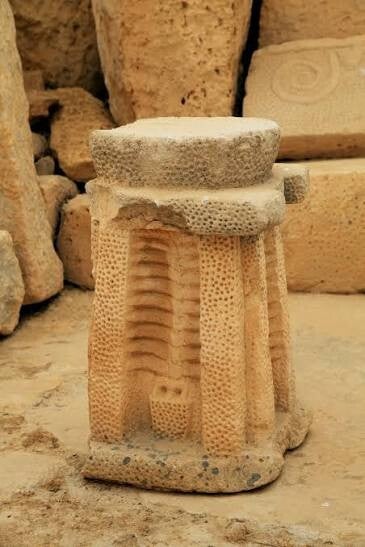
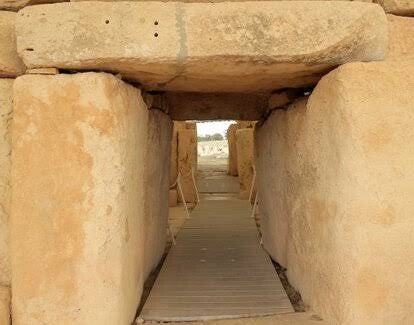
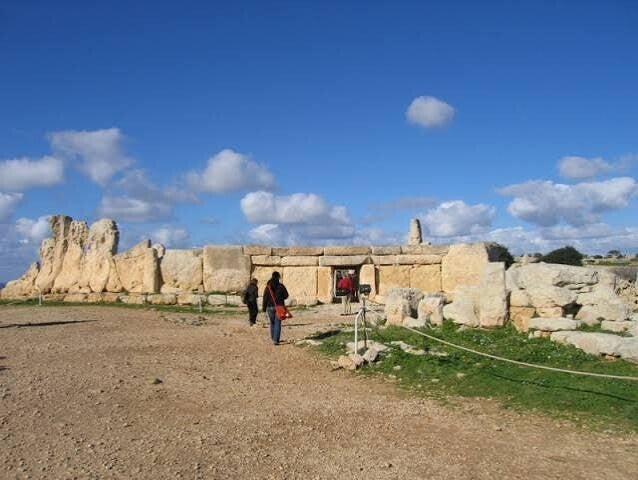
On Malta’s southern coast, stone doorways and immense upright slabs stand above the Mediterranean. Ħaġar Qim and Mnajdra are two of the islands’ most remarkable prehistoric temple complexes. Visiting them together offers a glimpse of the skill, beliefs and landscape of a society that lived here thousands of years ago.
The two sites form one archaeological park with a visitor centre. Give yourself time for both: Ħaġar Qim is close to the entrance, while Mnajdra is farther along an exposed coastal path.
Where are they?
The Ħaġar Qim and Mnajdra Archaeological Park is near Qrendi, on the south coast of Malta’s main island. The temples occupy separate positions within the park, with sea views forming part of the visit. Admission is sold as a combined ticket for the archaeological park.
A brief historical context
The temples belong to Malta’s extraordinary prehistoric building tradition. UNESCO dates the Megalithic Temples of Malta to the fourth and third millennia BCE and describes them as among the world’s earliest surviving free-standing stone buildings. Their builders used large upright slabs, carefully arranged interior chambers and locally available limestone. Ħaġar Qim and Mnajdra form part of the UNESCO World Heritage listing.
Visitors often notice how the buildings relate to light and the passing seasons. Heritage Malta holds special events connected with sunrise at the solstices and equinoxes. These are separately organised, limited-capacity experiences: an ordinary daytime ticket should not be mistaken for a sunrise event booking.
The original purpose of every space is still a subject for archaeological interpretation. What you can see with certainty is the builders’ command of stone, the complexity of the structures and the striking choice of location.
How to get there
From Valletta and elsewhere in Malta: The park can be reached by car, taxi, organised excursion or public bus. Bus 74 serves the Ħaġar Qim area on routes from Valletta, but routes and frequency can change; check Malta Public Transport’s live journey planner and identify your return bus before leaving. A driver or rental car provides more flexibility if you want to combine the temples with other southern-coast stops.
From abroad: Fly into Malta International Airport, then continue to your accommodation or the park by road. Travellers arriving by cruise ship at Valletta can use a taxi, transfer or a public-transport connection for a day visit. Allow for traffic, walking time within the park and the opening hours of the site.
What to see during your visit
Start at the visitor centre. Its displays introduce the prehistoric communities and help you recognise the features you will see among the stones. It is a useful first stop, particularly if you are visiting without a guide.
Explore Ħaġar Qim. Look at the scale of the upright stones and the arrangement of its passages and chambers. Take your time with the interpretation rather than trying to assign a modern purpose to every feature.
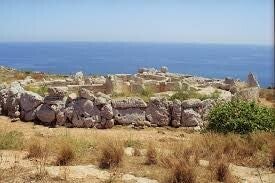
Continue to Mnajdra. Follow the designated path and allow for the return walk. Mnajdra rewards the extra effort with a different temple layout and a setting closely connected to the surrounding landscape. The path is exposed, so carry water and consider the heat, wind and your walking ability before setting out.
Heritage Malta says the visitor centre and Ħaġar Qim are accessible, while Mnajdra is not fully accessible. Contact the site before travelling if someone in your party has mobility needs.
Plan roughly two to three hours for the visitor centre, both temple sites, photographs and the walk between them. This is a suggested pace rather than an official tour duration.
Opening and closing times
The archaeological park’s hours vary by season and can change for events or site operations. Plan a daytime visit and check Heritage Malta’s current opening notices and the archaeological park page for your exact date before travelling. Heritage Malta states that last admission is 30 minutes before closing. Its museums and sites are closed on 1 January, Good Friday, and 24, 25 and 31 December.
Arriving in the morning usually leaves more time to see both temples without watching the clock. Do not plan to begin the walk to Mnajdra just before last admission.
Entry fees
Heritage Malta’s current Ħaġar Qim and Mnajdra Archaeological Park combo ticket covers admission to the park and is listed at €5.50–€10, depending on ticket category. The site lists €10 for adults. Select the appropriate child, student or concession category on the official booking page to see the applicable current price. Special guided events, including sunrise experiences, have their own tickets and prices.
Check your ticket’s conditions and keep it available during the visit. Transport, food and any organised guide are separate costs unless your chosen supplier expressly includes them.
Dos and don’ts
Do wear supportive walking shoes, bring water and use sun protection. Stay on marked paths and read the interpretation at both sites. Give children close supervision around the stones and coastal paths. Check the weather, opening notices and your return transport before setting out.
Don’t touch or climb the ancient structures, move stones, cross barriers or enter restricted areas. Avoid leaving litter in the archaeological park or its surrounding landscape. Do not assume an ordinary admission ticket includes access to a solstice or equinox event, or that every path is suitable for a wheelchair or pushchair.
Make Ħaġar Qim and Mnajdra part of your Malta holiday
Would you like to explore Malta’s ancient history as part of a family holiday, a couples’ escape or a longer island itinerary? Virtual World Travel Agency can help you plan a trip that brings together heritage, coastal scenery and time to relax.
WhatsApp or call: +34 664 663 275
Email: info@virtual-world.pl
Holiday planner form: Tell us about your holiday
Self-booking platform: Browse hotels, car rentals and events
Let the stones, the sea and Malta’s long history become part of your journey.
Add comment
Comments