Preparing a PhD proposal can be both exciting and challenging. Many prospective doctoral candidates have an interesting subject they would like to investigate, but they struggle to transform that broad interest into a clear, focused and academically defensible research problem.
A compelling PhD proposal must do more than identify a topic. It must demonstrate that there is a meaningful difficulty, unanswered question, neglected perspective, contradiction or limitation within existing scholarship. It must also explain why the problem matters and how the proposed research will contribute new knowledge.
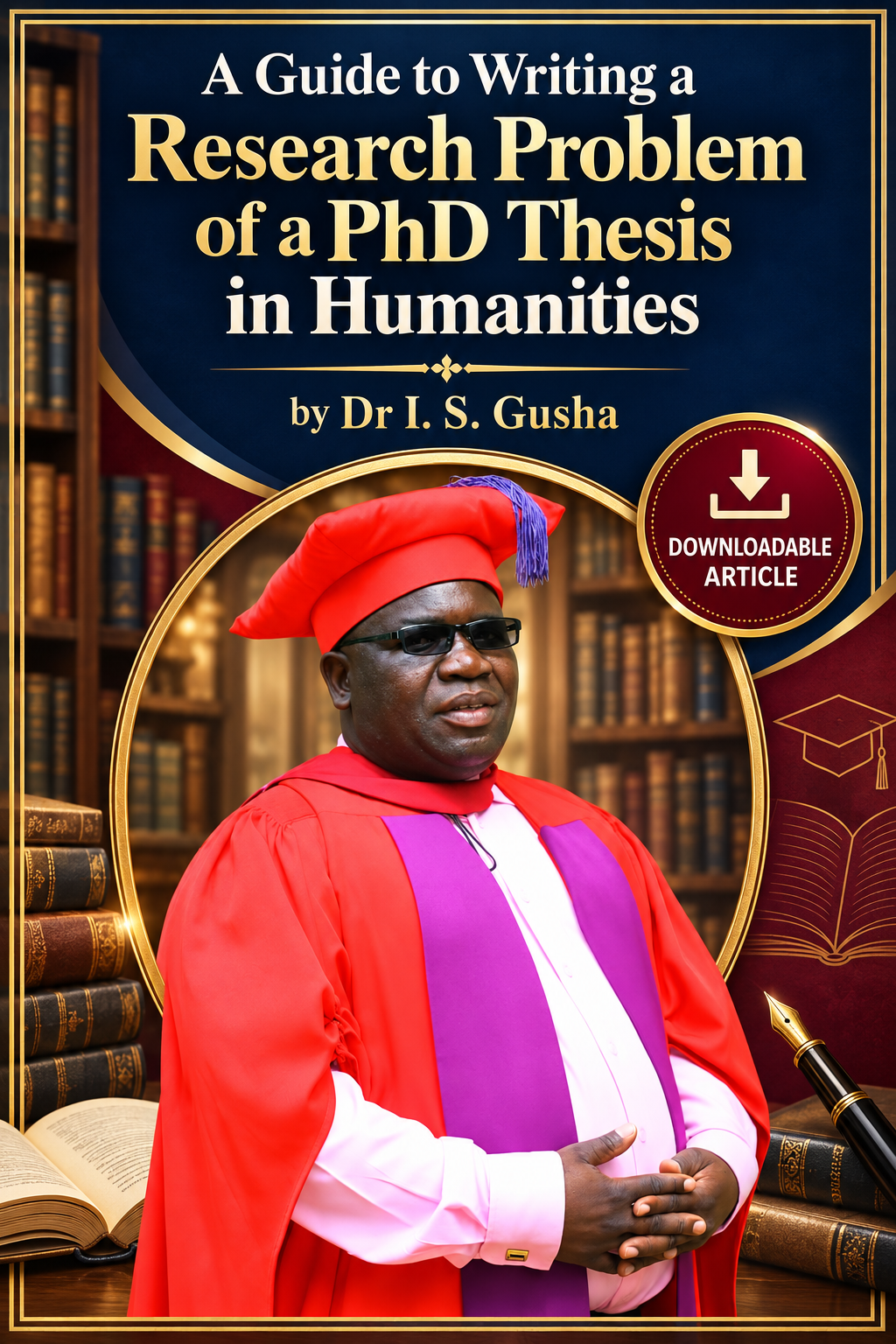
The downloadable article, “A Guide to Writing a Research Problem for a PhD Thesis in the Humanities,” by Dr I. S. Gusha, provides comprehensive academic and practical guidance for completing this important stage of doctoral proposal writing.
Why Is the Research Problem Important?
The research problem is the intellectual foundation of a PhD thesis. It explains why the proposed study is necessary and gives direction to the entire research project.
A clearly written research problem influences:
The purpose of the study
The main and subsidiary research questions
The literature review
The theoretical or conceptual framework
The selection of primary and secondary sources
The research methodology
The scope and limitations of the study
The originality and significance of the expected contribution
Without a clearly defined research problem, a proposal may contain an interesting topic, extensive background information and several research questions but still fail to establish why a new doctoral study is required.
A Topic Is Not Yet a Research Problem
One of the most common mistakes made by prospective PhD candidates is confusing a broad subject with a research problem.
For example, topics such as African Christianity, migration, religious identity, colonial history, gender in literature or political philosophy may be valuable fields of study. However, they are not yet research problems.
A research problem must identify something specific that remains insufficiently understood, inadequately explained, contested, overlooked or misrepresented within existing scholarship.
The guide carefully explains the differences between:
A broad academic field
A subject or topic
A practical concern
A literature gap
A research problem
A research question
A purpose statement
Understanding these distinctions can help a student move from a general interest to a focused and researchable doctoral project.
What Does This Downloadable Article Cover?
This comprehensive academic guide explains how to construct a persuasive research problem specifically for a PhD proposal in the humanities.
It covers:
The meaning and purpose of a research problem
The distinctive character of research problems in the humanities
How to identify a genuine scholarly deficiency
How to engage existing academic conversations
The difference between identifying a gap and establishing a problem
How to explain the significance of the problem
How to connect the problem with research questions
How to delimit the geographical, historical and conceptual scope
How to align the problem with theory, sources and methodology
How to demonstrate originality without exaggeration
Ethical and positional considerations
Common weaknesses found in research-problem statements
A detailed worked example from the humanities
A practical writing procedure
A model structure for a proposal
A final evaluation checklist
The article also contains in-text citations from reputable scholars and a comprehensive bibliography for further reading.
Why Should a Prospective PhD Student Buy This Guide?
1. It helps transform a broad idea into a researchable problem
Many students know the general area they want to study but cannot explain precisely what their research will investigate. This guide provides a logical process for moving from a broad subject to a focused scholarly problem.
2. It explains what universities expect at doctoral level
A PhD proposal must demonstrate academic significance, originality, feasibility and methodological coherence. The article explains how the research problem can establish these qualities from the beginning.
3. It helps students avoid weak claims
Statements such as “little research has been conducted” or “no one has studied this topic” are often too vague and may be inaccurate. The guide shows how to identify and describe a scholarly deficiency carefully and convincingly.
4. It connects every part of the proposal
The research problem should not exist separately from the rest of the proposal. It must align with the research questions, objectives, literature review, theoretical framework, methodology and expected contribution. The guide explains these relationships clearly.
5. It provides a worked humanities example
The article demonstrates how a broad subject can be developed into a scholarly context, a precise deficiency, an academic consequence and a viable research response. This practical example helps readers apply the principles to their own projects.
6. It includes a practical evaluation checklist
Prospective candidates can use the checklist to assess whether their research problem is sufficiently clear, significant, focused, original and researchable before submitting a proposal or approaching a potential supervisor.
7. It is grounded in reputable scholarship
The article engages respected writers on research design, doctoral education and academic writing, including Wayne C. Booth, Gregory G. Colomb, Joseph M. Williams, John Creswell, Joseph Maxwell, Patrick Dunleavy, Umberto Eco, Estelle Phillips, Derek Pugh and Kate Turabian.
Who Will Benefit from This Article?
This downloadable resource is especially valuable for:
Prospective PhD applicants
Students preparing doctoral research proposals
Early-stage PhD candidates refining their projects
Master’s students considering doctoral study
Lecturers and postgraduate research supervisors
Independent scholars developing research projects
Students of theology, religious studies, history, literature, philosophy, cultural studies and related humanities disciplines
Build Your PhD Proposal on a Strong Foundation
A doctoral thesis may require several years of sustained research, reading, analysis and writing. Beginning with a vague or unmanageable research problem can result in confusion, repeated revisions and the loss of valuable time.
Investing in a clear academic guide at the proposal stage can help you ask better questions, define realistic boundaries and communicate the importance of your proposed research more convincingly.
This article does not offer a shortcut to completing a doctorate. Instead, it provides a disciplined framework for developing the intellectual foundation upon which a strong PhD proposal can be built.
Download Your Copy
“A Guide to Writing a Research Problem for a PhD Thesis in the Humanities” is available as a downloadable article.
Purchase and download the complete guide here
Begin your doctoral journey with a research problem that is focused, significant, original, researchable and capable of making a meaningful contribution to knowledge.
Written by Dr I. S. Gusha
Add comment
Comments