Tibidabo and the Serra de Collserola offer a remarkable combination of panoramic scenery, historic entertainment, religious architecture and protected Mediterranean landscape. Rising behind Barcelona, they provide a completely different experience from the city’s crowded historic centre and beaches.
At the summit of Tibidabo, visitors can enjoy a century-old amusement park, the Temple of the Sacred Heart of Jesus and exceptional views over Barcelona. The surrounding Collserola Natural Park traditionally offers forests, walking routes, viewpoints and places of environmental interest.
However, Tibidabo’s paved summit attractions and the forested areas of Collserola have different access conditions. In 2026, significant restrictions have affected recreational access to parts of Collserola. Visitors must check official notices before entering any forest path.
Where Are Tibidabo and Collserola?
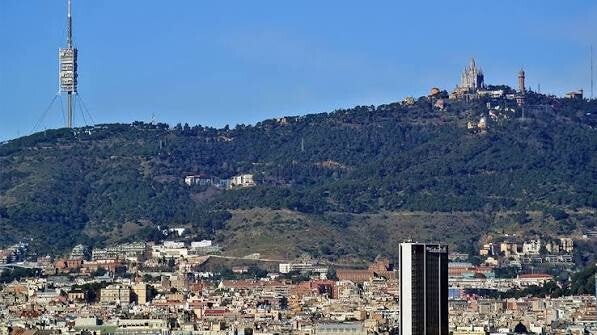
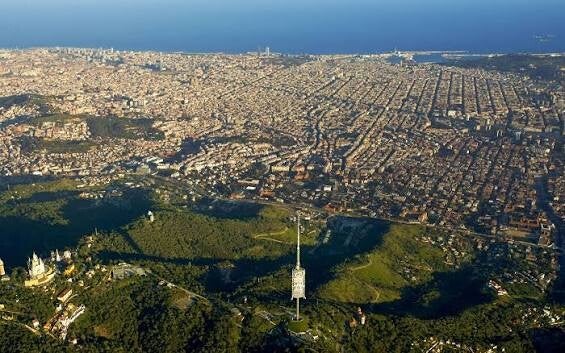
Tibidabo is the highest and most recognizable summit in the Serra de Collserola overlooking Barcelona. It rises to approximately 512 metres above sea level and is visible from many parts of the city.
The summit lies northwest of Barcelona’s centre within the Sarrià–Sant Gervasi district. Its principal address is:
Plaça del Tibidabo
08035 Barcelona, Spain
Collserola is the mountain range separating Barcelona from the Vallès plain. The wider natural park extends across several municipalities, including Barcelona, Sant Cugat del Vallès, Cerdanyola del Vallès, Esplugues de Llobregat, Sant Just Desvern and Molins de Rei.
The Collserola Park Information Centre is located at:
Carretera de l’Església, 92
08017 Barcelona
Tibidabo is approximately:
- 35–50 minutes from Plaça de Catalunya
- 40–55 minutes from the Gothic Quarter
- 35–50 minutes from the Sagrada Família
- 45–60 minutes from Barceloneta
- 35–50 minutes from Barcelona–El Prat Airport
- 30–45 minutes from Barcelona-Sants station
Travel time depends on transport connections, road traffic and the operating schedule of the funicular.
A Brief History of Tibidabo
The name Tibidabo is traditionally associated with the Latin words tibi dabo, meaning “I will give you.” The expression appears in the biblical account of the temptation of Jesus, when the devil shows Christ the kingdoms of the world and says, “All these I will give you.”
The name is appropriate for a mountain from which Barcelona, the Mediterranean Sea and the surrounding region appear spread out below.
For centuries, Collserola formed a natural boundary behind Barcelona. Its forests, farms, churches, springs and paths were used by rural communities, religious groups and travellers moving between Barcelona and the Vallès.
Tibidabo’s transformation into a leisure destination began at the end of the nineteenth century. Pharmacist and businessman Dr Salvador Andreu promoted the development of Avinguda del Tibidabo and transport connections leading toward the mountain.
In 1901, the Tibidabo Funicular and amusement park opened. The funicular was among Spain’s earliest examples of this form of mountain transport, while Tibidabo became one of Europe’s oldest surviving amusement parks.
The park’s elevated location and mechanical attractions made it a symbol of Barcelona’s technological optimism. Historic rides were gradually joined by modern attractions, shows, restaurants and family entertainment.
The original funicular was eventually replaced by the modern Cuca de Llum, meaning “firefly,” which began operating in 2021.
A Brief History of Collserola
The Serra de Collserola has long provided Barcelona with forests, water sources, agricultural land and natural protection.
Historic farmhouses, chapels, defensive sites and paths remain scattered across the landscape. The area also contains remains associated with Iberian settlements, medieval communities and later rural development.
As Barcelona expanded during the nineteenth and twentieth centuries, Collserola became increasingly important as a protected natural space. It now serves as a major ecological corridor and a green refuge beside one of Europe’s most densely populated metropolitan areas.
The park’s vegetation includes Mediterranean woodland, pine forests, oak trees, scrubland and riverside habitats. Wildlife traditionally includes birds of prey, foxes, badgers, squirrels and wild boar.
Important 2026 Access Notice for Collserola
In March 2026, authorities imposed major access restrictions in Collserola following the detection of African swine fever among wild boar within Barcelona’s municipal area.
The disease is not considered a danger to humans, but it can spread rapidly among pigs and wild boar. Recreational access to forest paths was therefore restricted as part of disease-containment measures. Further temporary restrictions have also occurred because of wildfire risk and fires during summer 2026.
The paved summit area containing Tibidabo Amusement Park, the Temple of the Sacred Heart and authorized public transport may remain accessible even when recreational forest routes are closed.
Before planning any hike, run or cycling trip:
- Consult the official Collserola Natural Park website.
- Check Barcelona and Catalan emergency notices.
- Obey all barriers and signs.
- Do not enter closed forest roads or trails.
- Do not approach or touch wild boar.
- Report dead or distressed wild animals to emergency services.
- Follow all fire-prevention restrictions.
A visit to Tibidabo’s authorized summit attractions should not be interpreted as permission to enter the surrounding forest.
What to See and Do at Tibidabo
Tibidabo Amusement Park
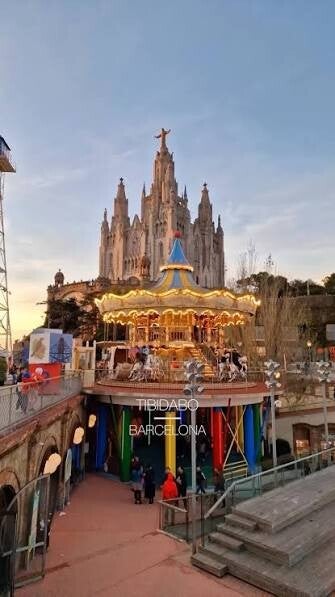
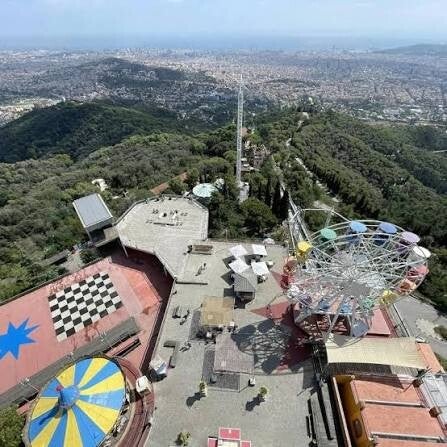
Tibidabo Amusement Park opened in 1901 and is one of Europe’s oldest continually operating amusement parks.
Its combination of historic rides, modern family attractions and mountaintop views gives it a character different from large contemporary theme parks.
Popular attractions may include:
- L’Avió: A historic aeroplane ride extending over the mountainside
- Talaia: A high observation arm offering spectacular views
- Giradabo: The panoramic Ferris wheel
- Carrusel: A traditional carousel
- Automata Museum: A collection of mechanical figures and amusement machines
- Family rides and children’s attractions
- Roller coasters and thrill rides
- Seasonal shows and entertainment
Not every attraction operates every day. Maintenance, weather, height restrictions and seasonal programming can affect availability.
The Panoramic Area
The Panoramic Area occupies the upper section of Tibidabo and contains several of the park’s most historic attractions.
General access to the Panoramic Area is usually free, but individual rides require a ticket or appropriate pass. The area offers some of Barcelona’s finest views and can be visited even on certain days when the complete amusement park is closed.
Historic attractions in this area commonly include the Giradabo, Talaia, Avió, Carrusel and Automata Museum.
Temple of the Sacred Heart of Jesus
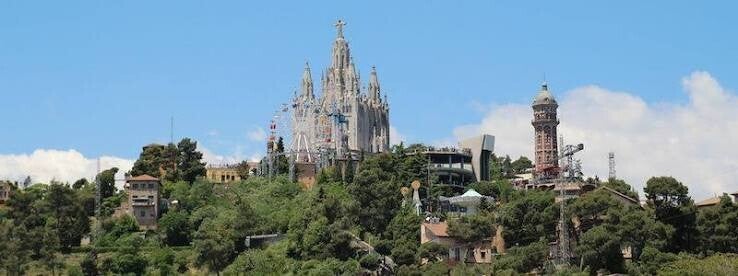
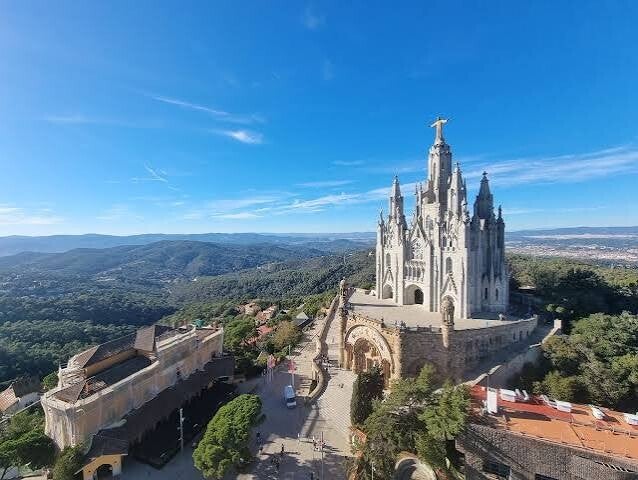
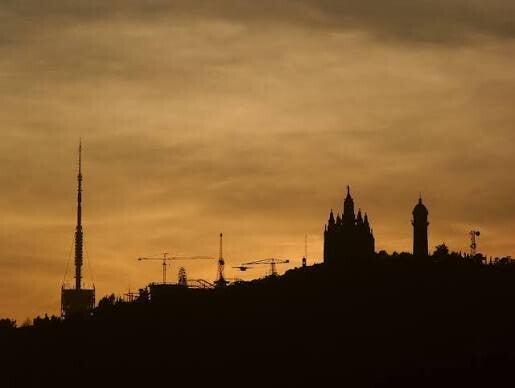
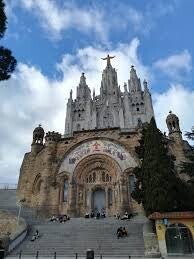
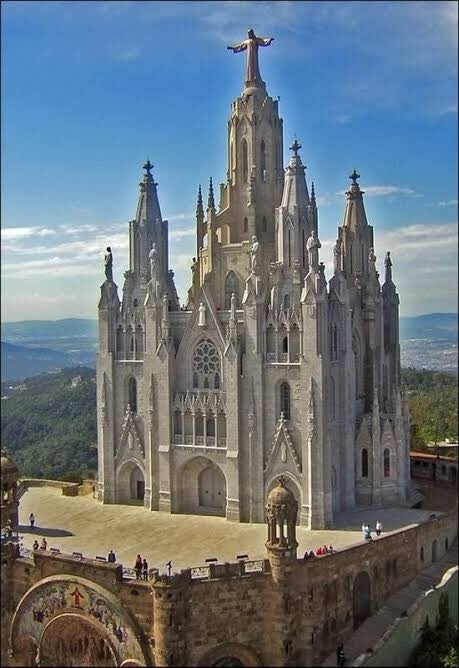
The Temple Expiatori del Sagrat Cor, or Expiatory Temple of the Sacred Heart, stands beside the amusement park at the Tibidabo summit.
The religious complex consists of a lower crypt and an upper church crowned by a monumental statue of Christ with outstretched arms.
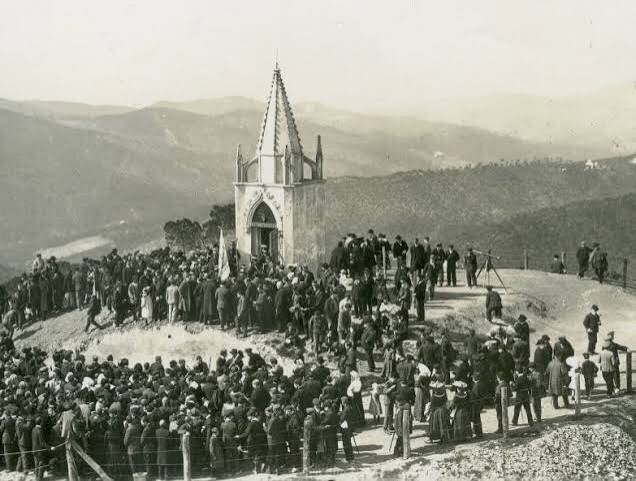
A small hermitage was constructed on the mountain during the nineteenth century. Work on the present church began in 1902 under architect Enric Sagnier and was later continued by his son, Josep Maria Sagnier. The church was completed during the twentieth century and received the title of minor basilica in 1961.
The lower crypt combines Romanesque, Byzantine and Modernista influences. The upper church has a more vertical neo-Gothic appearance.
Entry to the church and crypt is normally free. A paid lift provides access toward the upper terraces, but additional stairs are required to reach the highest viewpoints.
Because it is an active place of worship, tourist access may be restricted during Masses, weddings, funerals and religious celebrations.
Tibidabo Viewpoints
On clear days, visitors can see:
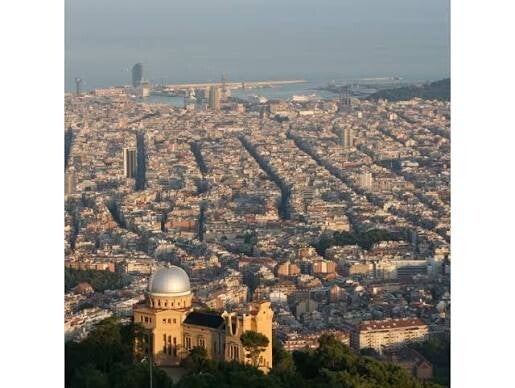
- Barcelona’s Eixample street plan
- The Sagrada Família
- Spotify Camp Nou
- Montjuïc
- The Mediterranean coastline
- Port of Barcelona
- The Besòs and Llobregat areas
- The Vallès region behind Collserola
- Distant mountains beyond the metropolitan area
Morning often offers clearer visibility, while sunset provides a more atmospheric city view.
Cuca de Llum Funicular
The Cuca de Llum connects Plaça del Doctor Andreu with the Tibidabo summit.
Opened in its present form in 2021, it replaced the historic Tibidabo funicular. Its large windows provide views during the ascent, while digital displays introduce aspects of the mountain and amusement park.
The journey takes approximately four minutes and carries up to 252 passengers per trip. Official Cuca de Llum information
Torre de Collserola
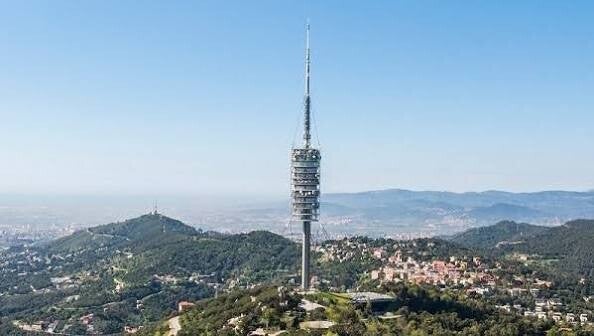
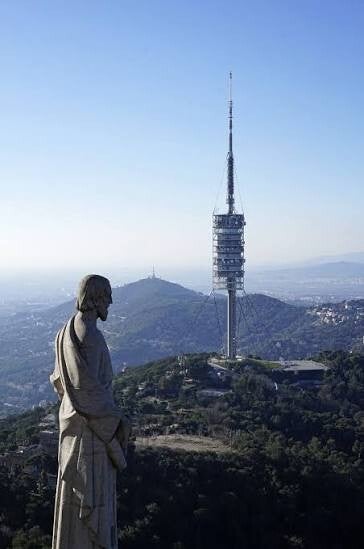
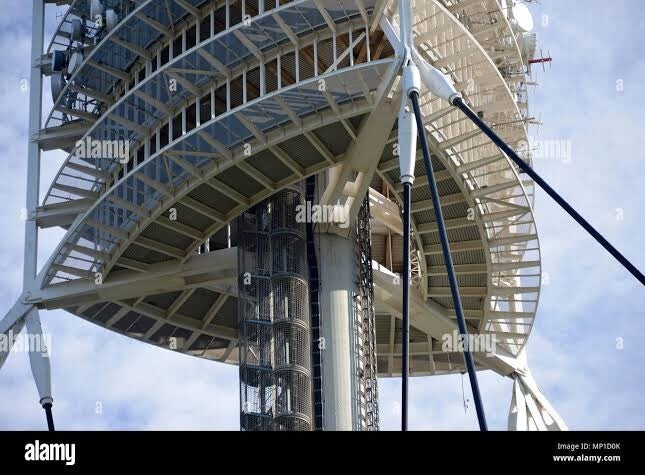
Torre de Collserola is a telecommunications tower designed by British architect Norman Foster for the 1992 Barcelona Olympic Games.
It stands on Turó de la Vilana near Tibidabo and reaches approximately 288 metres in structural height. Its elevated position makes it one of Barcelona’s most visible landmarks.
Public viewpoint access is limited and may operate only during selected periods. Do not travel to the tower without confirming that visitor admission is available. Check Torre de Collserola information
Places of Interest in Collserola
Subject to official access permission, places traditionally associated with Collserola include:
Vallvidrera
Vallvidrera is a historic hillside neighbourhood within Barcelona. Its small streets, houses and viewpoints create a quieter atmosphere than the city centre.
The Vallvidrera Funicular connects Peu del Funicular station with the upper neighbourhood.
Vil·la Joana
Vil·la Joana is a historic farmhouse where Catalan poet Jacint Verdaguer spent the final period of his life. It now operates as a museum connected with Barcelona’s history and literary heritage.
Santa Maria de Vallvidrera
This historic church is located near the Collserola Information Centre. Its surrounding landscape reflects the area’s rural and religious history.
Vallvidrera Reservoir
The reservoir was constructed during the nineteenth century as part of Barcelona’s water infrastructure. Recreational access may be affected by park restrictions, conservation work or path closures.
Carretera de les Aigües
The Carretera de les Aigües is traditionally one of Barcelona’s most popular walking, running and cycling routes. It follows a relatively level course along the mountainside and provides extensive city views.
This route must not be used while official restrictions prohibit entry. Check current access conditions before setting out.
Collserola Park Information Centre
The centre provides maps, environmental information, suggested routes and guidance about park regulations.
It normally opens daily from 09:30 to 15:00, with special closures on selected dates. Access to the centre does not necessarily mean surrounding forest trails are open. Collserola Information Centre
Opening and Closing Times
Tibidabo does not operate one universal timetable. The amusement park, Panoramic Area, Cuca de Llum, church and Collserola facilities each have separate schedules.
Tibidabo Amusement Park
The full amusement park generally opens on selected days:
- March–May: Weekends, public holidays and selected Easter dates
- June: Weekends and holidays, with additional opening days later in the month
- July–August: Generally Wednesday–Sunday
- September–November: Weekends, public holidays and selected special dates
- December: Weekends and selected Christmas dates
- January: Selected early-January dates
Opening and closing times vary by date. The park often begins operating around 11:00, but visitors must use the official daily calendar. Official Tibidabo schedule
Panoramic Area
The Panoramic Area generally operates:
- Weekends during February
- Daily from March through December, except selected Christmas dates
- Selected dates in early January
On 9 September 2026, for example, the Panoramic Area was scheduled from 11:00 to 19:00, while the complete amusement park was closed. This demonstrates why the two schedules must be checked separately.
Cuca de Llum
The funicular generally operates:
- Weekends in February
- Daily from March through December
- Selected days during January
- Reduced hours on certain Christmas and New Year dates
Its daily schedule is coordinated with Tibidabo operations.
Temple of the Sacred Heart
Typical schedules are:
- Crypt: Approximately 09:00–20:00 in winter, with later closing during warmer months
- Upper church and terrace lift: Seasonal, generally beginning around 10:30 or 11:00
- September: Upper areas may operate until approximately 19:45 or 20:00
Religious services take priority over tourism.
Collserola Natural Park
Collserola is normally an open natural landscape rather than an enclosed attraction with gates. However, access may be legally restricted because of:
- Animal-disease containment
- Wildfire danger
- Active firefighting
- Storm damage
- Conservation work
- Hunting or wildlife-control operations
- Extreme weather
In 2026, visitors should not assume forest paths are open. Check official conditions on the day of travel.
How to Reach Tibidabo Locally
Via Avinguda del Tibidabo and Cuca de Llum
A common route is:
- Take FGC line L7 from Plaça de Catalunya to Avinguda Tibidabo.
- Continue toward Plaça del Doctor Andreu using the current connecting bus service.
- Take the Cuca de Llum funicular to the summit.
Transport arrangements may vary according to the park calendar.
By TibiBus
Special TibiBus services operate from selected Barcelona locations on park-opening days. Routes and departure points may change, so consult the Tibidabo website before travelling.
By Bus
City buses serving the mountain area include routes 195 and 196. Bus 111 may also serve sections around Vallvidrera and Tibidabo, depending on the chosen route.
By Taxi
A taxi is convenient for families, groups and visitors with reduced mobility. Ask for Plaça del Tibidabo or the specific attraction.
Book a return taxi in advance during quieter periods because vehicles may not always be waiting at the summit.
By Car
Limited paid parking may be available near the summit. It can fill quickly during weekends and public holidays.
Driving is not recommended during busy events or adverse weather. Forest-road closures must be respected.
How to Reach Collserola Locally
When recreational access is officially permitted, useful railway connections include:
- FGC to Baixador de Vallvidrera
- FGC to Les Planes
- FGC to La Floresta
- FGC to Sant Cugat
- FGC to Peu del Funicular, followed by the Vallvidrera Funicular
The correct station depends on the authorized route. Do not begin a hike without confirming that the complete route is open.
International Connections
From Barcelona–El Prat Airport
International visitors can:
- Take the Aerobús to Plaça de Catalunya and connect with FGC line L7.
- Take the airport train from Terminal 2 to Barcelona-Sants and continue by metro, FGC or taxi.
- Use metro line L9 Sud and transfer into Barcelona’s urban network.
- Take a taxi or private transfer directly to Tibidabo.
Public transport is generally more reliable than driving during busy weekends.
From Barcelona-Sants Station
Take metro line L5 to Diagonal, walk to Provença FGC station and continue toward Plaça de Catalunya or the appropriate Collserola connection.
Alternatively, take a taxi directly to Plaça del Tibidabo or Plaça del Doctor Andreu.
From the Cruise Port
Cruise passengers can take the Cruise Bus toward the Columbus Monument and continue by taxi or public transport.
Because Tibidabo is far from the cruise terminals, passengers with limited shore time should use a taxi or organized transfer and allow sufficient time to return.
By International Coach
Long-distance coaches generally arrive at Barcelona Nord or Barcelona-Sants. Continue by metro, FGC or taxi.
Best Time to Visit
Spring and autumn normally provide the most comfortable temperatures. Summer offers longer operating hours but can be hot and crowded.
Morning is usually best for clear views and shorter queues. Late afternoon provides attractive light, but check the final funicular departure carefully.
Avoid exposed viewpoints during thunderstorms, strong wind or extreme heat.
Practical Dos and Don’ts
Do
- Check the Tibidabo calendar before leaving your accommodation.
- Confirm whether the full park or only the Panoramic Area is open.
- Verify Collserola trail restrictions on the day of travel.
- Wear comfortable shoes.
- Carry water, sunscreen and a hat.
- Bring a light jacket because the summit can be cooler and windier.
- Check ride height and age restrictions before purchasing tickets.
- Respect worship inside the Sacred Heart church.
- Keep children supervised near viewpoints and rides.
- Allow time for the final funicular or bus departure.
- Follow instructions from park staff, police and forest officers.
- Use marked, officially open routes only.
Don’t
- Do not assume the amusement park opens daily.
- Do not confuse free Panoramic Area access with free use of the rides.
- Do not enter closed Collserola paths.
- Do not feed, approach or photograph wild boar at close range.
- Do not touch dead or injured wildlife.
- Do not light fires, smoke in forest areas or discard cigarettes.
- Do not leave food or rubbish behind.
- Do not fly a drone without authorization.
- Do not rely on an outdated transport timetable.
- Do not miss the final Cuca de Llum departure.
- Do not climb barriers at viewpoints.
- Do not travel to Torre de Collserola without confirming public access.
Plan Your Barcelona Holiday with Virtual World Travel Agency
Would you like professional assistance organizing your Barcelona holiday? Virtual World Travel Agency can help you arrange accommodation, transportation, car rentals, attraction tickets, family activities, events and personalized travel experiences.
WhatsApp or call: +34 664 663 275
Email: info@virtual-world.pl
Holiday planner form:
Request a personalized holiday plan
Self-booking platform for hotels, car rentals and events:
Search and book your travel services
Experience Barcelona from above—combining the historic attractions of Tibidabo with the natural beauty of Collserola—through a carefully planned holiday with Virtual World Travel Agency.
Add comment
Comments