At the heart of Barcelona lies a fascinating district where more than 2,000 years of history remain visible in narrow streets, ancient walls, medieval palaces, churches and hidden archaeological remains. The Gothic Quarter—known locally as the Barri Gòtic—occupies the oldest part of the city and contains important traces of the Roman settlement of Barcino.
A visit to the Gothic Quarter is not simply a walk through an attractive historic neighbourhood. It is a journey from Roman Barcelona through the medieval city and into the political, religious and cultural life of modern Catalonia.
A Brief Historical Background
Roman Barcino
Barcelona’s recorded urban history began around 10 BC, when the Romans established a small colony called Colonia Iulia Augusta Faventia Paterna Barcino. The settlement was constructed on and around the low hill now known as Mont Tàber.
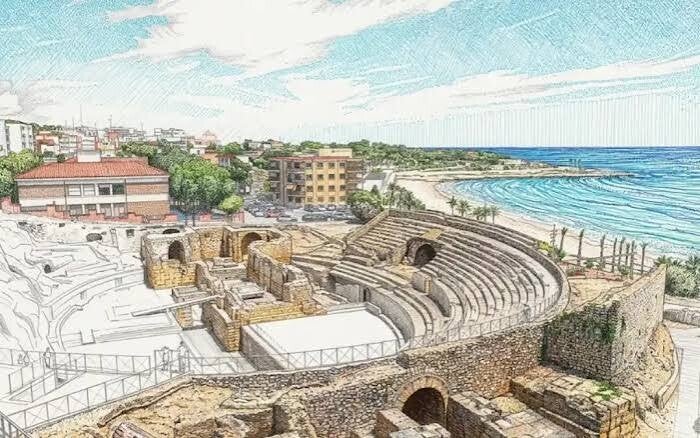
Although Barcino was smaller than the nearby Roman cities of Tarraco, now Tarragona, and Empúries, its location between the Mediterranean Sea and the Collserola hills gave it strategic and commercial importance.
The Roman town was organised around two principal streets:
- The Cardo Maximus, running approximately from north to south.
- The Decumanus Maximus, running approximately from east to west.
These two streets crossed near the present-day Plaça de Sant Jaume, which remains the political centre of Barcelona. Today, the square is home to Barcelona City Hall and the Palau de la Generalitat, the seat of the Government of Catalonia.
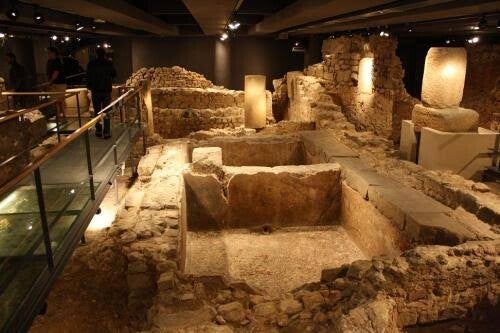
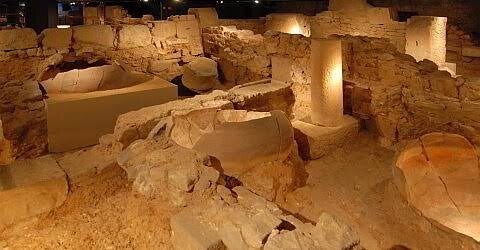
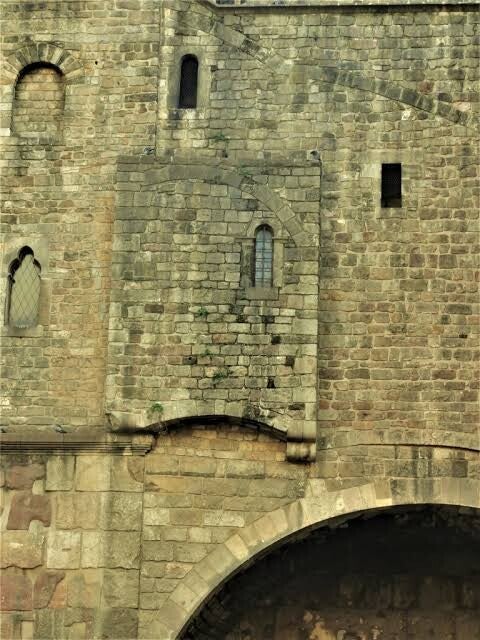
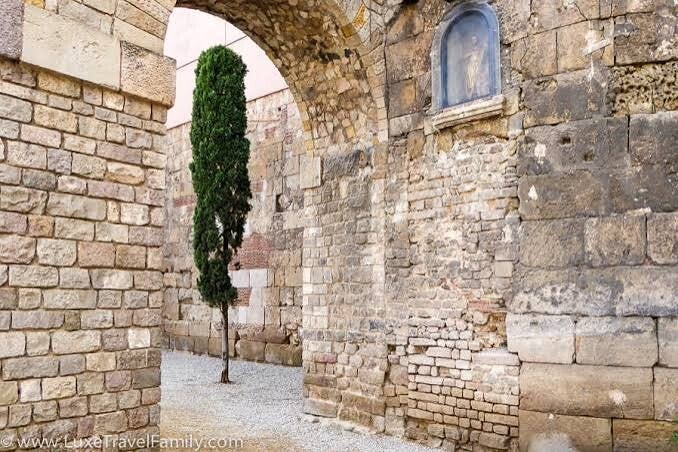
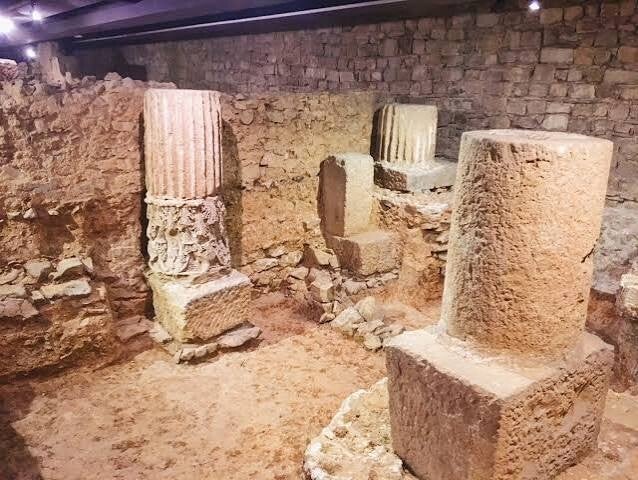
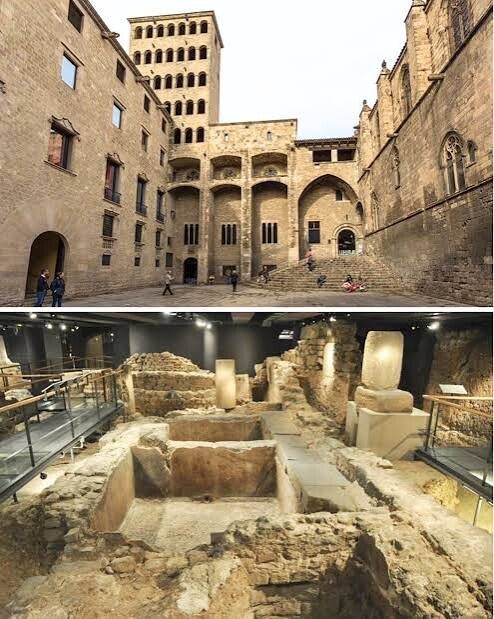
Roman Barcino contained defensive walls, towers, houses, workshops, baths, religious buildings and a temple dedicated to Emperor Augustus. Sections of the Roman walls and towers are still visible around the Gothic Quarter, while underground archaeological remains can be explored at the Barcelona History Museum.
Barcelona was therefore not built over an empty landscape. The modern city grew directly above its Roman foundations. Barcelona Tourism’s historical overview dates the foundation of the Roman colony to around 10 BC.
Medieval Barcelona
After the decline of Roman authority, Barcelona passed through Visigothic and Muslim control before becoming an important Christian county. During the Middle Ages, it developed into a powerful political and commercial centre connected to the Mediterranean world.
The city became associated with the Counts of Barcelona and later the Crown of Aragon. Palaces, churches, administrative buildings and merchant houses transformed the old Roman settlement into a prosperous medieval city.
Many of the buildings and public spaces that characterise the Gothic Quarter developed between the thirteenth and fifteenth centuries. Barcelona Cathedral, the royal buildings around Plaça del Rei and the administrative institutions around Plaça de Sant Jaume reflect the religious and political importance of medieval Barcelona.
However, visitors should understand that not everything appearing “Gothic” is entirely medieval. During the late nineteenth and early twentieth centuries, parts of the neighbourhood were restored, altered or reconstructed to strengthen Barcelona’s Gothic character. The famous bridge across Carrer del Bisbe, for example, was added in the twentieth century.
The Gothic Quarter is therefore a living historical landscape containing Roman foundations, genuine medieval structures, later restorations and modern urban life.
Where Is the Gothic Quarter Located?
The Gothic Quarter is situated in Ciutat Vella, Barcelona’s Old City. It lies between:
- La Rambla to the west
- Via Laietana to the east
- Plaça de Catalunya to the north
- Port Vell and the waterfront to the south
The neighbourhood is compact and best explored on foot. Its narrow lanes, small squares and pedestrianised streets are part of its charm, but they can also be confusing. Using an offline map or guided walking tour can help visitors understand the historical relationship between the different sites.
The most convenient central meeting points include:
- Plaça de la Catedral
- Plaça de Sant Jaume
- Plaça del Rei
- Jaume I Metro Station
- Liceu Metro Station
- The lower end of Portal de l’Àngel
Connecting with the Gothic Quarter Internationally
By Air
Most international visitors arrive through Josep Tarradellas Barcelona-El Prat Airport, approximately 15 kilometres from central Barcelona.
The main options from the airport include:
- Aerobús: A direct shuttle service connecting Terminals 1 and 2 with Plaça de Catalunya. From there, the northern Gothic Quarter can be reached on foot.
- Metro: Line L9 Sud connects both airport terminals with Barcelona’s wider metro network. A change is required to reach the Gothic Quarter.
- Train: Rodalies trains operate from Terminal 2. Passengers arriving at Terminal 1 can use the airport shuttle bus to Terminal 2.
- Taxi: Licensed Barcelona taxis are black and yellow. A taxi is convenient when travelling with luggage, children or passengers with limited mobility.
- Private transfer: A prearranged transfer can take visitors directly to their hotel, although vehicles cannot access every narrow or pedestrianised street in the Gothic Quarter.
By International and High-Speed Train
Barcelona Sants is the city’s principal railway station. It receives high-speed services from Madrid and other Spanish cities, as well as international railway connections through France.
From Barcelona Sants, visitors can use the metro, bus or taxi to reach the Gothic Quarter. Before booking accommodation inside the old city, confirm whether a taxi can stop directly outside the property.
By Sea
Barcelona is an important Mediterranean cruise and ferry destination. Cruise terminals are located around the extensive Port of Barcelona.
From the cruise terminals, visitors may use:
- Cruise-port shuttle buses
- Licensed taxis
- Public transport from the lower end of La Rambla
- Prearranged private transfers
Allow enough time when returning to a cruise ship because Barcelona’s terminals can be far apart.
By Road
Barcelona is connected by motorway to France, the Costa Brava, Valencia, Madrid and other Spanish destinations. Driving inside the Gothic Quarter is not recommended because of pedestrian zones, traffic restrictions, narrow streets and limited parking.
Travellers arriving by car should reserve secure parking outside the oldest part of the city and continue on foot or by public transport.
Connecting with the Gothic Quarter Locally
The most useful metro stations are:
- Jaume I — Line L4: Best for Plaça del Rei, Barcelona Cathedral, the Roman walls and the eastern Gothic Quarter.
- Liceu — Line L3: Convenient for La Rambla, La Boqueria and the western side of the district.
- Catalunya — Lines L1 and L3: Useful for the northern Gothic Quarter and visitors arriving by Aerobús.
- Drassanes — Line L3: Convenient for the southern Gothic Quarter, La Rambla and the waterfront.
- Urquinaona — Lines L1 and L4: Useful for the north-eastern approaches.
Walking is the best way to explore the neighbourhood itself. Bicycles and scooters can be inconvenient in crowded pedestrian areas and should never be ridden through dense groups of pedestrians.
Essential Places to Visit
1. Barcelona Cathedral
The Cathedral of the Holy Cross and Saint Eulalia is the spiritual centre of the Gothic Quarter. Although predominantly Gothic, it incorporates architectural elements from different periods.
Important areas include:
- The main nave and side chapels
- The crypt of Saint Eulalia
- The choir stalls
- The Chapel of the Holy Christ of Lepanto
- The rooftop
- The cloister and its thirteen white geese
The geese traditionally represent the age of Saint Eulalia when she was martyred.
The Cathedral is an active place of Christian worship. Visitors should dress respectfully, remain quiet during services and distinguish between cultural visiting hours and times reserved for prayer.
2. Plaça del Rei and MUHBA
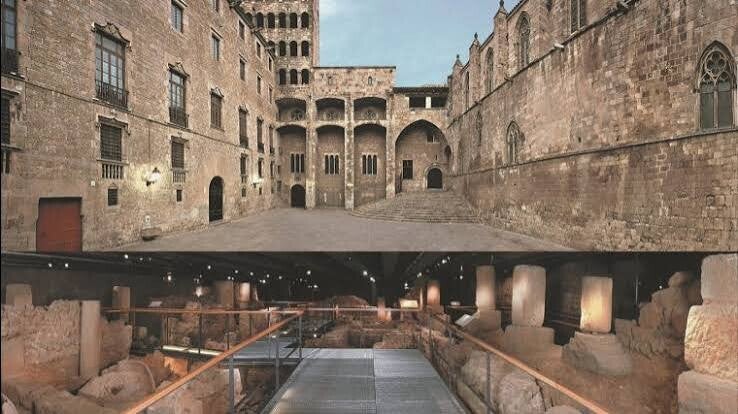
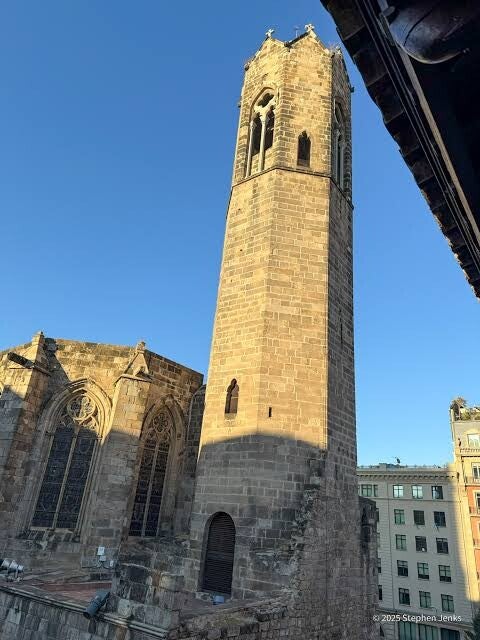
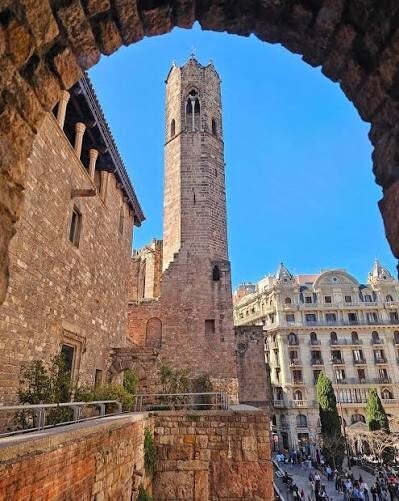
Plaça del Rei is one of Barcelona’s most atmospheric medieval squares. The surrounding buildings include parts of the former royal palace complex.
Beneath the square lies one of the city’s most important archaeological sites. At MUHBA Plaça del Rei, visitors can walk through the remains of Roman streets, workshops and buildings before continuing into medieval Barcelona.
Allow between 90 minutes and two hours for a meaningful visit.
3. The Roman Temple of Augustus
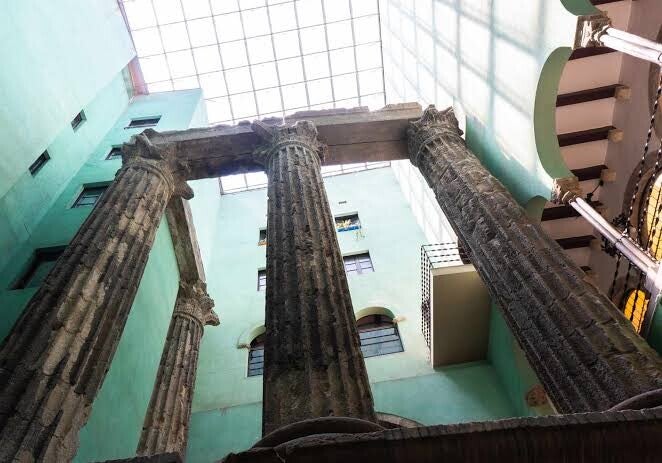
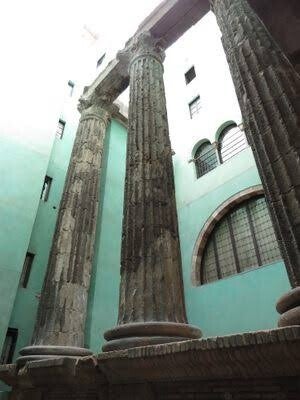
Inside the courtyard of the Centre Excursionista de Catalunya, on Carrer del Paradís, four surviving columns of the Roman Temple of Augustus rise dramatically within a later building.
A small marker outside identifies the summit of Mont Tàber, the hill around which Roman Barcino developed.
This is one of the Gothic Quarter’s most surprising historical encounters: monumental Roman columns hidden inside an ordinary medieval street.
4. The Roman Walls and Towers
Sections of Barcino’s defensive walls can be seen around:
- Plaça Nova
- Avinguda de la Catedral
- Carrer de la Tapineria
- Plaça de Ramon Berenguer el Gran
- Carrer del Sotstinent Navarro
- Baixada de Viladecols
At Plaça Nova, two Roman towers once guarded one of the entrances into Barcino. Later medieval buildings were constructed directly against and above the Roman walls.
5. Plaça de Sant Jaume
Plaça de Sant Jaume occupies approximately the area where Barcino’s Cardo and Decumanus crossed.
Today, it remains Barcelona’s political centre. The square is bordered by:
- Barcelona City Hall
- The Palau de la Generalitat de Catalunya
Public events, demonstrations, traditional celebrations and official ceremonies are frequently held here.
6. Carrer del Bisbe
Carrer del Bisbe connects the Cathedral area with Plaça de Sant Jaume. Its best-known feature is the decorative neo-Gothic bridge built in the twentieth century.
The street becomes crowded during the day, so visit early if you want a quieter atmosphere and clearer photographs.
7. Plaça de Sant Felip Neri
This peaceful square is one of the most moving places in the Gothic Quarter. The walls of the Church of Sant Felip Neri bear marks associated with bombing during the Spanish Civil War.
The square should be visited respectfully. It is a place of memory, not merely a decorative photography location.
8. The Jewish Quarter
The medieval Jewish district, known as El Call, lies around Carrer de Sant Domènec del Call and neighbouring lanes.
Barcelona’s Jewish community contributed greatly to the city’s intellectual, medical, commercial and cultural life before suffering persecution, violence and expulsion.
Visitors should approach the area as an important place of historical memory rather than treating it only as a picturesque neighbourhood.
9. Plaça Reial
Located just off La Rambla, Plaça Reial is a large nineteenth-century square surrounded by arcades, restaurants and nightlife venues. Its lampposts were among Antoni Gaudí’s early public commissions.
Visit during the day for architecture and return in the evening for dining or live music, while remaining alert to personal belongings.
10. Plaça del Pi and Santa Maria del Pi
The Gothic church of Santa Maria del Pi and its surrounding squares offer a pleasant place to rest. Artisan and food markets are occasionally held nearby.
The church’s large rose window is one of its most recognisable features.
Opening and Closing Times
The Gothic Quarter itself is a public neighbourhood and does not have fixed opening or closing hours. Its streets and squares remain accessible throughout the day and night, although certain areas become much quieter late at night.
Individual monuments, museums and churches maintain separate schedules.
Barcelona Cathedral Cultural Visits
Current published tourist visiting hours are:
- Weekdays: 9:30 a.m.–6:30 p.m.; last access at 5:45 p.m.
- Saturdays and religious-festival vigils: 9:30 a.m.–5:15 p.m.; last access at 4:30 p.m.
- Sundays and religious festivals: 2:00 p.m.–5:00 p.m.; last access at 4:30 p.m.
Worship services follow a different timetable, and cultural access may be modified for religious celebrations. Confirm the latest details through the official Barcelona Cathedral visiting-hours page.
MUHBA and Roman Sites
MUHBA operates several separate sites, including Plaça del Rei, the Temple of Augustus and sections of the Roman city. Opening hours vary by site, season, public holiday and restoration programme.
Visitors should check the official museum information shortly before travelling. As a general guide, many municipal museums close on Mondays, while Sunday-afternoon or first-Sunday free-entry arrangements may apply. Do not assume that every Roman site follows the same timetable.
Churches and Civic Buildings
Churches may close during services, weddings, funerals or special celebrations. City Hall and the Palau de la Generalitat are not permanently open as ordinary tourist attractions; public visits normally take place on designated dates or through organised programmes.
A Suggested Walking Route
A well-organised walk can follow this sequence:
- Begin at Plaça Nova and examine the Roman towers.
- Visit Barcelona Cathedral and its cloister.
- Walk along Carrer del Bisbe.
- Enter Plaça de Sant Jaume.
- Continue to the Temple of Augustus on Carrer del Paradís.
- Explore Plaça del Rei and visit MUHBA.
- Walk through the old Jewish Quarter.
- Pause at Plaça de Sant Felip Neri.
- Continue toward Plaça del Pi.
- Finish at Plaça Reial or the waterfront.
Allow approximately three hours for the walk without museum interiors, or at least five hours when including the Cathedral and MUHBA.
Best Time to Visit
Early morning is best for quieter streets, cooler temperatures and photography. Late afternoon offers attractive light and a lively atmosphere.
Summer visitors should carry water, wear sun protection and schedule indoor attractions during the hottest part of the day. In winter, bring layers and remember that daylight ends earlier.
The district is busiest around the Cathedral, Carrer del Bisbe, La Rambla and Plaça Reial. Moving a few streets away often reveals quieter squares and a more authentic neighbourhood atmosphere.
Dos and Don’ts
Do
- Wear comfortable shoes suitable for cobbled streets.
- Reserve Cathedral, museum and guided-tour tickets when necessary.
- Keep phones, wallets and passports secure.
- Dress respectfully when entering churches.
- Learn a few words of Catalan or Spanish.
- Pause to observe architectural details rather than rushing.
- Support local cafés, shops and licensed guides.
- Respect residents who live and work in the neighbourhood.
- Check current opening hours before visiting.
- Call 112 in an emergency.
Don’t
- Do not leave phones or bags unattended on café tables.
- Do not block narrow streets while taking photographs.
- Do not enter churches wearing beachwear.
- Do not speak loudly during worship or prayer.
- Do not buy tours or tickets from unverified street sellers.
- Do not assume that every “Gothic” feature is medieval.
- Do not treat sites connected with persecution, war or martyrdom merely as entertainment.
- Do not create excessive noise late at night in residential streets.
- Do not walk in cycle lanes while looking at your phone.
- Do not rely on old opening times found on unofficial websites.
Safety Advice
The Gothic Quarter is generally busy and well visited, but pickpocketing can occur in crowded streets, on La Rambla, inside metro stations and on restaurant terraces.
Carry only what you need. Use a secure cross-body bag, avoid displaying large amounts of cash and never keep a wallet in an easily accessible back pocket.
At night, stay on reasonably busy and well-lit routes. Visitors who have been drinking should use a licensed taxi rather than becoming separated from their group.
Let Us Help You Plan Your Barcelona Holiday
Would you like to visit the Gothic Quarter, explore Roman Barcelona or enjoy a complete holiday in this magnificent Mediterranean city?
Virtual World Travel Agency can assist you with travel advice, flights, accommodation, airport transfers, car rentals, attraction and event tickets, customised holidays and personalised travel planning.
WhatsApp or Call: +34 664 663 275
Email: info@virtual-world.pl
Holiday Planner Form:
Complete your personalised holiday-planning form
Self-Booking Platform for Hotels, Car Rentals and Events:
Book your travel services online
Virtual World Travel Agency—Turning Your Travel Dreams into Memorable Experiences.
Opening hours, admission charges, transport services and visitor arrangements may change. Confirm the latest information through official attraction and transport websites before travelling.
Add comment
Comments